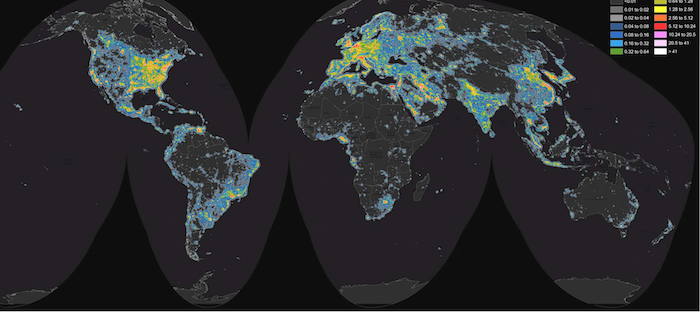









Light at night and the various forms of light pollution have measurable effects on humans, nighttime ecosystems, and more. There is a growing body of scientific research that is measuring and attempting to understand these effects.
This page lists some of the research efforts supported by DarkSky.
This white paper examines the role of horizontal and near-horizontal outdoor lighting emissions as contributors to atmospheric light pollution, expanding the traditional focus on upward-directed light that produces sky glow above urban and industrial areas.
In response to the continued global growth of light pollution and its documented impacts on nocturnal ecosystems and night-sky visibility, the analysis evaluates common outdoor lighting applications to assess the functional value of high-angle light emissions relative to their environmental costs.
The findings indicate that light emitted between 80° and 90° above nadir provides limited visual benefit in most applications while contributing disproportionately to sky glow, supporting the adoption of stricter limits on very high-angle luminaire emissions within DarkSky International programs and policies.
Join John Barentine and the DarkSky team as we discuss important findings from this year’s report.
Each year, DarkSky publishes an annual report summarizing the current scientific consensus on artificial light at night (ALAN) and light pollution.
For this year’s report, our team considered thousands of published papers, theses, and articles, including nearly 5,000 pieces of scientific literature listed in the Artificial Light At Night Research Literature Database.
Like assembling a jigsaw puzzle, we identify the most relevant pieces, strategically placing them next to others to create a summary that is understandable and useful.
Join John Barentine and the DarkSky team as we discuss important findings from this year’s report.
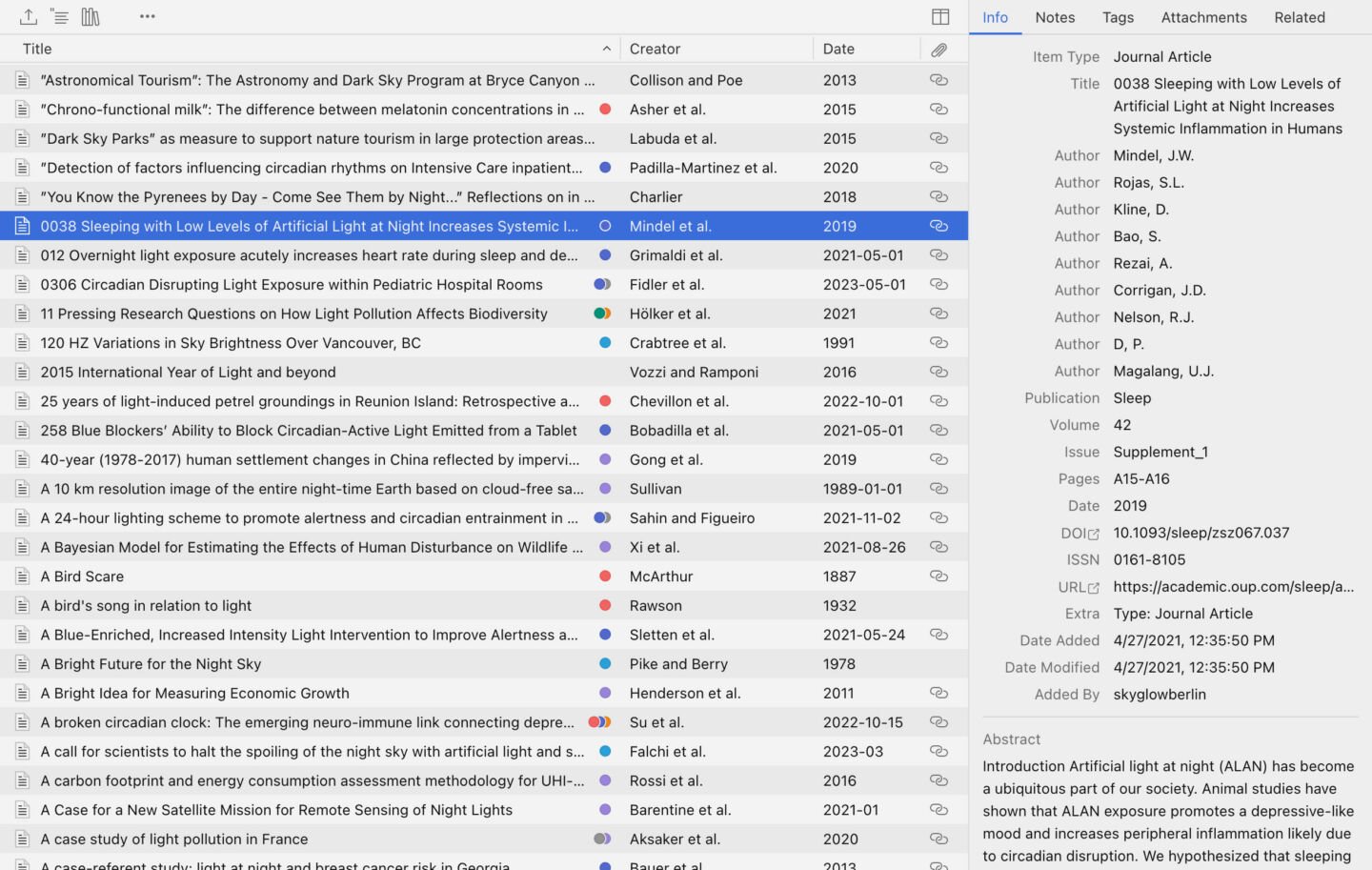
Along with out partners at the Loss of the Night Network, DarkSky maintains a comprehensive, searchable database of scientific publications on artificial light at night (ALAN). The only database of its kind, the Artificial Light at Night (ALAN) Research Literature Database provides references to scientific literature on all aspects of research pertaining to artificial light at night.
The ALAN Database is free for public use, and no login is required. The search window is in the upper right. Research on specific topics can be found by entering a key word (e.g., sleep, birds, cancer), author name, publication, or other relevant information, into the window. Search results will then appear in the main part of the window.
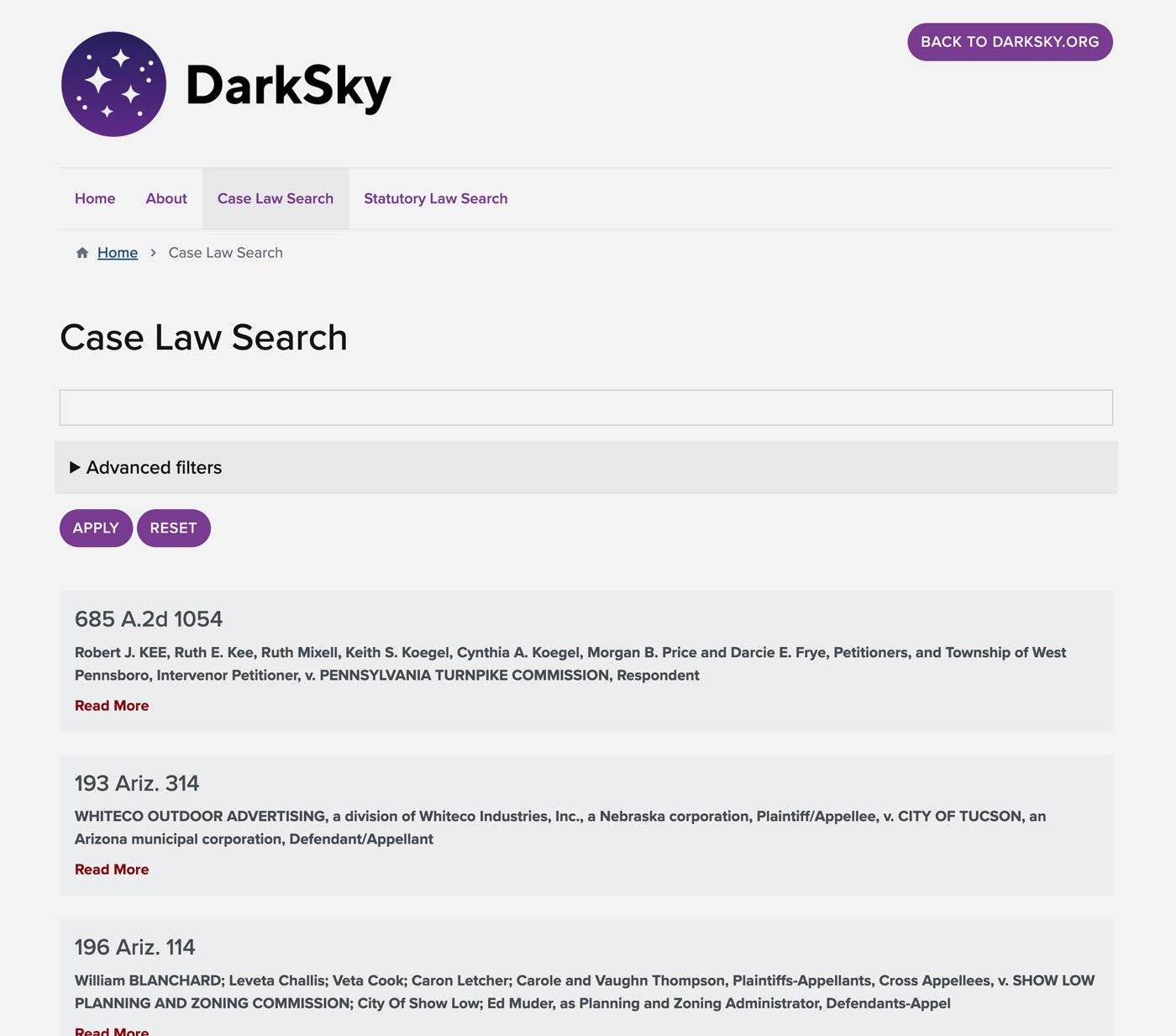
In partnership with the University of Arizona’s James E. Rogers College of Law, we have developed a database of U.S. case law and statutory law pertaining to lighting issues.
It’s currently available as a beta (test) database. Learn more
You don’t have to wear a lab coat to be a citizen-scientist! We have listed below several ways for volunteers to plug in and help study light pollution.
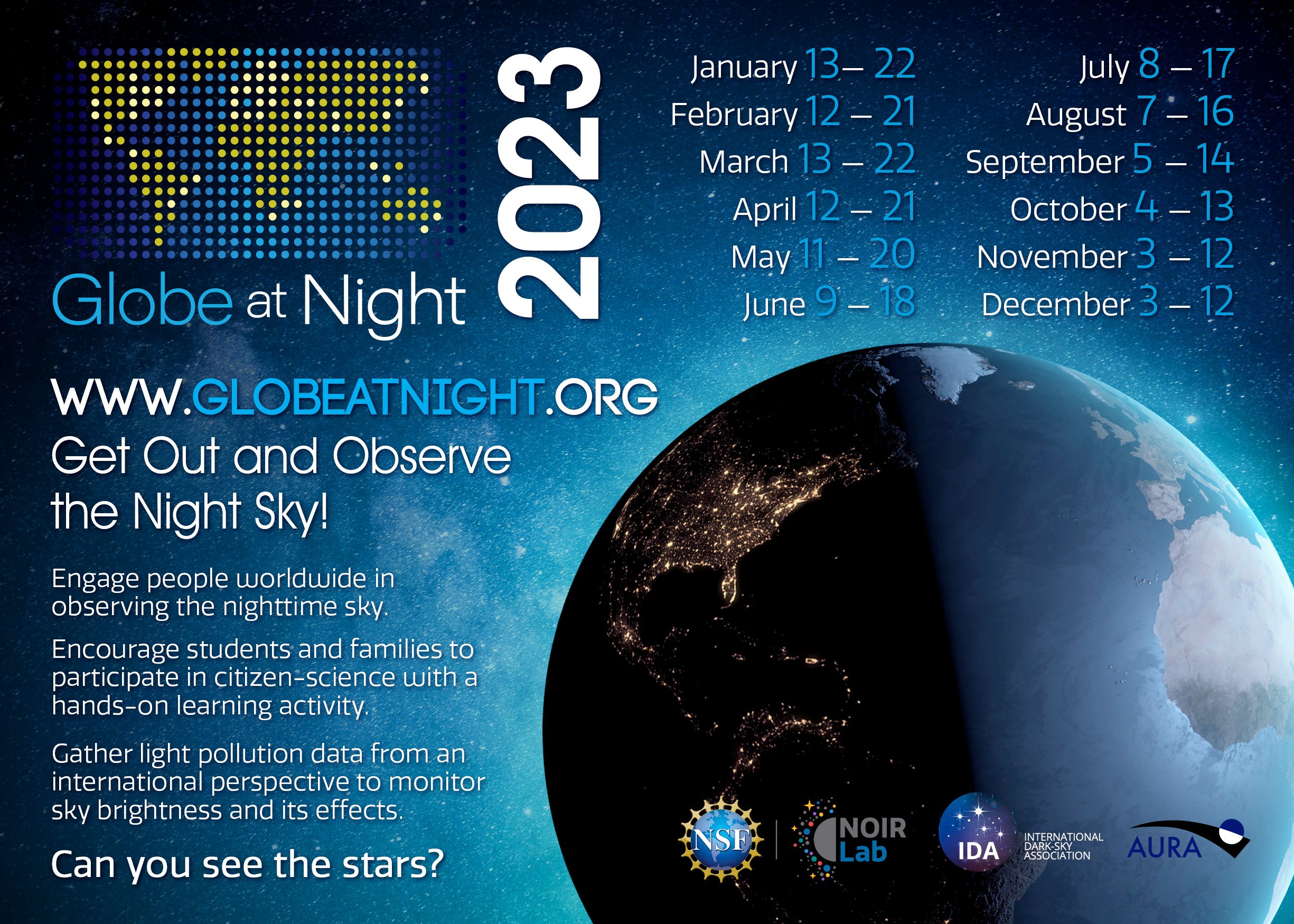
Participating in the Globe at Night citizen-science campaign is a great way to help our understanding of sky glow and its impact. No special tools are required, and observations can easily be reported by smartphone, tablet, or computer.