







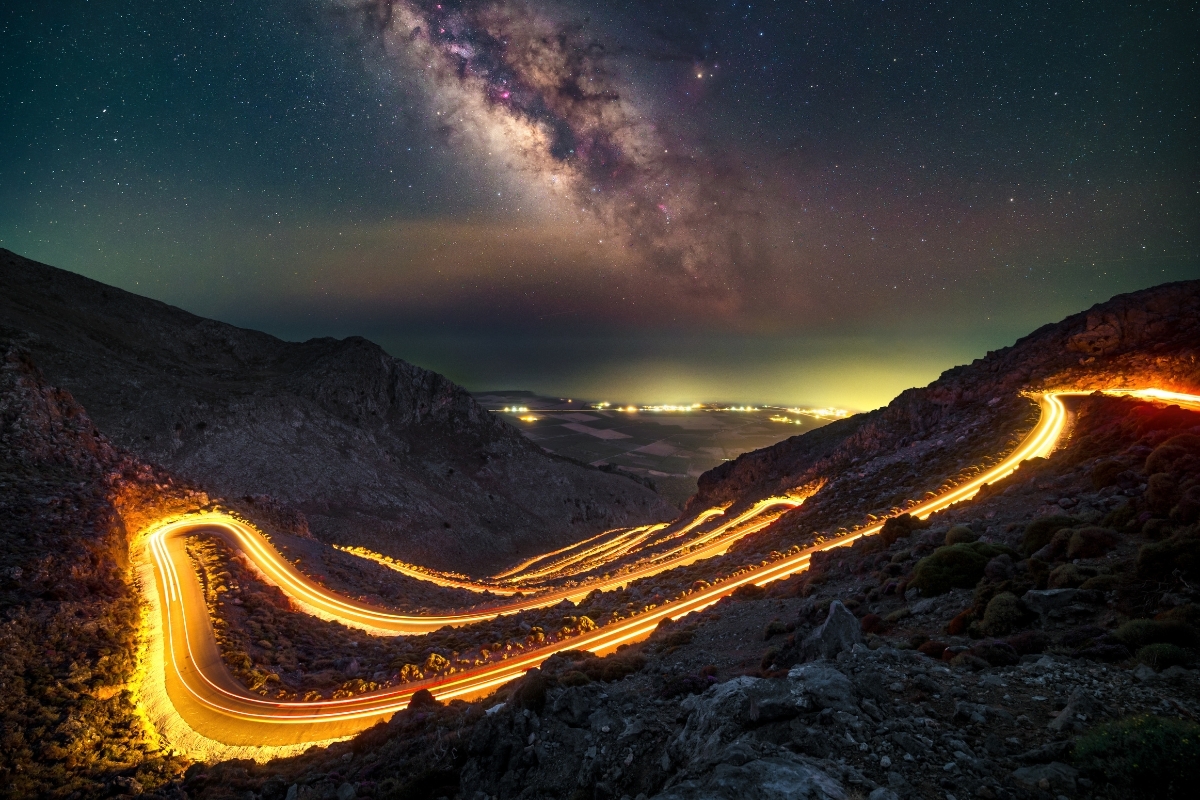
Modern headlights are brighter and bluer than ever, and drivers have noticed. In a March 2026 AAA survey, six in ten drivers said glare is a problem after dark. Wildlife feels it too. Headlights project light sideways into roadside habitat, reaching landscapes that have no other artificial light.
Now the federal government is taking a fresh look. In October, the National Highway Traffic Safety Administration (NHTSA) announced plans to modernize Federal Motor Vehicle Safety Standard No. 108, the rule that governs vehicle lighting in the United States, with glare as its first priority. Rather than write the new rules on its own, NHTSA will convene a committee of up to 18 stakeholders to negotiate them.
That committee will shape the headlights on American roads for years to come. DarkSky International wants to make sure the nighttime environment has a voice in the room.
On November 9, DarkSky submitted formal comments on the committee’s scope and membership. Read our full comment letter [REPLACE LINK]. Our recommendations include:
Our comments draw on a DarkSky discussion paper on the ecological effects of vehicle headlights, by Ruskin Hartley, Kevin Gaston, and Brian Liebel, which we submitted with our letter. They also point to DarkSky One, the concept car we unveiled at the Detroit Auto Show in January to show how adaptive, warmer, lower-glare lighting can work.
DarkSky has applied to serve on the committee, with CEO and Executive Director Ruskin Hartley as our representative. We have also asked NHTSA to add a seat for environmental and night-sky organizations, as well as for affected road users.
“The people who face headlights every night deserve a voice alongside the people who make them,” said Ruskin Hartley, CEO and Executive Director of DarkSky International. “Better headlights should mean better light, not simply more of it.”
NHTSA will review nominations before announcing the committee’s membership, and the committee’s meetings will be open to the public. In the meantime, you can follow all public comments on regulations.gov under Docket No. NHTSA-2026-1981, and learn more about our recommendations on vehicle headlights and DarkSky One.
We encourage our community to stay connected. We will share updates as the committee takes shape, along with opportunities to weigh in.
Do car headlights contribute to light pollution?
Yes. While often overlooked, vehicle headlights are a widespread source of artificial light at night. Their intensity, horizontal projection, and mobility allow light to reach far beyond roads into natural habitats.
Why are modern headlights brighter than older ones?
Advances in LED and HID technology allow headlights to produce more intense, blue-rich light, often without the same controls found in older systems.
Why is blue-rich light harmful at night?
Blue light is uniquely disruptive: It suppresses melatonin and disrupts circadian rhythms in many species of wildlife and humans more strongly than other wavelengths. Because blue light also scatters more easily in the atmosphere, it is a primary driver of sky glow, brightening the night sky far more than warmer tones.
Can headlights be designed to reduce environmental impact?
Yes. Adaptive lighting, improved beam control, and limits on unnecessary brightness can improve safety while reducing light pollution.

As long as Earth has spun on its axis in orbit around the sun, the planet has known night. …