








The FIFA World Cup showcases some of the most advanced sports venues on Earth. But a significant innovation in sports lighting is taking place far from the tournament’s largest stadiums, on local fields where new technologies are proving that communities don’t have to choose between a well-lit pitch and the quality of life that comes with dark nights.
In the forested hills of Germany’s Eifel region, a rare sight still unfolds each night. On clear evenings, the Milky Way stretches across the sky, arching over villages, farmland, and the dark ridgelines of Eifel National Park.
Across much of central Europe, this view has largely disappeared as artificial light has faded the night sky. Yet in Germany’s rural Eifel region, darkness still endures and is cherished. Preserving it has taken commitment. Through the SternenLandschaft Eifel initiative, communities have spent more than a decade protecting the region’s nightscape, helping earn nearby Eifel National Park certification as a DarkSky Park, safeguarding their dark sky heritage for future generations.
But locals to this area treasure another tradition that also transcends borders, languages, and cultures: football.
So when the municipal club at Sportanlage Kall-Sötenich needed new field lighting, the community knew what they wanted: lighting that served the game without sacrificing the stars.
Working with regional utility e-regio and lighting manufacturer Musco, they found it.
Football serves as a gathering point, bringing neighbors together on local fields and village greens. It has also proven its power to unite the world, with billions gathering to watch the sport’s biggest matches. This summer, as FIFA World Cup games are played across Mexico, the United States, and Canada, that shared connection will once again be on full display.
Across the globe, these games, large and small, are often played after sunset, when fans can gather and cooler temperatures make play more comfortable and, in some climates, safer.
But as communities grow, so does the challenge of balancing competing priorities. Residents want access to quality recreational facilities and opportunities for sport, while also preserving the qualities that make their communities desirable places to live.
For some communities, like those in Germany’s Eifel region, that means protecting views of the night sky. For others, it means reducing glare shining into nearby homes, minimizing impacts on wildlife and natural areas, or preserving the character of a neighborhood park after dark. New sports lighting projects frequently become a focal point for these conversations, raising questions about how communities can support recreation while maintaining quality of life for those who live nearby.
For years, many assumed these goals were at odds. Lighting a field meant accepting glare and light spilling beyond the boundaries of play as an unavoidable tradeoff. Today, advances in sports lighting are proving a different reality. Communities no longer have to choose between a well-lit field and the quality of life made possible by smart lighting design.
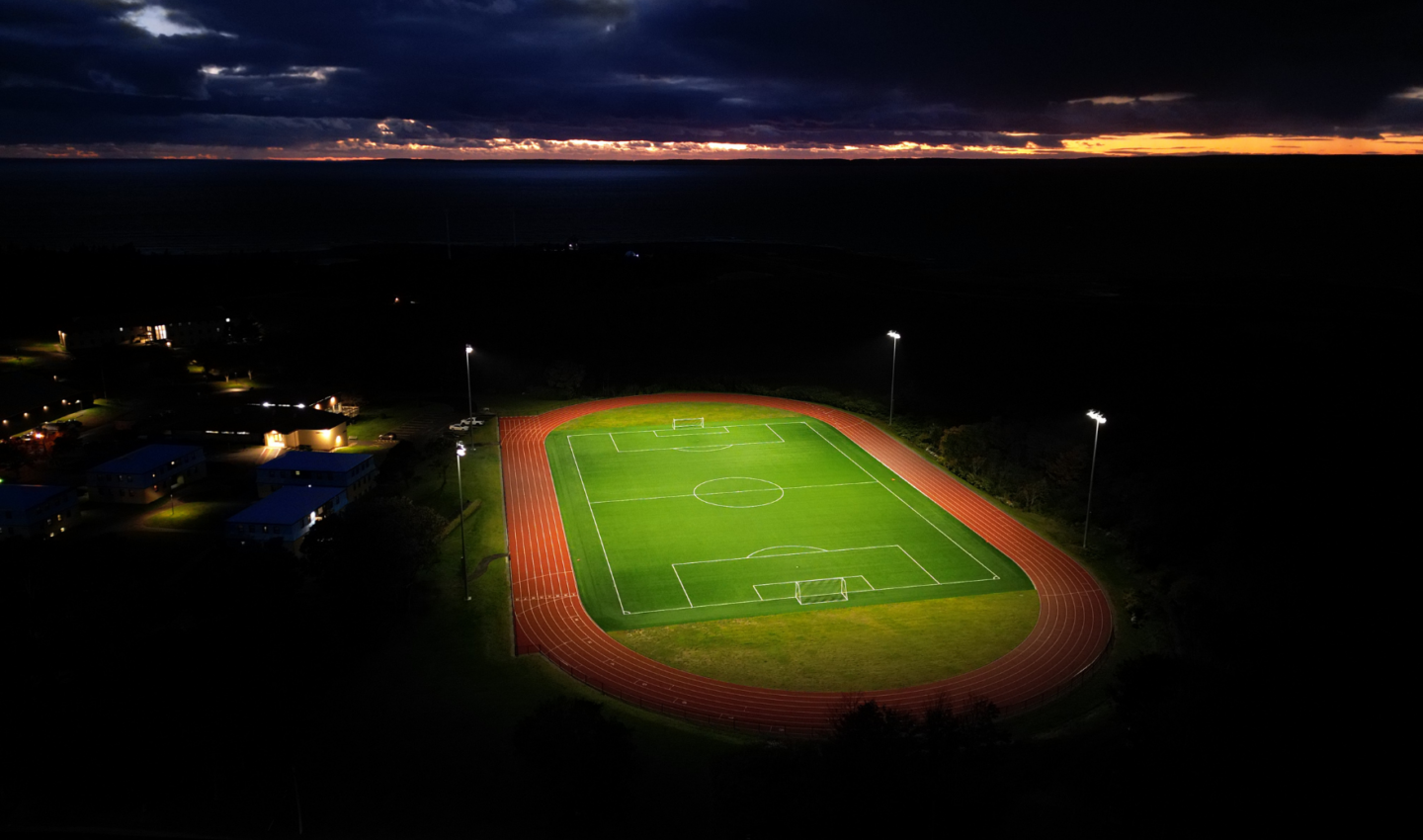
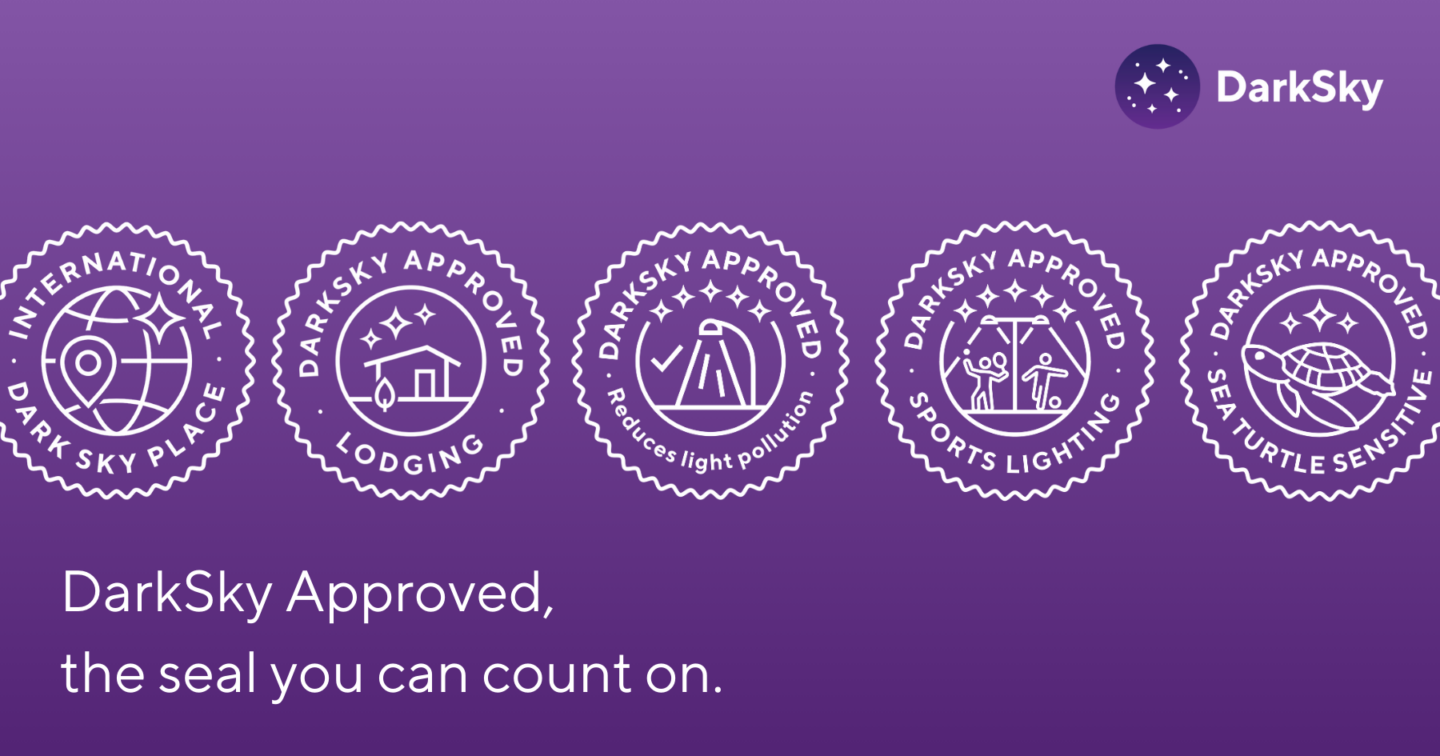
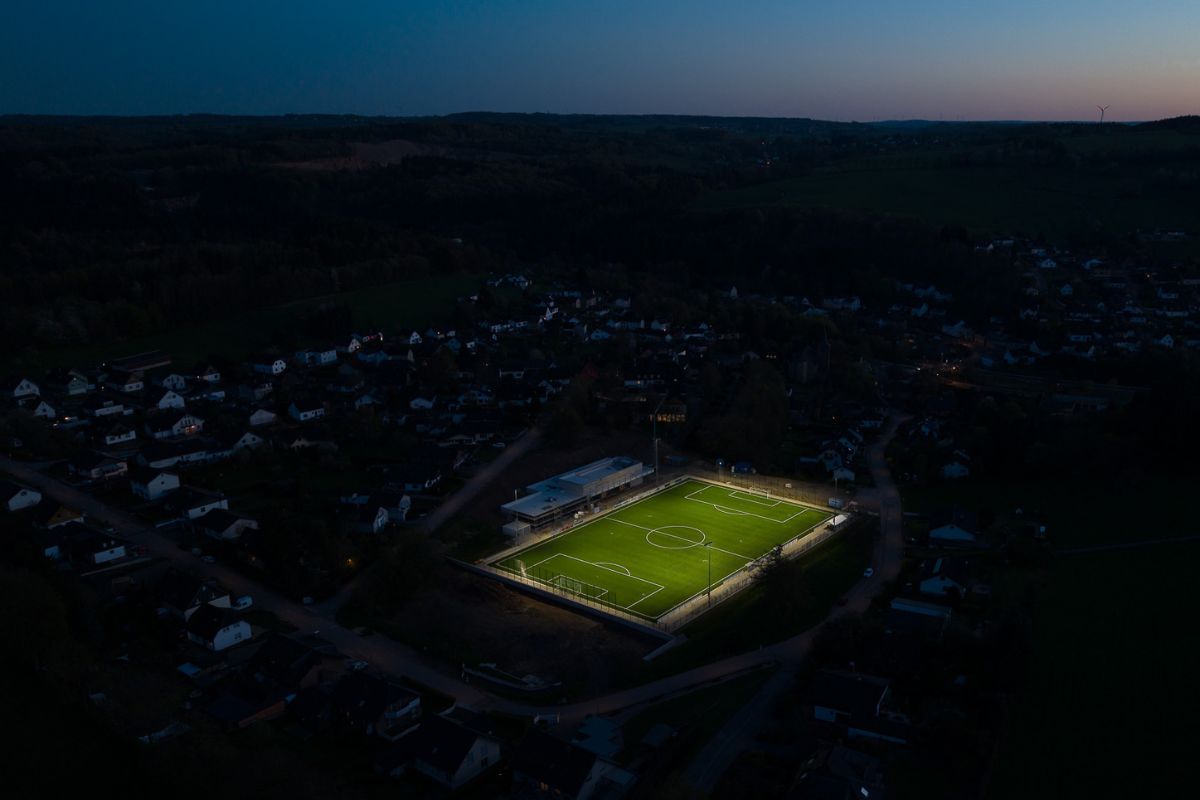
Kall-Sötenich is now home to Europe’s first DarkSky Approved Outdoor Sports Lighting installation, a system that fully illuminates a competitive football pitch while leaving the sky above it essentially undisturbed.
The approval came through DarkSky International’s certification program, which evaluates sports lighting not only on illumination levels, but on how effectively light is confined to the playing surface.
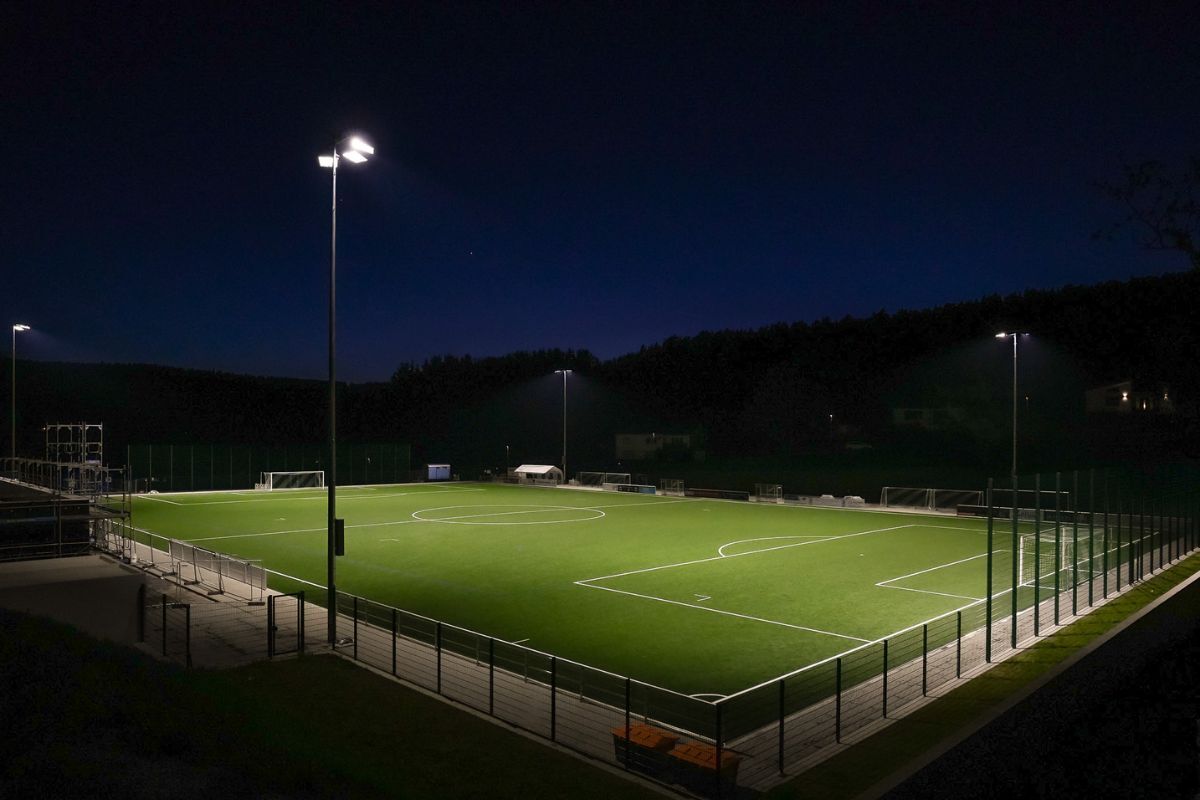
Designed, manufactured, and installed by Musco Lighting, the system achieves this through precision optics and state-of-the-art shielding, directing light precisely where athletes and spectators need it while limiting spill light beyond the field’s boundaries. The result is a facility that meets the demands of competitive play while helping preserve the qualities that make the Eifel region unique.
On the pitch, players have everything they need. But beyond the touchlines, the night remains.
In Liberty Lake, Washington, a nonprofit sports center serving the greater Spokane–Coeur d’Alene region arrived at the same conclusion as communities in Germany’s Eifel region: quality lighting and quality of life can coexist.
Last year, HUB Sports Center completed Phase II of its outdoor expansion, adding two multi-use turf fields supporting year-round programming for soccer, football, lacrosse, and other sports. Evening use was essential. So was ensuring the new lighting would not negatively impact the neighborhoods surrounding the facility.
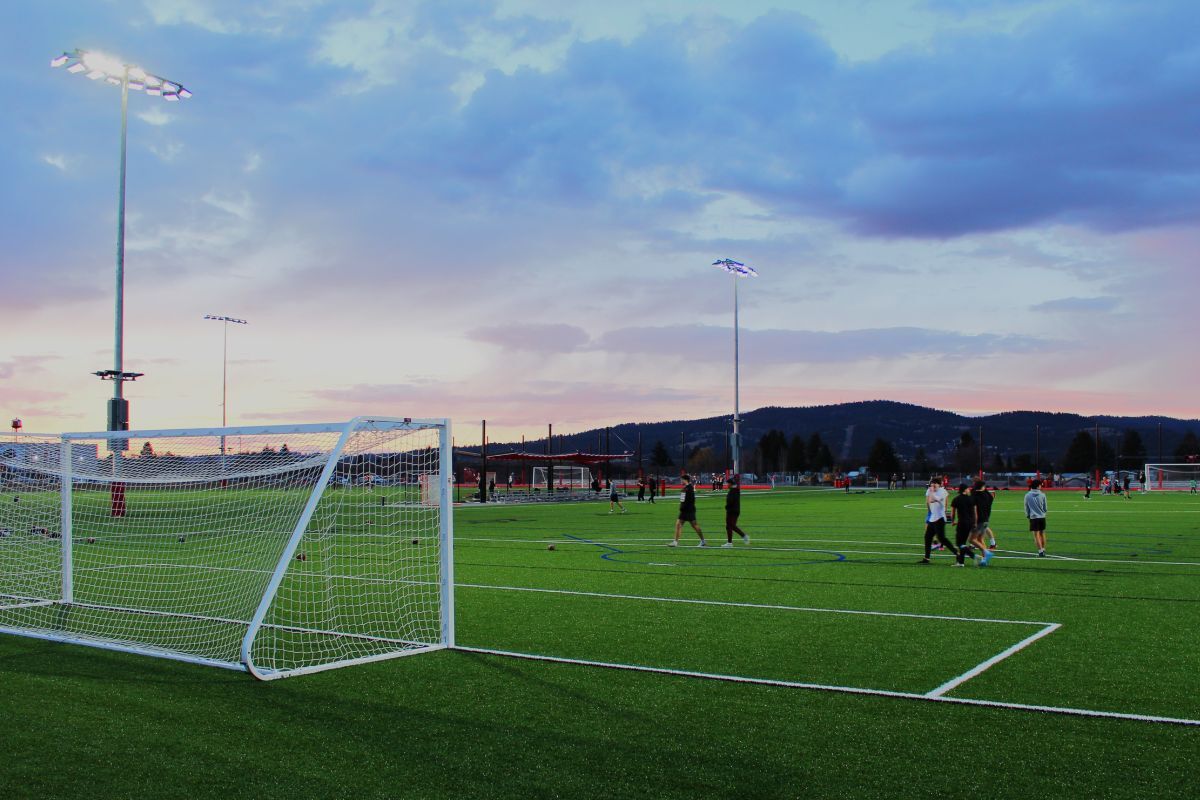
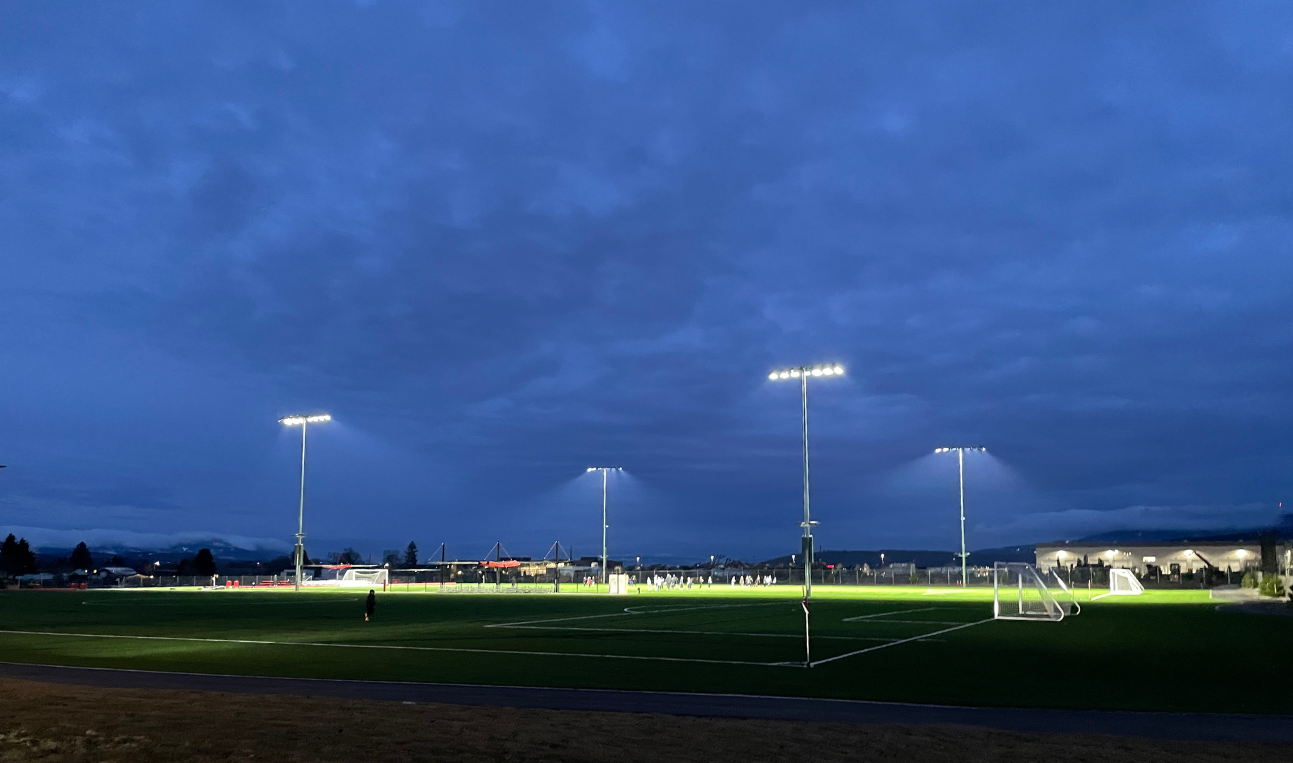
Working with the City of Liberty Lake and Musco Lighting, HUB installed a system that earned DarkSky Approved certification, making it the first such facility in Eastern Washington and only the second in the state. The system reduces glare for athletes and spectators while limiting light trespass into nearby homes, helping ensure residents can enjoy their evenings without unwanted light spilling into windows and backyards.
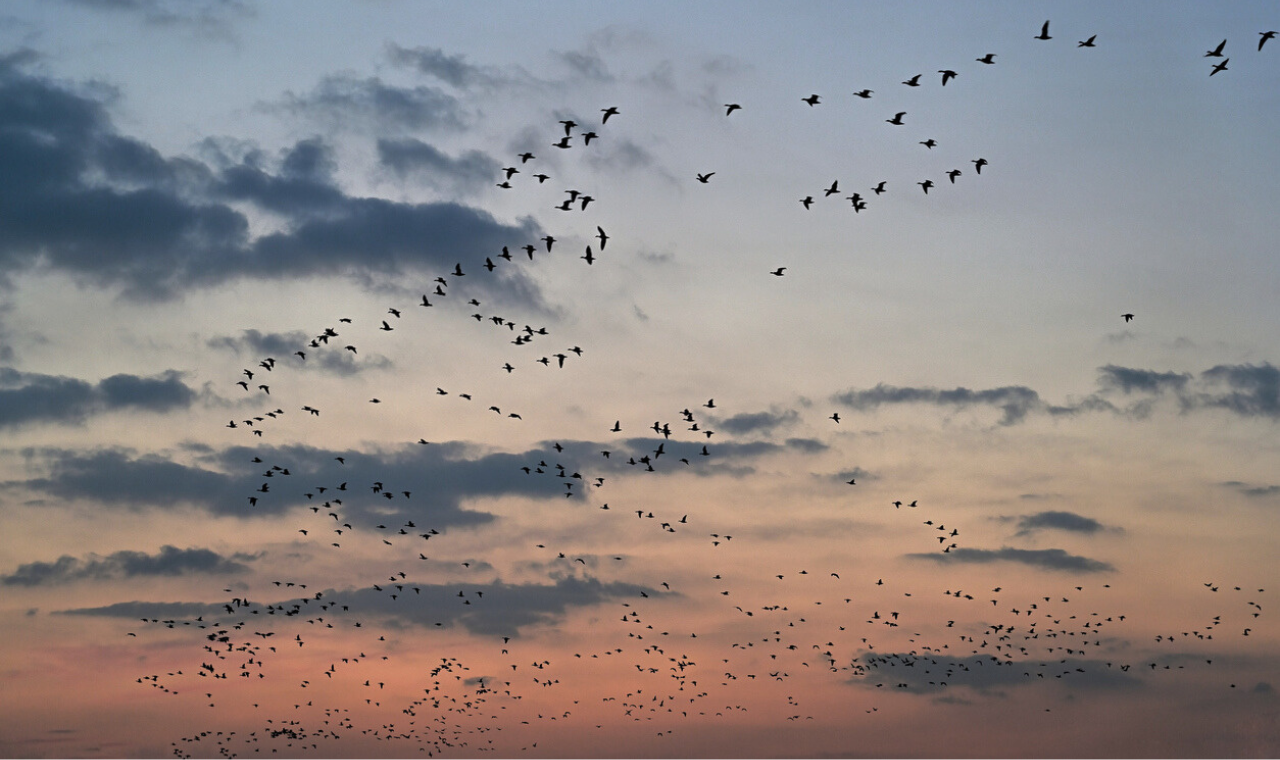
At Université Sainte-Anne in Nova Scotia, the priorities were different. As a university serving both students and the broader community, the institution needed high-quality lighting for its track and soccer field while remaining a steward of the natural environment that surrounds its campus. Located within the Acadian Skies and Mi’kmaw Lands Starlight Reserve and along the Atlantic Flyway, the site sits amid important habitat for migratory birds and other wildlife.
By earning DarkSky Approved certification, the university became home to the first Outdoor Sports Lighting project outside the United States. The lighting system helps support collegiate athletics and community recreation while minimizing impacts on nearby habitat, nature trails, wildlife corridors, and migratory species that depend on natural darkness.
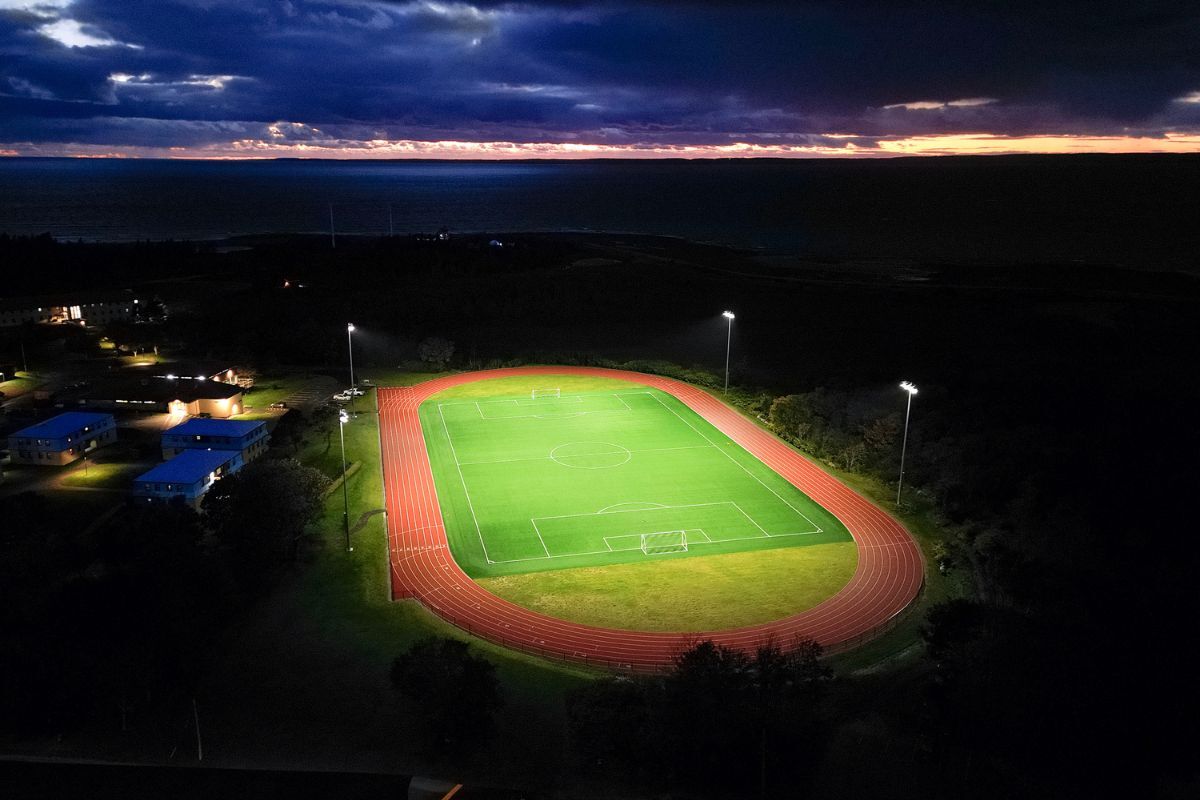
From Germany to Washington to Nova Scotia, each project reflects a different community priority, from preserving views of the night sky, to protecting neighborhood quality of life, to safeguarding wildlife and sensitive natural landscapes. Yet all arrived at the same conclusion: communities no longer have to choose between quality sports facilities and the benefits of smart lighting design.
This summer, billions of people will watch FIFA World Cup matches played under some of the most advanced stadium lighting systems ever built. But long before players reach the world’s biggest stage, they develop their skills on community fields like those in Germany, Washington, and Nova Scotia.
As more communities choose DarkSky Approved lighting, they are helping redefine what quality sports lighting looks like. The next generation of players is developing on these fields, and so is a new standard—one that supports the game while protecting the qualities that make communities thrive.
It’s a win for the game. A win for the community. And a win for the night.