








Spending time outdoors can do more than connect us with nature. It can support our mental health, improve our well-being, and help us reconnect with ourselves and the world around us.
In this DarkSky Community Partner Webinar, Nurturing Your Well-Being Through the Great Outdoors, Sydney Williams of Hiking My Feelings explores the powerful relationship between nature, darkness, and wellness. Watch the recording below, then continue reading Sydney’s accompanying guest article for additional insights and practical ways to cultivate well-being through meaningful experiences in the outdoors.
Guest article by DarkSky Advocate Sydney Williams
There is a moment that happens at sea, far enough from shore that the horizon disappears.
The ocean turns inky black, the sky does too. And the line between them softens until it feels like you’re floating through the Universe itself.
I remember standing on the balcony of a cruise ship as a kid, wind whipping against my face, staring out at a darkness so expansive it made me feel both impossibly small and completely held at the same time. During the day, I loved the endless blue horizons where the ocean met the sky. At night, that same expansiveness transformed into stars scattered across the darkness in every direction. It was so much bigger than the glow-in-the-dark stars on the ceiling of my childhood bedroom.
I didn’t have language for what I was feeling yet, I just knew I kept looking up.
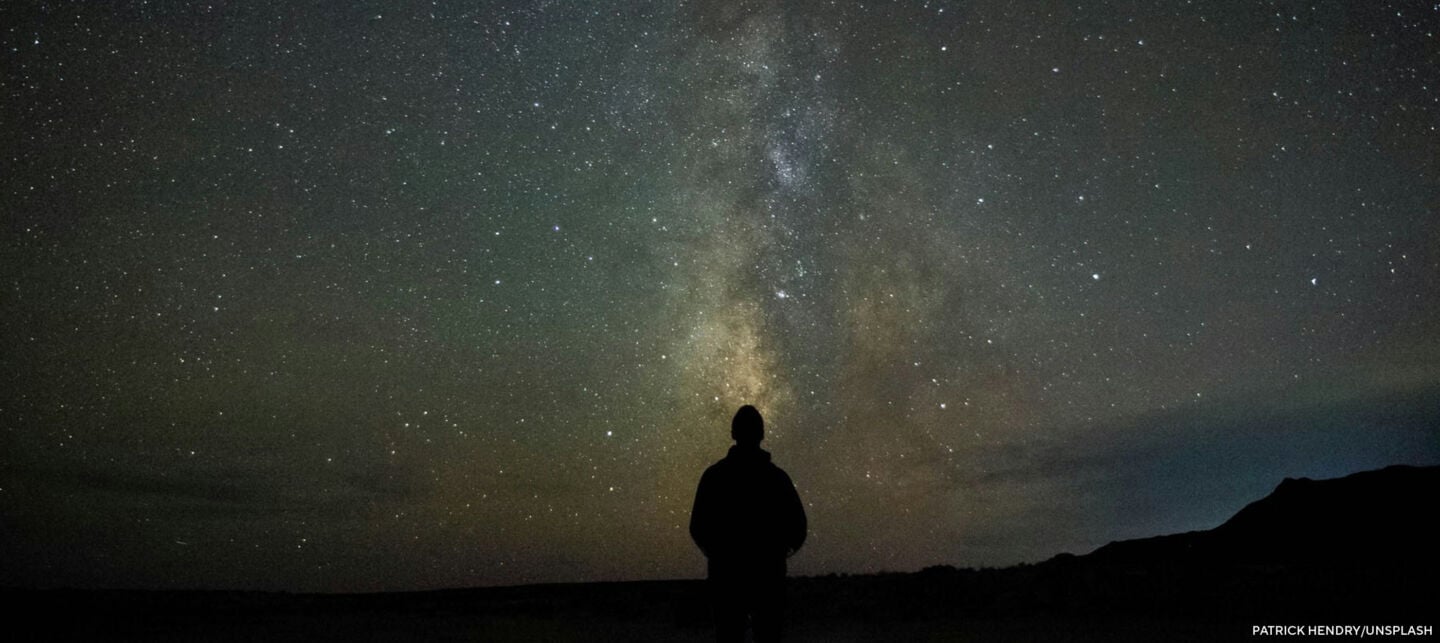
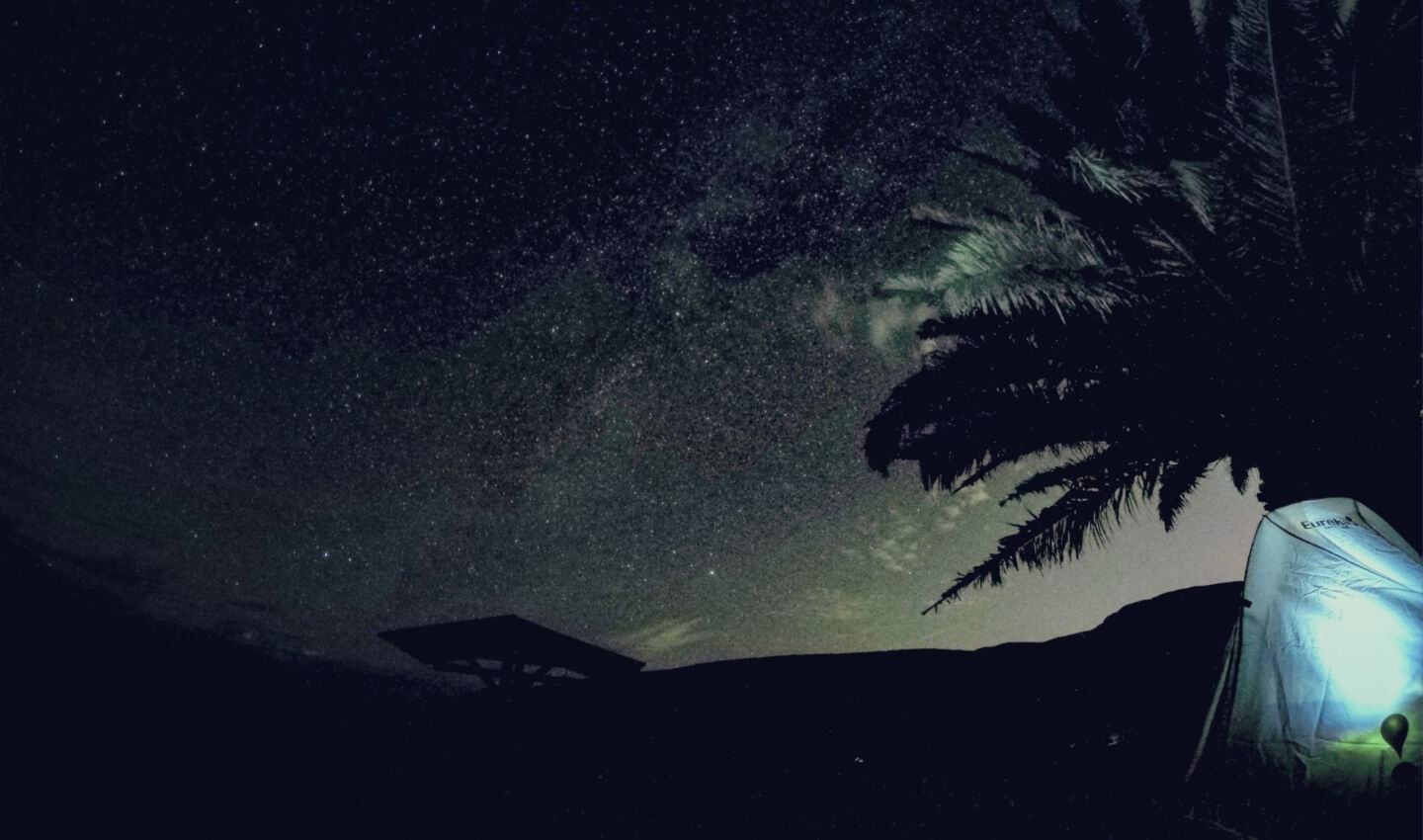
Years later, during my first backpacking trip on the Trans-Catalina Trail, I remember sitting outside my tent at Little Harbor trying to take my first real night sky photo. I wanted one of those classic adventure shots: a glowing tent beneath a sky full of stars. Looking back, I think I was trying to capture a feeling I didn’t fully understand yet. Something about the stillness, the darkness, and the immensity of the sky made me want to remember it forever.
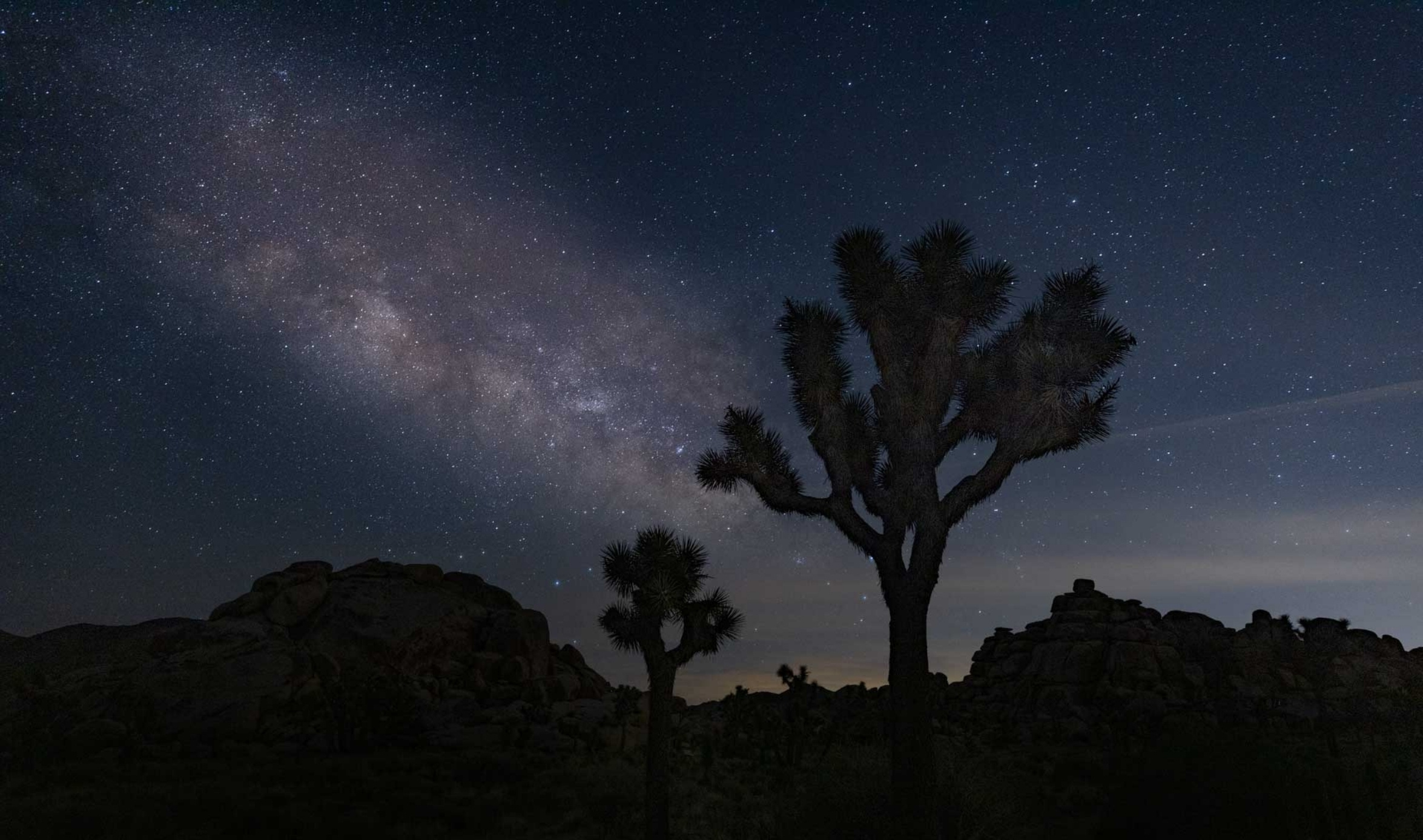
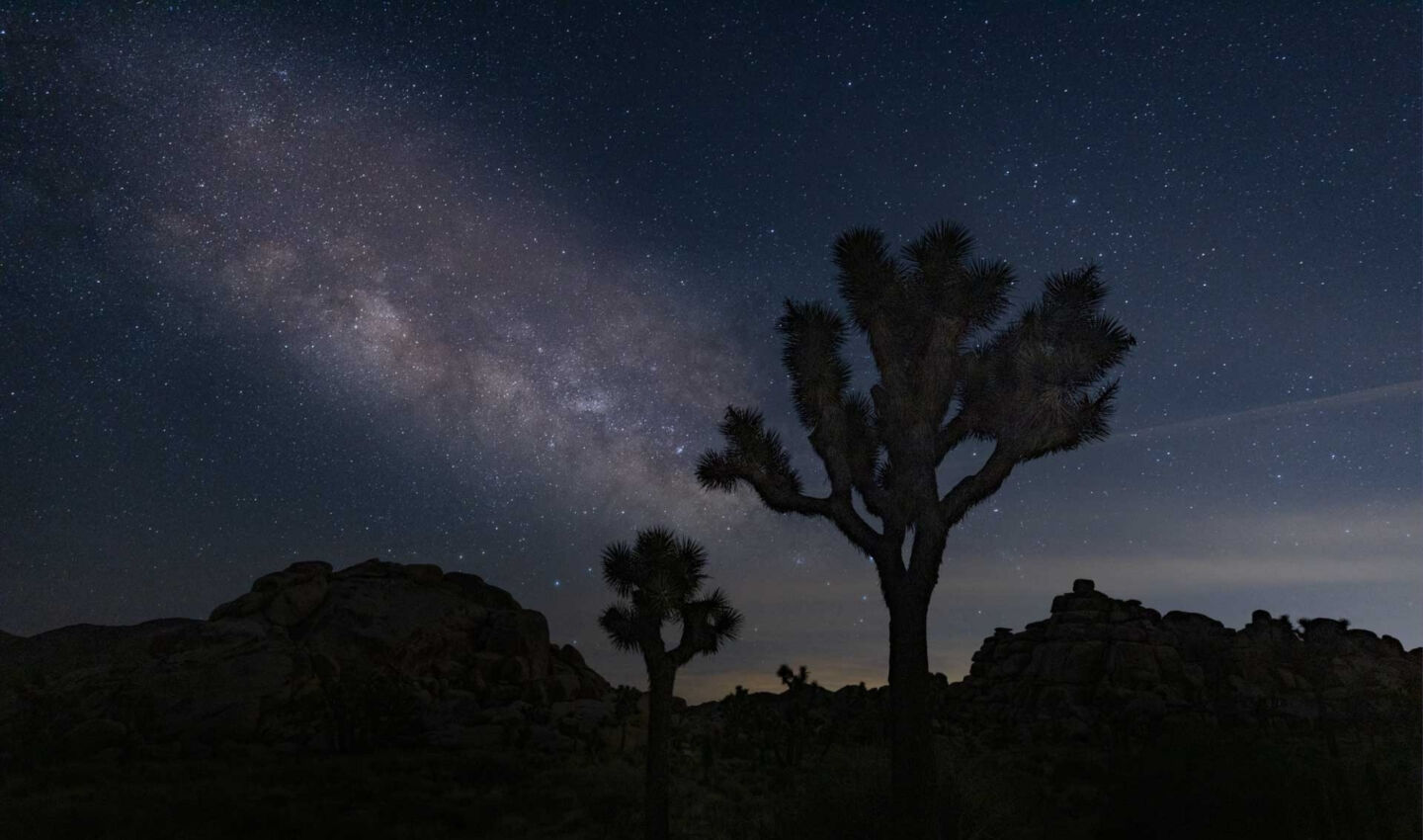
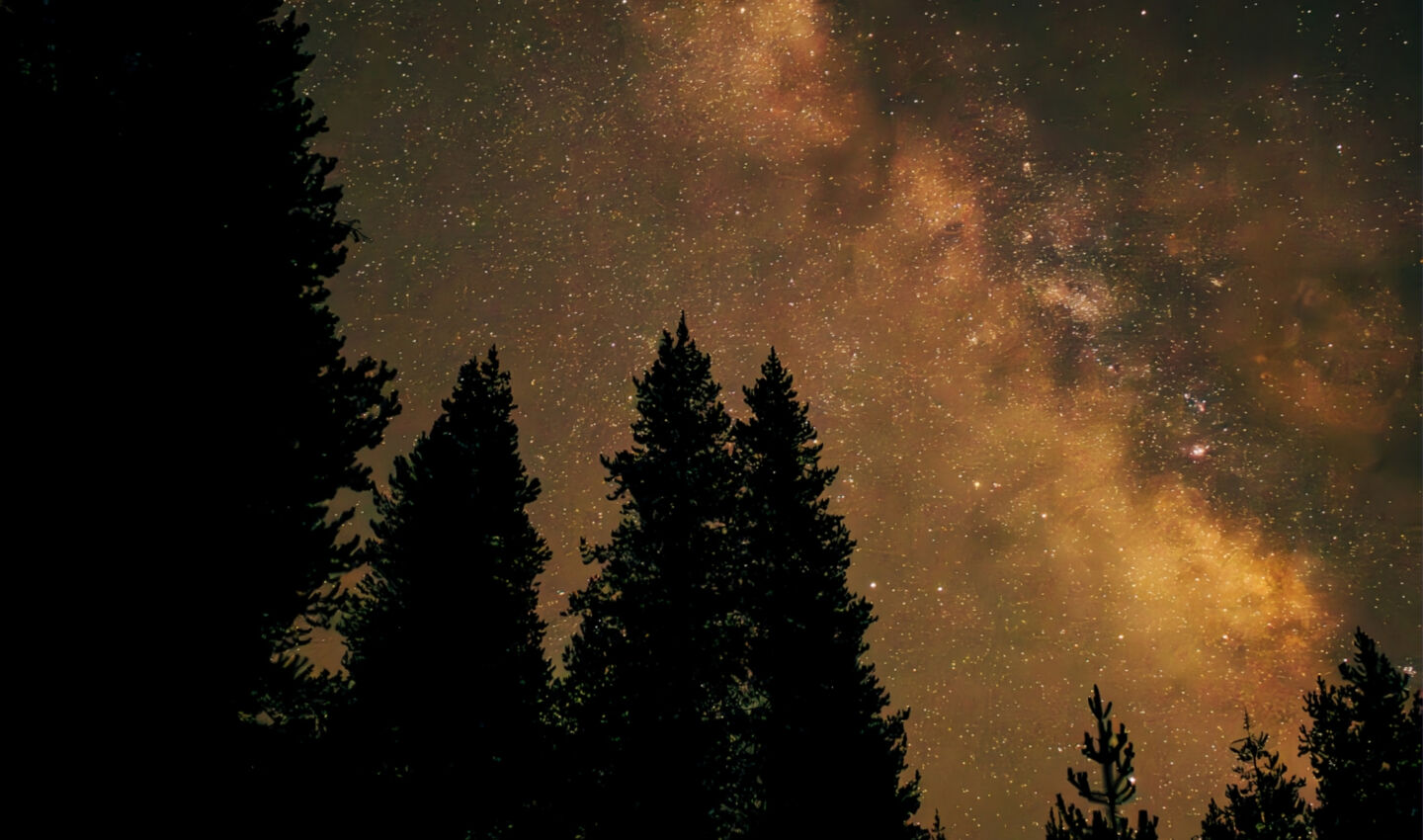
That curiosity deepened in the deserts of Joshua Tree, where our visits became less about escaping city life and more about intentionally reconnecting to the night sky. It grew beneath the silhouette of giant sequoias in California’s Sierra Nevada, where we learned constellation stories during inspiring star programs. And it expanded while floating on my back in Cinnamon Bay in Virgin Islands National Park, holding hands with my husband as the stars slowly emerged overhead one by one until the horizon disappeared and the sea and sky became indistinguishable from each other once again.Over time, I realized I wasn’t just looking at the night sky and making wishes on shooting stars, I was learning how to be in relationship with it, and reorienting myself to the wonder of it all.
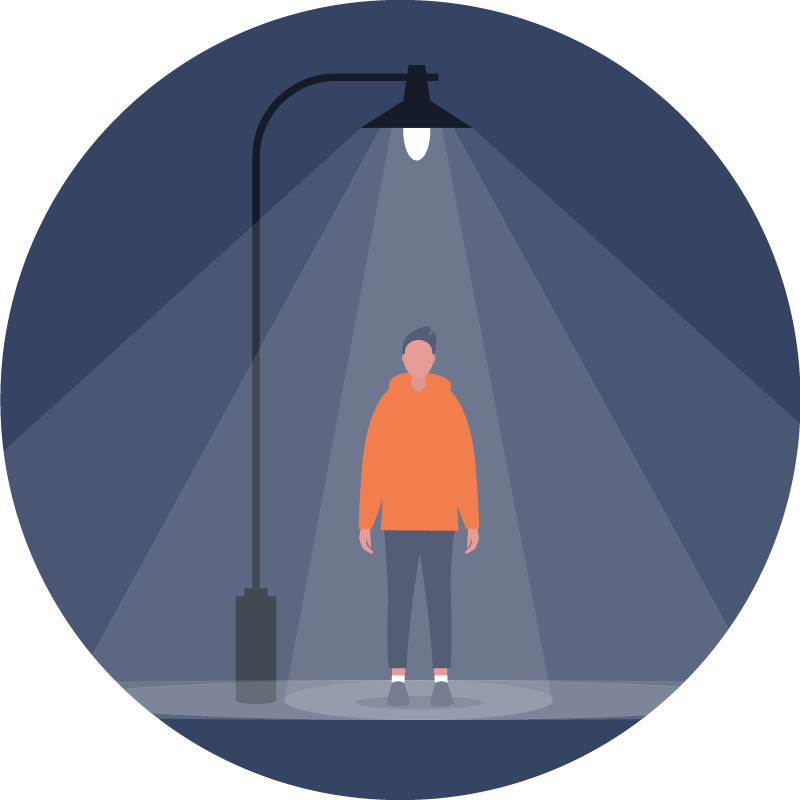
Somewhere along the way, many of us stopped experiencing darkness as a relationship, and started experiencing it as an inconvenience. We flood our homes, cities, parking lots, roads, screens, and bedrooms with artificial light. We stay stimulated long after the sun goes down. We sleep wearing and next to electronic devices, glowing clocks, buzzing notifications, and streetlights that pour through our windows. Then we wonder why we feel exhausted, anxious, disconnected, and overwhelmed.
Long before modern infrastructure, humans lived in relationship with cycles of light and darkness. Indigenous cultures around the world used the stars for navigation, storytelling, seasonal orientation, ceremony, and relationship to the greater community of life on Earth. Many cultures continue those traditions today, carrying knowledge systems rooted in careful observation of the night sky across generations.
Modern research is beginning to validate what our ancestors already knew. Exposure to artificial light can disrupt circadian rhythms, melatonin production, sleep quality, and overall health. Research has linked excessive nighttime light exposure to increased stress, sleep disruption, metabolic impacts, and reduced well-being. At the same time, studies on awe suggest experiences of vastness, including star-filled skies, can reduce stress, expand perspective, increase feelings of connection, and interrupt cycles of rumination and self-focus.
Darkness changes the nervous system. Without constant visual stimulation, our other senses become more alive. We notice temperature shifts, wind patterns, sounds, smells, and subtle movement. Our eyes slowly adjust. Our breathing changes. The pace of the body begins to soften toward something older and more natural.
Under truly dark skies, I feel calmer, more grounded, and more connected to both my body and the living world around me. The farther I step from artificial light, the more I remember that I am not separate from nature or the cosmos, I am part of it.
That realization changes things. It changes how I think about conservation. During a Dark Sky Festival in Sequoia National Park, I heard a park scientist describe darkness as a resource worth protecting. It felt so obvious once he said it out loud. Of course darkness matters, entire ecosystems depend on it. Migration, pollination, reproduction, rest, navigation, and recovery are all shaped by natural cycles of light and dark. Humans are no exception.
Protecting dark skies is not just about astronomy. It’s about protecting rest, wonder, biodiversity, orientation, and our relationship to something larger than ourselves.
That understanding became part of the foundation for Reciprocity Rx, our nature-based framework for reconnecting people to themselves, each other, and the living world through the practices of Receive, Reflect, Return, and Reconnect.
If you’ve felt that pull toward the stars but haven’t fully explored it yet, there are gentle ways to begin.
Our free Reciprocity Rx toolkit includes guided reflections and practices exploring how different landscapes can support our healing in different ways, including dark sky experiences and the ways darkness can support rest, awe, perspective, and nervous system regulation.
For those wanting to go deeper, our guided dark sky journal offers prompts, rituals, and reflections designed to help people build a more intentional relationship with darkness, wonder, rest, and the night sky.
And for those craving immersive experiences, we host retreats, volunteer programs, workshops, and gatherings in some of the darkest and most awe-inspiring landscapes we’ve ever experienced together.
This work is not about escaping modern life. It’s about remembering we are ancient beings living in a modern world, and that our bodies still respond to rhythms far older than artificial light.
If this resonates with you, I’d love to invite you to watch our webinar with DarkSky International, exploring the relationship between darkness, mental health, awe, and reconnection to the living world.
Because as it turns out, not everything needs to be illuminated to be understood.