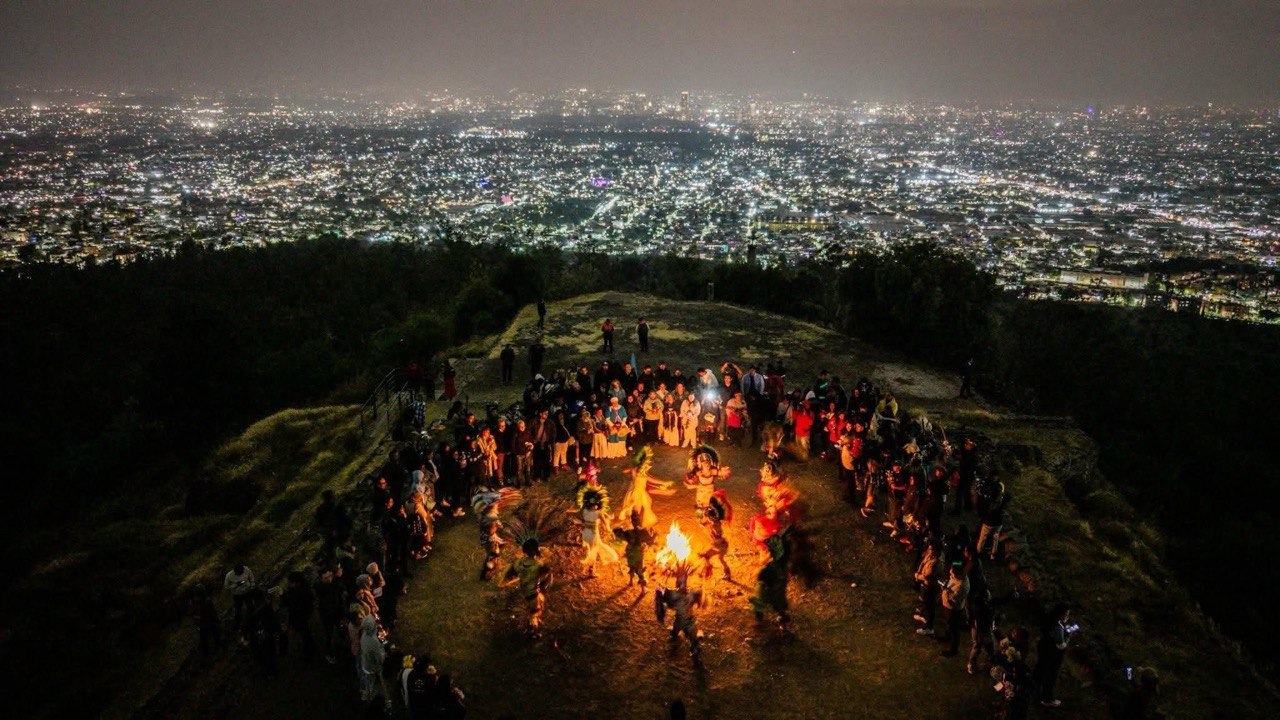







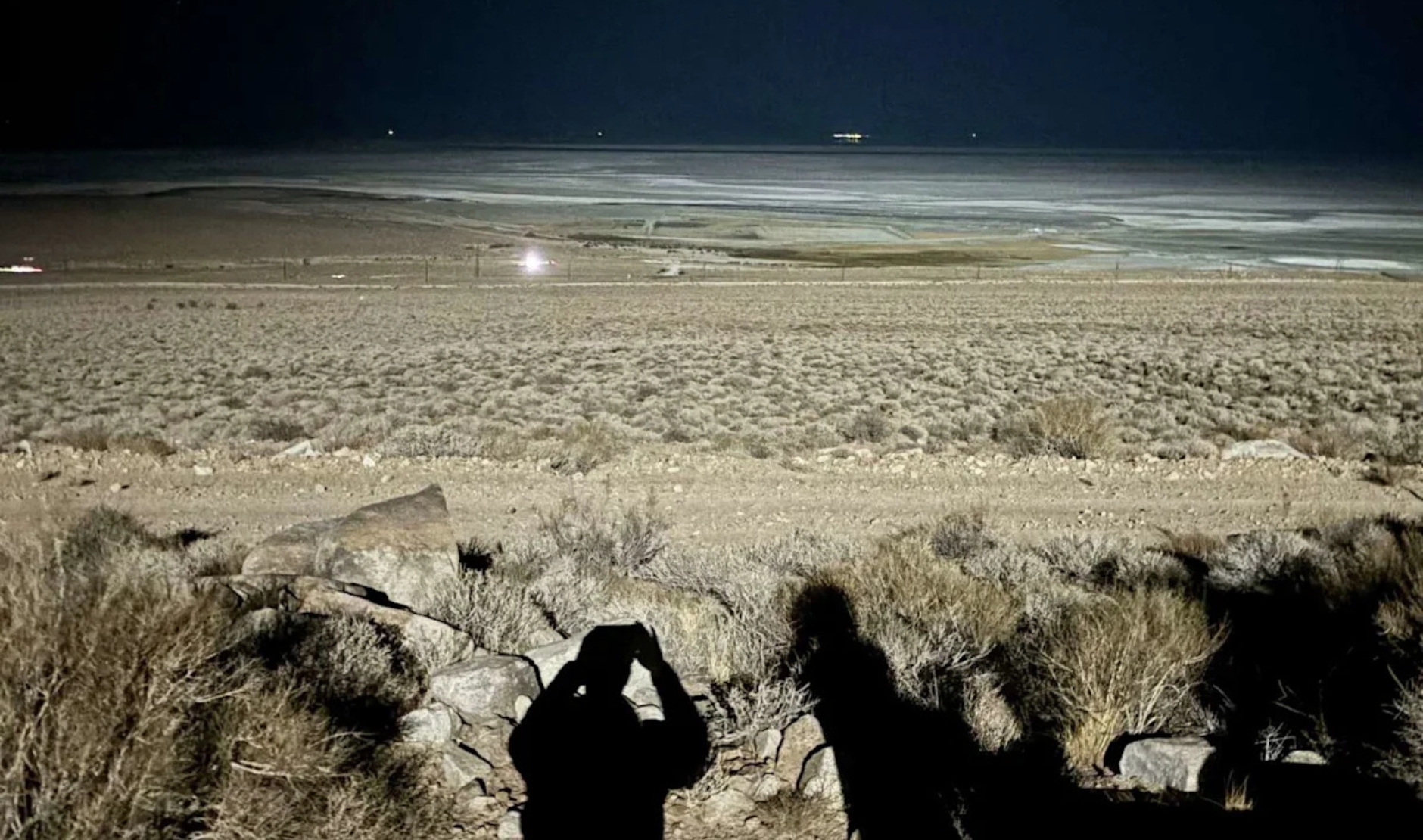
On the night of Saturday, October 10, residents of Lone Pine, California, and drivers along Highway 395 were startled by an extraordinary, blinding light.
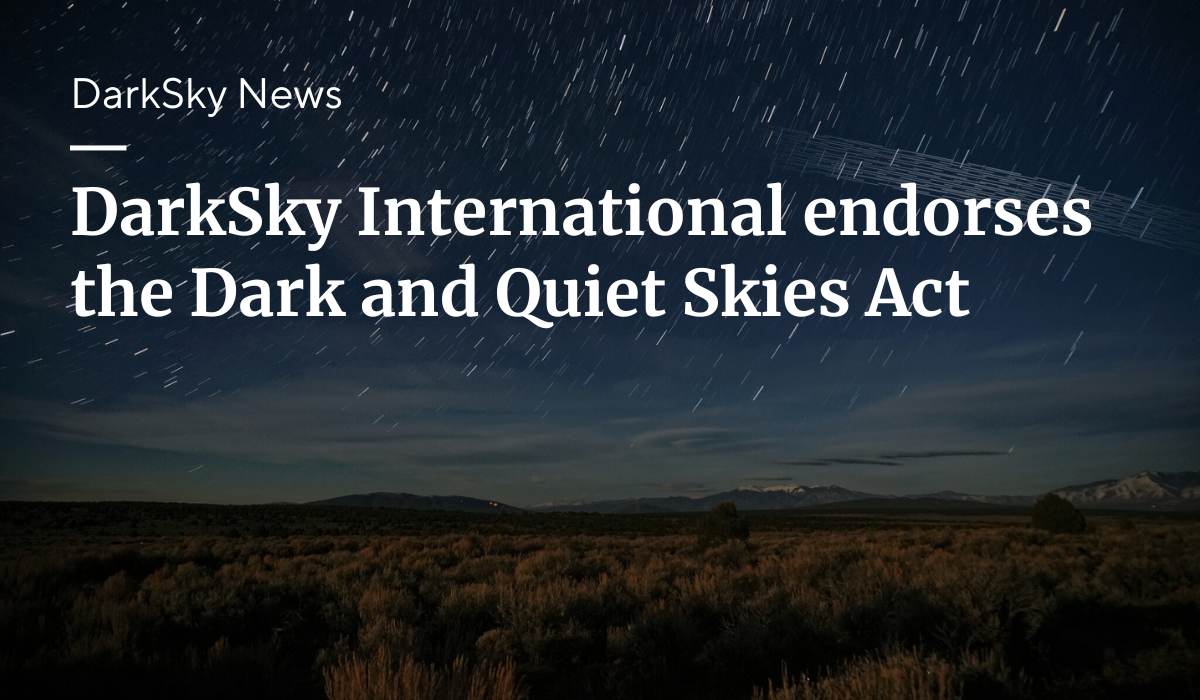
In the Owens Valley, beneath towering Mount Whitney, the Milky Way stretches across some of California’s darkest skies. The surrounding public lands, including the Alabama Hills National Scenic Area, are known for their exceptional darkness. But on a moonless night, when the sky should have been at its darkest, powerful beams flooded an estimated 19,200 acres, an area larger than Manhattan, with light twice as bright as a full moon.
The light looked otherworldly, but it didn’t come from space. At least, not yet.
High above town, along the remote Horseshoe Meadows Road, the Los Angeles-based startup Reflect Orbital had hauled two giant spotlights up the mountainside, aimed them at the dark valley below, and flipped the switch.
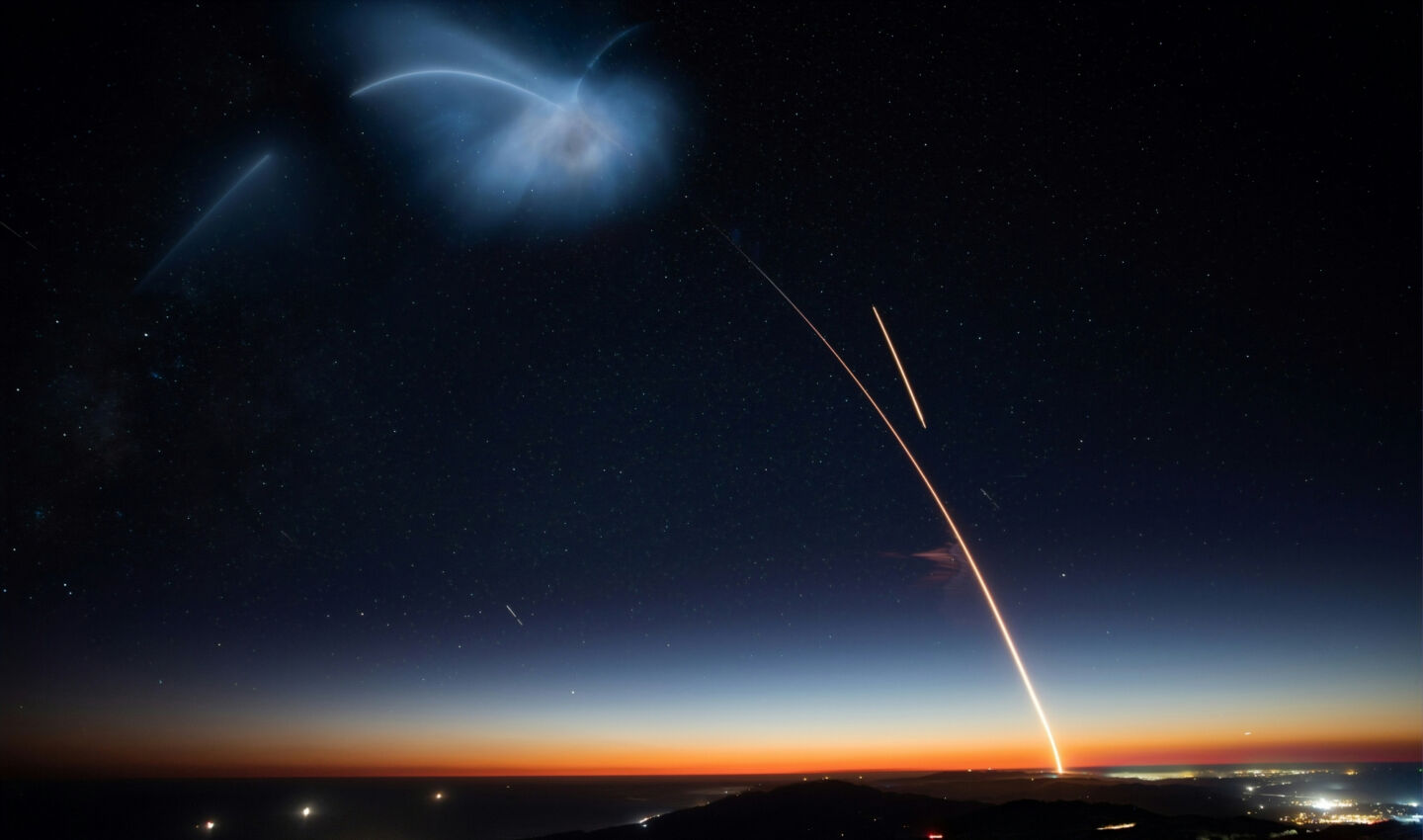
It was a rehearsal for something far bigger: a demonstration of the illumination the company hopes to one day deliver from swarms of thousands of satellites equipped with mirrors designed to redirect sunlight back to Earth after dark.
Reflect Orbital has made ambitious claims for the technology, from extending the productive hours of solar farms to aiding search-and-rescue operations. In a recent social media post, the company described its potential for such lifesaving work as transformational. The Lone Pine test was a chance to put that promise to the test.
But the local rescuers who participated came away less convinced.
Phillip Cash leads operations for China Lake Mountain Rescue Group, an all-volunteer team based in Ridgecrest. When Reflect Orbital reached out a week before the test, the team was eager to help. “My team is largely scientists, engineers, technicians,” Cash told DarkSky International. “We live for this sort of stuff.”
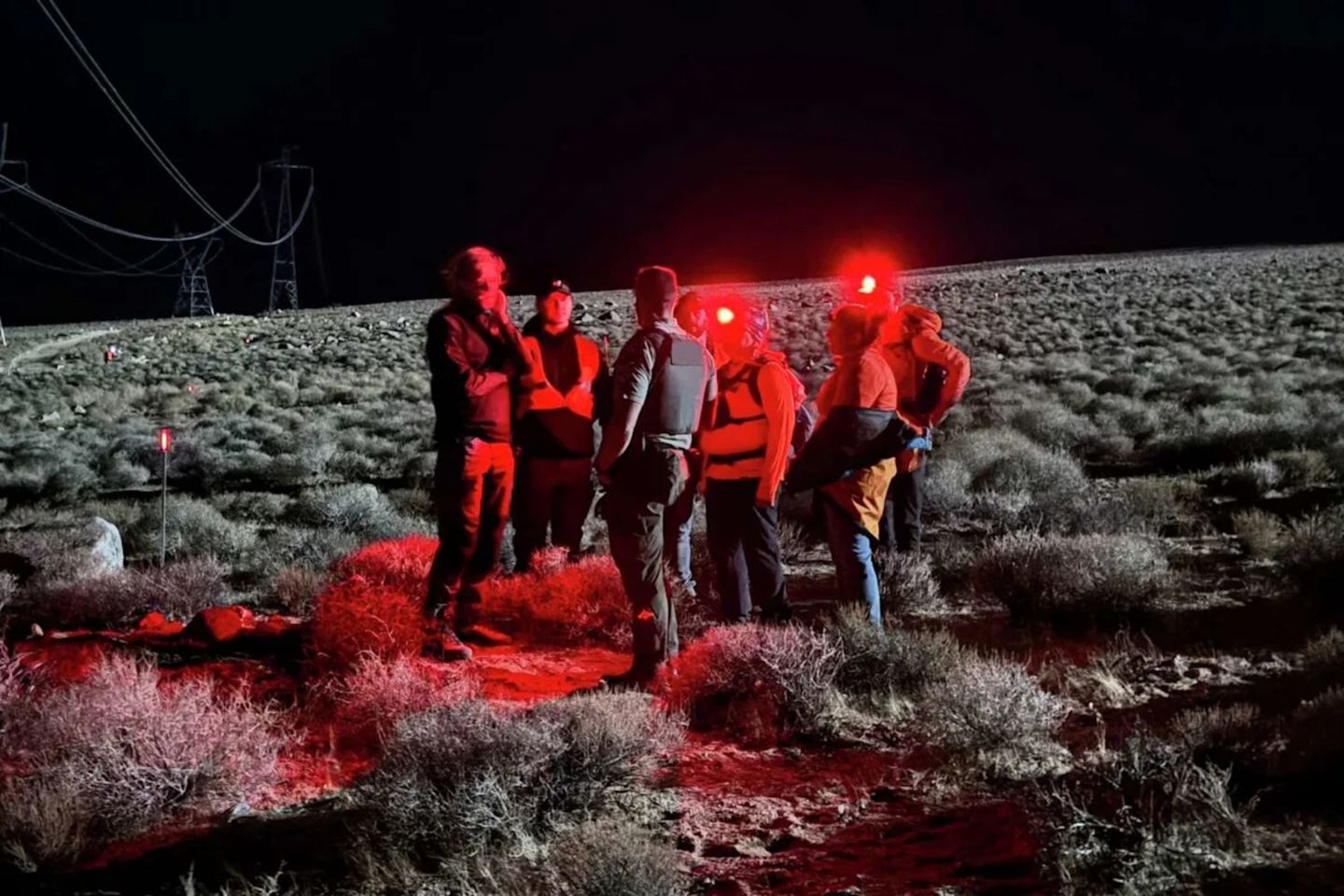
The company asked the group, along with Inyo County Search and Rescue, to run standard search-and-rescue tasks twice: “once without our big spotlight and once with the big spotlight.” Crews conducted grid searches, stretcher carries and rope rigging, first in darkness and then under the beams.
The additional light made it easier for searchers to move across rough ground. “My sense of peripheral was improved, and of course I’m less likely to step in a hole,” Cash said. But when it came to the essential work of finding people, the benefits were limited.
“With only a little exception, it was marginally better,” he said. “It’s not going to make a huge difference to search and rescue except in a few cases.” He gave the San Francisco Chronicle much the same assessment: “We’re pretty good at working at night already.”
The test had limitations, including a setup that may have exaggerated the benefits of the light. To gauge visibility, Reflect Orbital placed white, glossy boxes about four feet long in the search area, rather than the weighted rescue manikins teams often use in training. Searchers could spot the white reflective boxes from farther away under the beams, but they were a poor substitute for a lost hiker. “They don’t represent bodies, which wear clothing,” Cash said. “They don’t reflect light the same way.”
The glare from the light source presented another problem. When Cash reached the search area with the beams on, his first thought was, “Wow, I need a hat.” Rescuers wear hats at night to shield their eyes from bright light sources that interfere with night vision. Cash noted that teammates who had to look toward the light sources found the glare difficult.
The spotlights were positioned at a low angle, a worst-case scenario the company mentioned to the rescue crew, that would not be repeated when the satellites are overhead. Still, bright light in a searcher’s field of view can compromise the night vision on which rescue teams depend.
More light could even work against the mission, Cash said, a concern the rescuers raised with Reflect Orbital during their debrief. Search and rescue operates with an important principle: lost people should stay put. A landscape suddenly flooded with light could encourage them to move.
“They’re more likely to go, ‘Oh, look at all this light. Maybe I can find my way back now,’” Cash said. Someone who begins walking could stray farther from the search area or into greater danger.
Nor did the rescuers expect the technology to offer much benefit for helicopter operations. Helicopters already operate at night using night-vision goggles and terrain systems, while night hoisting remains subject to strict limitations. A light source that “could just fail at any moment,” Cash noted, would be difficult to rely on during a rescue.
Then there is the question of cost. Reflect Orbital has discussed pricing comparable to helicopter time, putting the service well beyond the budgets of most rescue teams.
“Most search and rescue teams, at least in California, will not be able to afford it,” Cash said. “They won’t even think about affording it. We cannot pay for that sort of thing.” Any purchase, he said, would likely have to come from a state agency such as the California Office of Emergency Services, particularly for larger-scale disaster response operations.
Cash calls himself “a big technology optimist,” and he does see circumstances where the light could make a meaningful difference: large-scale disasters.
After an earthquake or mudslide, emergency crews may work around the clock for days without reliable power. In such conditions, he said, the light “will make a world of difference.”
He pointed to this year’s earthquakes in Venezuela, where, he said, “there was no power option. Everything was battery powered.” He also recalled the 2019 earthquakes near Ridgecrest, when even moonlight made a difference on the ground.
For Cash, disaster response remains the most promising application of the technology, even if its usefulness for routine search-and-rescue operations remains uncertain.
For DarkSky International, the Lone Pine test reinforced concerns we have raised since Reflect Orbital first approached us. We do not oppose innovation, but technologies with the potential to fundamentally alter the nighttime environment must be developed responsibly, with careful consideration of their impacts on wildlife, communities and the night sky itself.
When the company’s plans drew attention earlier this year, DarkSky CEO Ruskin Hartley told SFGATE he was “extremely concerned,” calling the project “an unprecedented assault on the nighttime environment.”
Reflected light does not stop at the boundaries of a search area. It reaches nearby communities, roads, and airspace. This raises serious questions about whether intense glare could create additional safety hazards during an already stressful emergency, particularly for oncoming drivers or pilots responding to the scene.
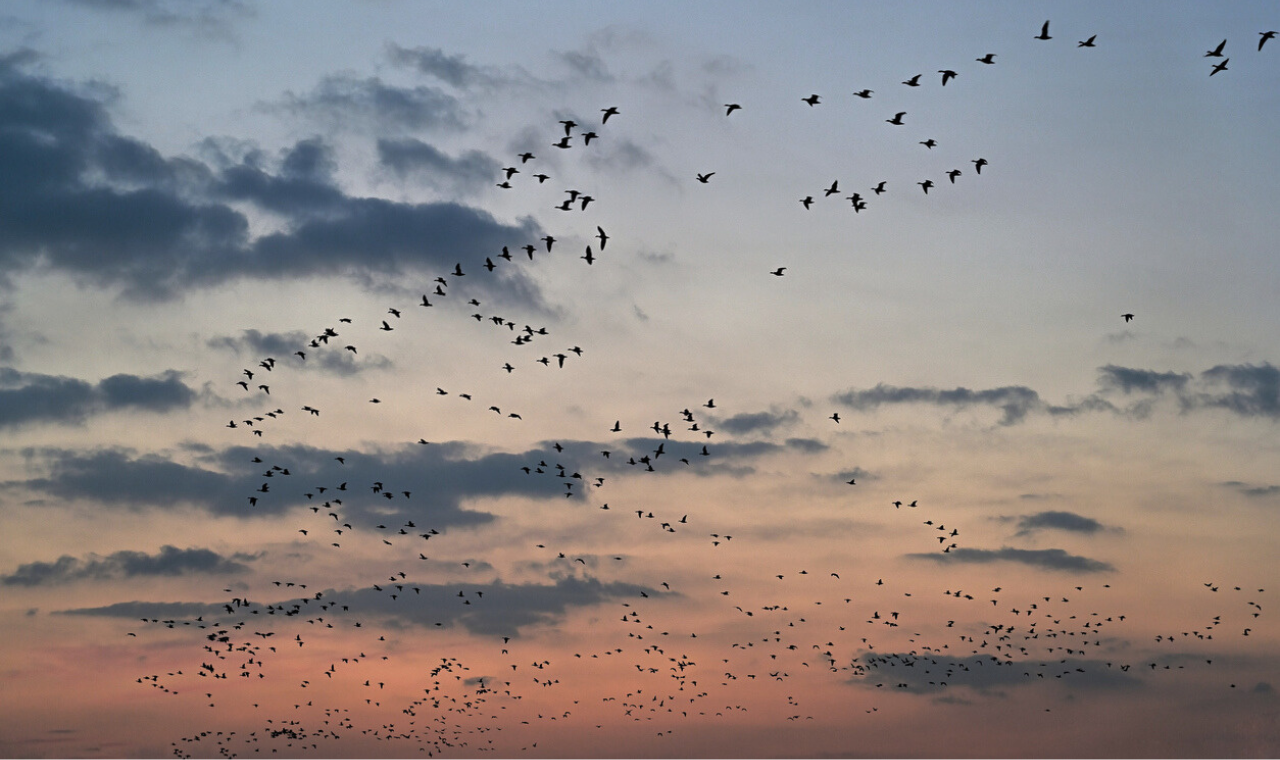
Beyond these immediate safety concerns, artificial illumination from orbit could disrupt wildlife migration, natural light-dark cycles, human sleep, and astronomical research. It also threatens the exceptional darkness of the public lands that draw visitors to the Eastern Sierra.
Yet despite the lack of a comprehensive safety or environmental review, the FCC has approved Reflect Orbital’s first satellite, with a launch planned for 2027. And the company’s ambitions extend far beyond a single satellite. Reflect Orbital aims to place more than 50,000 mirrors in orbit by 2035. Researchers cited by Scientific American estimate that a constellation of that size could make the night sky three to four times brighter.
For residents of Lone Pine, the test offered a glimpse of that possible future. Many traveling along Highway 395 had no idea what they were seeing, let alone that the light was part of a test for technology that could one day illuminate landscapes around the world.
Who owns the night? Who decides when and where light from space can be directed toward communities and protected landscapes? And who gets a say before it happens?
Innovation and dark skies can coexist. But decisions that could fundamentally change the nighttime environment should not be made without understanding the consequences or giving the people beneath those skies a voice.