









On August 6, 2026, DarkSky International—together with the American Bird Conservancy, Environment America, and Public Employees for Environmental Responsibility, represented by Earthjustice—filed a formal Application for Review asking the full Federal Communications Commission to reverse its Space Bureau’s approval of Reflect Orbital Inc.’s Earendil-1 satellite. Here’s what’s at stake, what we’re arguing, and what happens next.
FCC Application for Review (PDF)
Annex Listing Mitigations (PDF)
Reflect Orbital is a startup with a novel pitch: sell sunlight after dark by reflecting it down from orbit. Its first satellite, Earendil-1, is designed to unfold a mirror roughly a tenth of an acre in size at an altitude of 600–650 km, then steer reflected sunlight to specific locations on the ground. The company has described this as a “crucial testbed” for a much larger business. Publicly, it has said it plans to scale to 1,000 satellites by the end of 2028, 5,000 by 2030, and 50,000 by 2035—each successive generation carrying a larger mirror than the last. Reflect Orbital envisions selling on-demand illumination through a phone app, marketed for uses like replacing streetlights, extending industrial or agricultural working hours, and lighting outdoor events.
Reflect Orbital’s FCC application sought authorization for just the one test satellite. But it has told the Commission it plans to seek approval for additional satellites, and its public statements make clear the single-satellite filing is a first step toward a constellation.
On July 9, 2026, the FCC’s Space Bureau granted Reflect Orbital’s application, finding it served the public interest and fell outside the scope of environmental review under the National Environmental Policy Act (NEPA). It did so despite receiving more than 1,800 comments and replies in the docket, the large majority opposed, from astronomers, pilots, conservation groups, and members of the public.
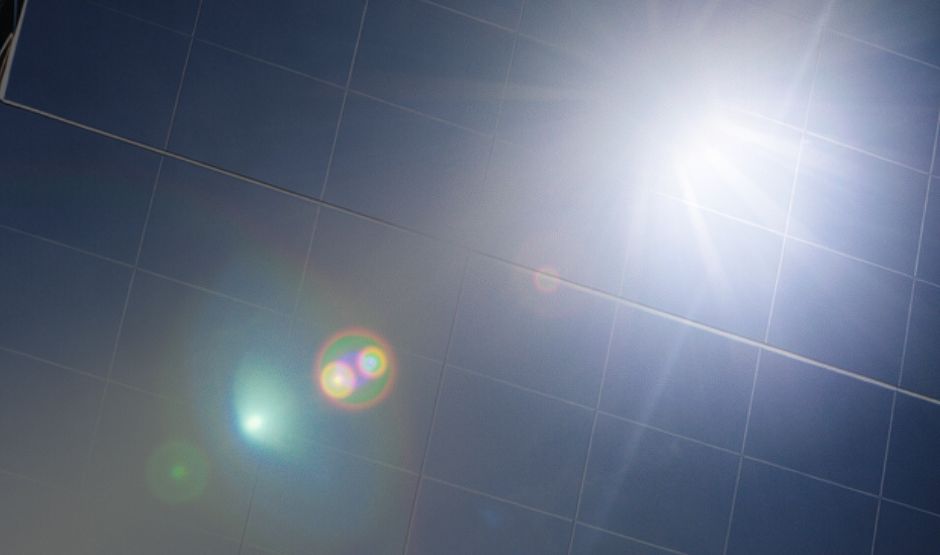
Even a single Earendil-1 satellite is expected to project a beam of reflected sunlight roughly 5 km—over 3 miles—in diameter as it sweeps across the ground, with scattered light extending further. Commenters, including DarkSky, raised a range of concerns that the Space Bureau’s order did not adequately address:
Our filing argues the Space Bureau made two kinds of errors in dismissing these concerns. First, a legal one: the Bureau claimed its review authority under the Communications Act and NEPA extends only to frequency interference and orbital debris, not to what the mirror actually does once in orbit. We argue that reading conflicts with the statute’s text, decades of case law, and the FCC’s own past decisions recognizing its authority over the physical operations and environmental effects of satellites. Second, a factual one: where the Bureau did address the record in the alternative, it relied on unsupported assertions and, in some cases, didn’t engage with the evidence at all — including dismissing eye-injury risk without addressing DarkSky’s technical report, and concluding effects would be minimal without knowing (or requiring disclosure of) where Reflect Orbital actually plans to point the mirror.
Our primary request is straightforward: reverse the Space Bureau’s order, and require a lawful public-interest and NEPA review—including a proper Environmental Assessment or Environmental Impact Statement—before Reflect Orbital’s satellite is authorized to operate.
In case the Commission declines to reverse the approval outright, we filed a companion annex proposing 16 specific conditions Reflect Orbital would have to satisfy. Grouped roughly by purpose, they’d require:
Before any operation begins: an independent scattered-light and sky-brightness analysis; a derivation of the eye-safety threshold based on international (ICNIRP) guidelines; an approved beam-pointing and slew-control plan to prevent flash-blinding pilots and drivers; a full aviation safety risk analysis reviewed by the FAA; an operational public warning and notification system; and documented consultation with national science bodies, including the International Astronomical Union’s Centre for the Protection of the Dark and Quiet Sky.
Once operating: a quantitative cap on ground-level brightness; advance public disclosure of exactly where and when illumination will occur; a 160 km buffer around registered observatories; exclusions over national parks, wildlife refuges, wilderness areas, Dark Sky Places, critical habitat for listed species, and Important Bird Areas; no illumination during peak spring and fall bird migration or after local midnight without specific justification; documented consent from affected state, local, and Tribal governments; and coordination with the FAA including advance airspace notification for each illumination event.
For verification and enforcement: independent third-party measurement of actual brightness, published on a regular schedule, with automatic suspension if measured brightness exceeds what was modeled; and a demonstrated fail-safe mode that can stow or defocus the mirror quickly, with mandatory cessation and incident reporting if there’s a credible report of eye injury or an aviation or roadway incident.
On scope: the authorization would be limited to a defined, test-only set of illumination events, with an explicit statement that it sets no precedent for approving Reflect Orbital’s full planned constellation—any future expansion would need its own application backed by environmental review of the whole projected system, not just one satellite at a time.
The Application for Review and mitigations annex are now part of the FCC’s public record in this proceeding. There’s no set timeline for when the full Commission will rule. We’ll share updates with DarkSky members as the case moves forward—and we’re grateful to everyone who submitted comments during the public comment period; that record is a meaningful part of why this fight isn’t over.

During the last new moon, I spent an hour standing in the quiet desert of Saguaro National Park. I …