










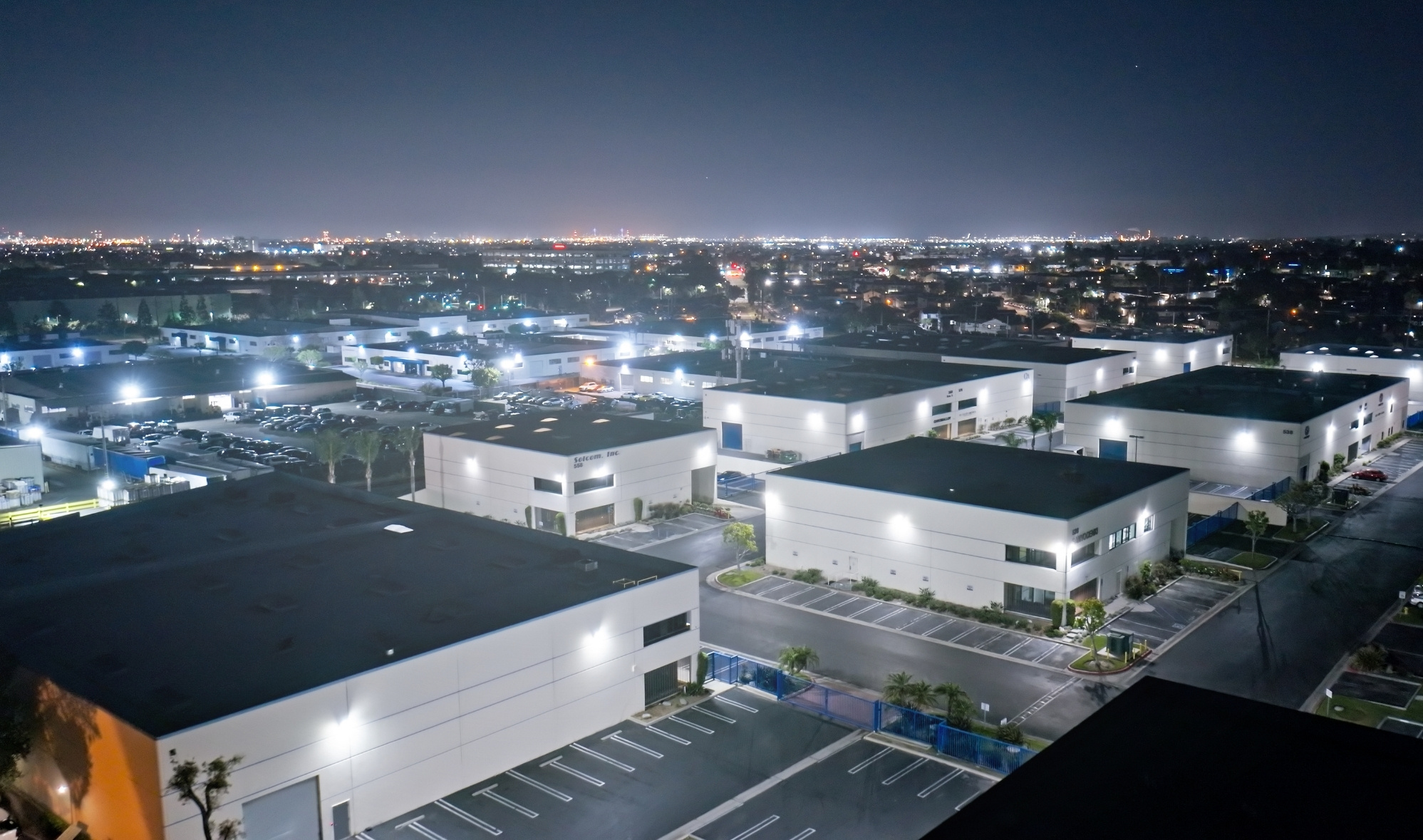
As the global demand for AI and cloud computing grows, the rapid expansion of data centers has become a major topic of debate in local zoning boards. While much of the conversation focuses on energy and water use, the impact of industrial light pollution on our nocturnal environment is a critical piece of the puzzle.
At DarkSky International, we believe that digital progress doesn’t have to mean the end of the night. Our goal is to protect the darkness for wildlife, for human health, and for the inspiration that comes from seeing a star-filled sky.
We recognize that local communities must decide if a data center is the right fit for their economy and resources. However, DarkSky takes a firm stance on siting:
For facilities deemed appropriate for their location, light pollution can be mitigated by following the Five Principles of Responsible Outdoor Lighting and technical standards like IES RP-43-22. We recommend four primary pillars for any industrial lighting plan:
Data centers often use “brute force” lighting for security. However, following professional standards, light levels should be kept to the absolute minimum necessary. If a space isn’t actively being used by humans, it shouldn’t be lit like a stadium.
Our municipal template now advocates for an 80-degree cutoff angle. This goes beyond “zero uplight”—it ensures the beam is tight and targeted. This prevents light from spilling horizontally into the neighborhood or creating the glare that actually hinders security cameras.
Data centers are high-tech hubs; their lighting should be too. We advocate for motion sensors and dimming to reduce light levels significantly during late-night hours when staff activity is minimal.
Blue-rich white light scatters more easily in the atmosphere, increasing skyglow. We advocate for warmer color temperatures (up to 3000K) to protect the circadian rhythms of local wildlife and residents.
Industry standards (such as IES recommendations) prove that safe, functional light levels are often much lower than many developers realize. Using these maintained illuminance levels in your local advocacy can prevent over-lighting:
Note: These levels provide ample visibility for security while protecting the night sky. Developers should refer to the relevant national standard, such as IES RP-8 (Lighting for Roadways and Parking Facilities) in the United States.
The results of applying these principles are measurable and dramatic:
Data centers do not have to be beacons of light pollution. By following the Five Principles of Responsible Outdoor Lighting—using light only where it’s needed, when it’s needed, and in the amount needed—we can keep our data in the cloud and the stars in our sight.
If a data center is proposed in your area, ask the developers these three questions:
Want to do more? Download our Municipal Template to help your city leaders draft stronger lighting ordinances today.

As long as Earth has spun on its axis in orbit around the sun, the planet has known night. …
During the last new moon, I spent an hour standing in the quiet desert of Saguaro National Park. I …