










Tennant Creek, Australia
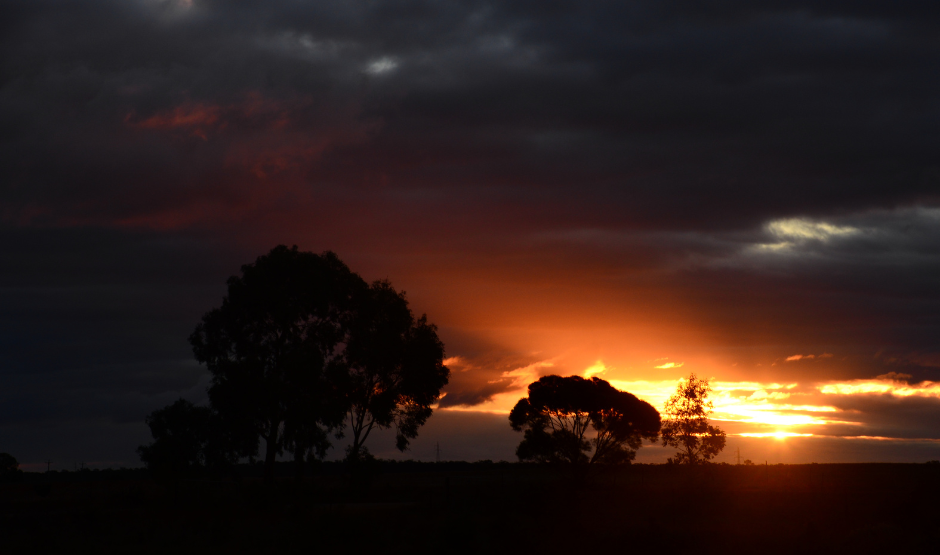
Karlu Karlu Conservation Reserve, famous for its large, striking granite boulders and cultural significance for the Aboriginal people of the area, is located 100 kilometers south of Tennant Creek in the Barkly Region of the Northern Territory, Australia. The Reserve is the main natural attraction in the Tennant Creek region and a popular rest stop for travelers on the Stuart Highway.
Almost all of the 1800-hectare Reserve is a registered sacred site and is significant to the Kaytetye, Warumungu, Warlpiri, and Alyawarra Traditional Owners, whose ancestors have managed the area since creation time. Karlu Karlu is a cultural landscape that is central to Traditional Owners’ identity. Their affiliation with the land involves a complex set of traditional rights, benefits, obligations, and responsibilities. Stories and traditions, sacred sites and related “dreamings” are important elements of the Reserve’s cultural value.
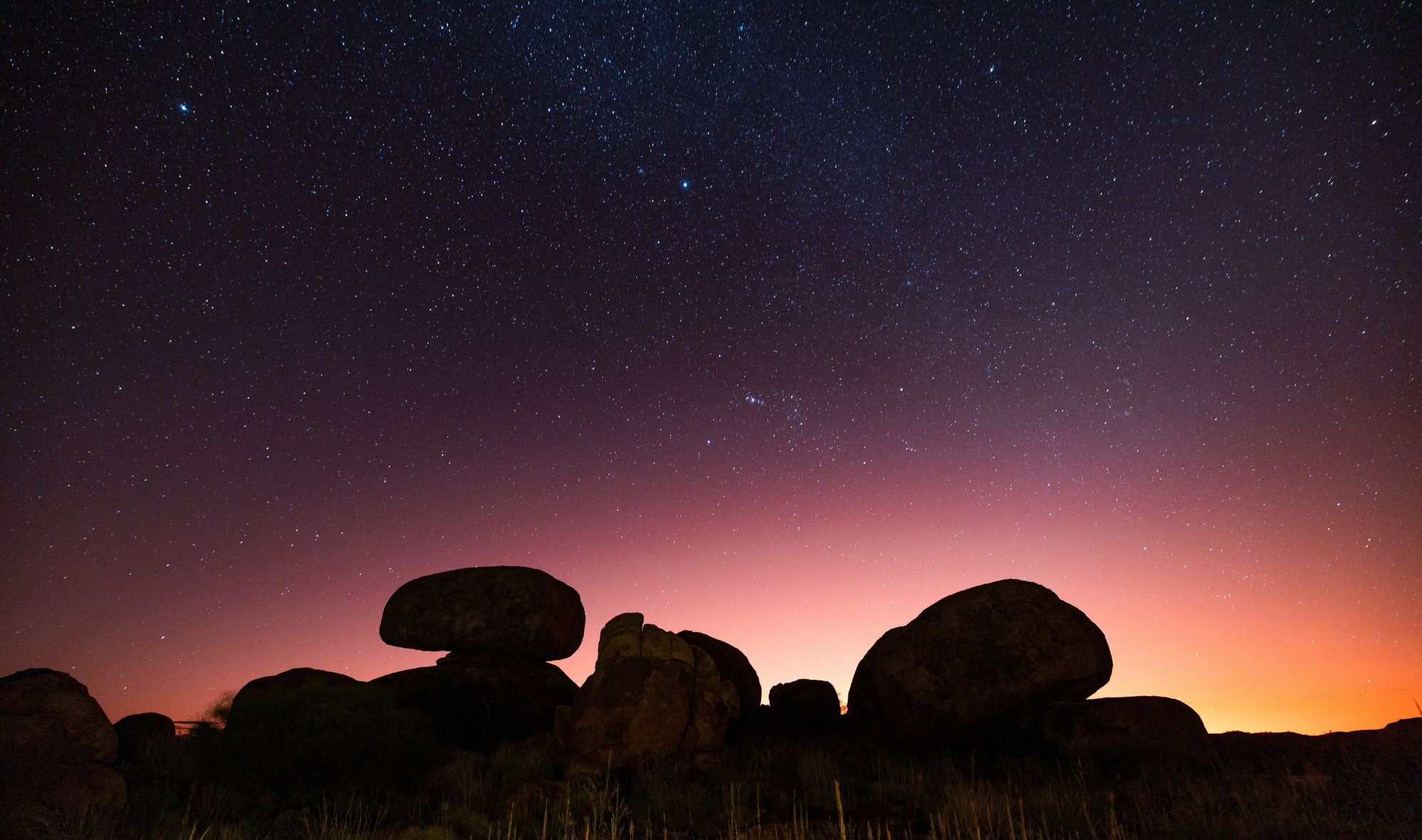
Karlu Karlu, famous for its granite boulders, is one of outback Australia’s most widely photographed and recognized sites. The Reserve is located within the Davenport-Murchison Bioregion and is home to approximately 116 native plant species, 83 bird species, 10 native mammal species, 30 reptile species, and 4 frog species, as well as one drought-surviving crab species. The site also preserves remnants of past mining and other activities of local historical value. Karlu Karlu is listed on the Register of the National Estate as a site of national significance for its extraordinary geological formations. The fascinating geological marvel can be explored through a short self-guided walking trail with informative signage.
“This award is an excellent example of how dark sky conservation can complement the protection of culturally and environmentally significant places. Its exceptionally dark skies, deep cultural connections, and iconic landscape make it a natural fit for International Dark Sky Sanctuary certification. As the first certified site in the region, this creates an exciting opportunity to build broader awareness of dark sky conservation locally,” remarked Amber Harrison, Dark Sky Places program manager.
The Department of Tourism and Hospitality led the submission process with support from a number of important stakeholders, including the Reserve’s Traditional Owners, Central Land Council, Barkly Regional Council, Tourism Central Australia, and the Devils Marbles Hotel.
Philip Cowan, Senior Director, NT Parks and Wildlife Operations, said, “This designation will help protect the night sky at Karlu Karlu, ensuring any future development must adhere to strict lighting guidelines, ensuring preservation of the night sky for future generations.”
“This is a stellar achievement, to see a Dark Sky Sanctuary designated at Karlu Karlu. It’s a big deal for tourism in the Barkly, and it’s yet another reason why the Northern Territory truly is a one-of-a-kind destination.”
“Our night skies are some of the darkest in the world – a stargazer’s dream! And with wide-open spaces like Karlu Karlu, there’s no shortage of exceptional viewing opportunities for visitors to Barkly. We couldn’t be prouder as a government to back the Territory’s unique regions,” said the Minister for Tourism and Hospitality, and Parks and Wildlife Marie-Clare Boothby.
The Department of Tourism and Hospitality intends to develop formalized night-sky viewing infrastructure following its successful designation. Signage will also be developed that will promote dark sky preservation and enhance viewing experiences, including interpretation of the night sky through Aboriginal-led storytelling.
About the International Dark Sky Places Program: Founded in 2001, the International Dark Sky Places Program is a non-regulatory and voluntary program encouraging communities, parks, and protected areas worldwide to preserve and protect dark sites through effective lighting policies, environmentally responsible outdoor lighting, and public education. When used indiscriminately, artificial light can disrupt ecosystems, impact human health, waste money and energy, contribute to climate change, and block our view and connection to the universe. Karlu Karlu Conservation Reserve now joins more than 270 Places that have demonstrated robust community support for dark sky advocacy and strive to protect the night from light pollution.
Learn more by visiting https://darksky.org/what-we-do/international-dark-sky-places/.
About DarkSky International: The mission of DarkSky is to preserve and protect the nighttime environment and our heritage of dark skies through environmentally responsible outdoor lighting. Learn more at darksky.org
Media Contacts
Media, Department of Tourism and Hospitality, Northern Territory Government
+61 0476 844 832
[email protected]