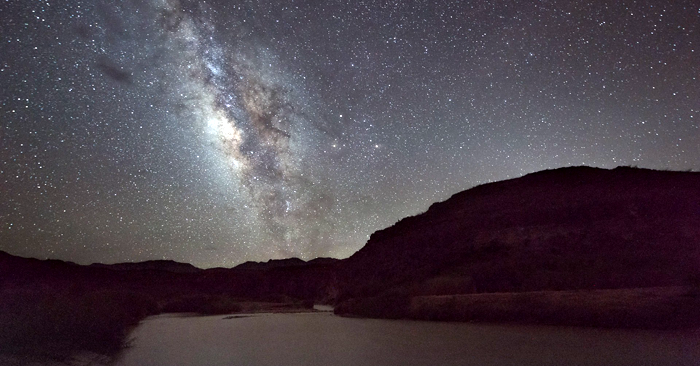









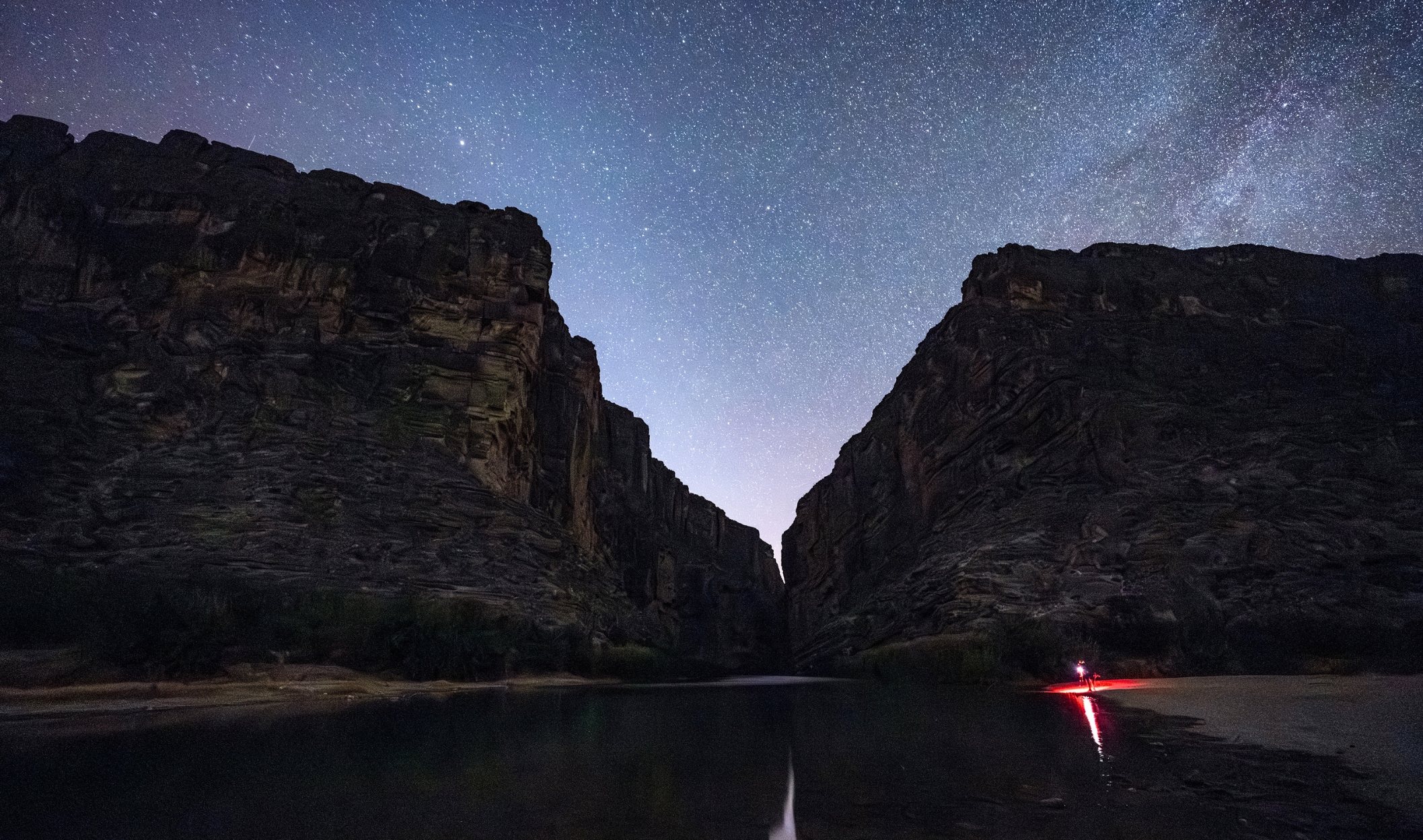
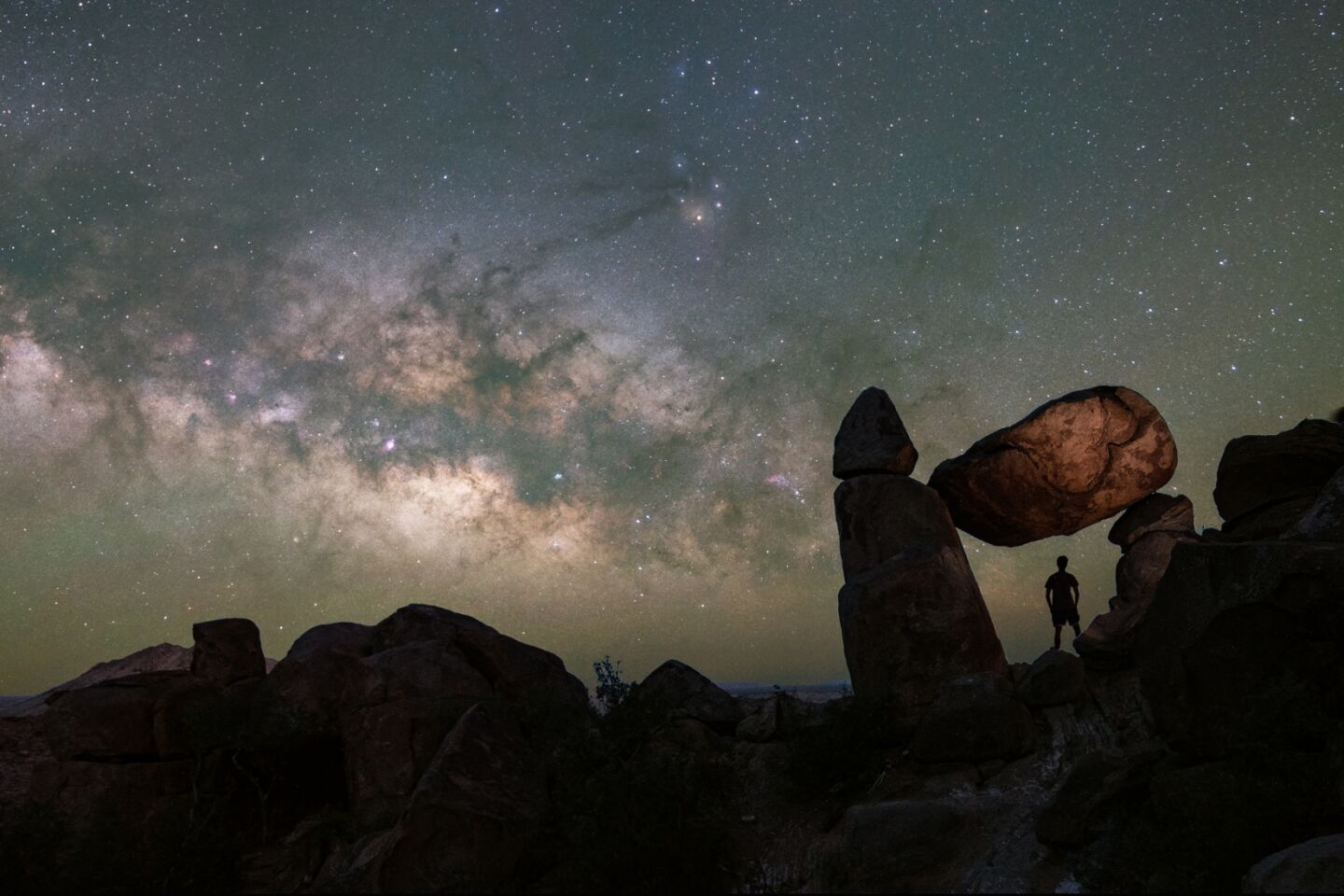
Big Bend National Park is one of the most extraordinary landscapes in the United States: towering canyons, ancient rivers, and some of the darkest night skies remaining in North America. It sits within a binational protected landscape shared with Mexico and as a certified DarkSky Park, is an integral part of the Greater Big Bend International Dark Sky Reserve, certified in 2022 after decades of work by scientists, land managers, and the people who call this remote stretch of the borderlands home.
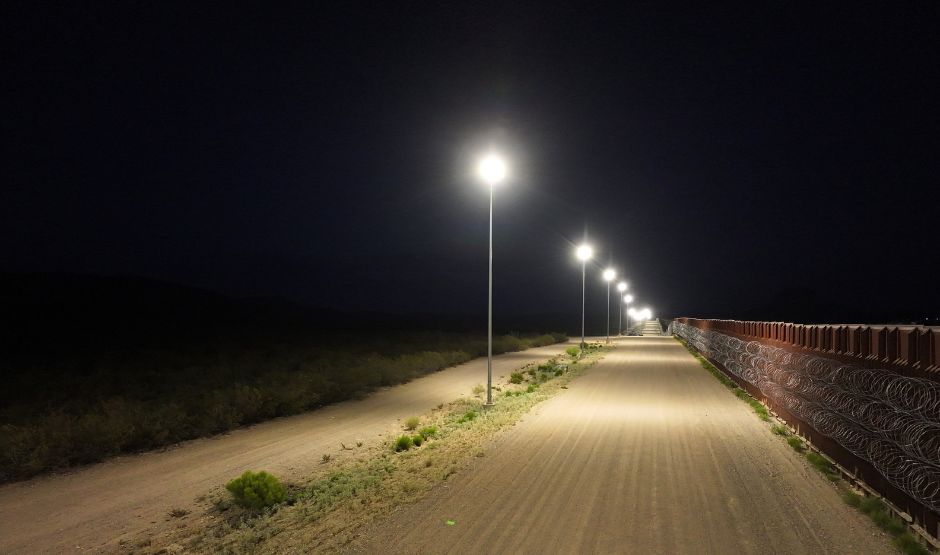
Over recent weeks, large-scale construction tied to border wall infrastructure has begun near Santa Elena Canyon, one of the park’s most iconic and culturally significant places. Construction camps and staging areas have also risen across the region, including on land adjacent to Black Gap Wildlife Management Area, a designated Dark Sky Sanctuary, and Big Bend Ranch State Park, a designated Dark Sky Park—both part of the larger Dark Sky Reserve.
DarkSky does not take a position on border security policy; that question sits outside our mission and our expertise. Our position, set by our board, is simple: naturally dark places should remain dark. Any large-scale infrastructure project, whatever its purpose, that brings sustained construction lighting into one of the darkest protected landscapes in North America raises exactly the kind of threat we exist to address.
Construction camps and staging areas typically run bright, unshielded lighting through the night. These sites are rarely quick to dismantle: once built, camps, staging areas, and the roads and utilities that serve them tend to remain in place for years, well beyond the original construction timeline. For a region built around some of the last truly dark skies on the continent, that kind of extended exposure to artificial light is enough to disrupt the night skies that dark sky communities across the Big Bend region depend on, and to undercut astrotourism as a genuine economic driver.
DarkSky’s position is that large-scale infrastructure development in a designated dark sky landscape should not proceed without first assessing its impacts on the nighttime environment. That review, including lighting plans, must happen before infrastructure is built. In a place protected for its exceptional night skies, darkness cannot be an afterthought. Where development is unavoidable, lighting must meet the strongest dark-sky standards and be planned in consultation with the Reserve’s land managers, Tribal partners, and local communities.
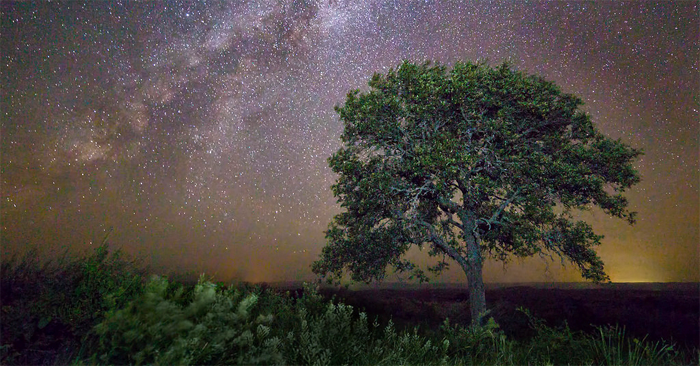
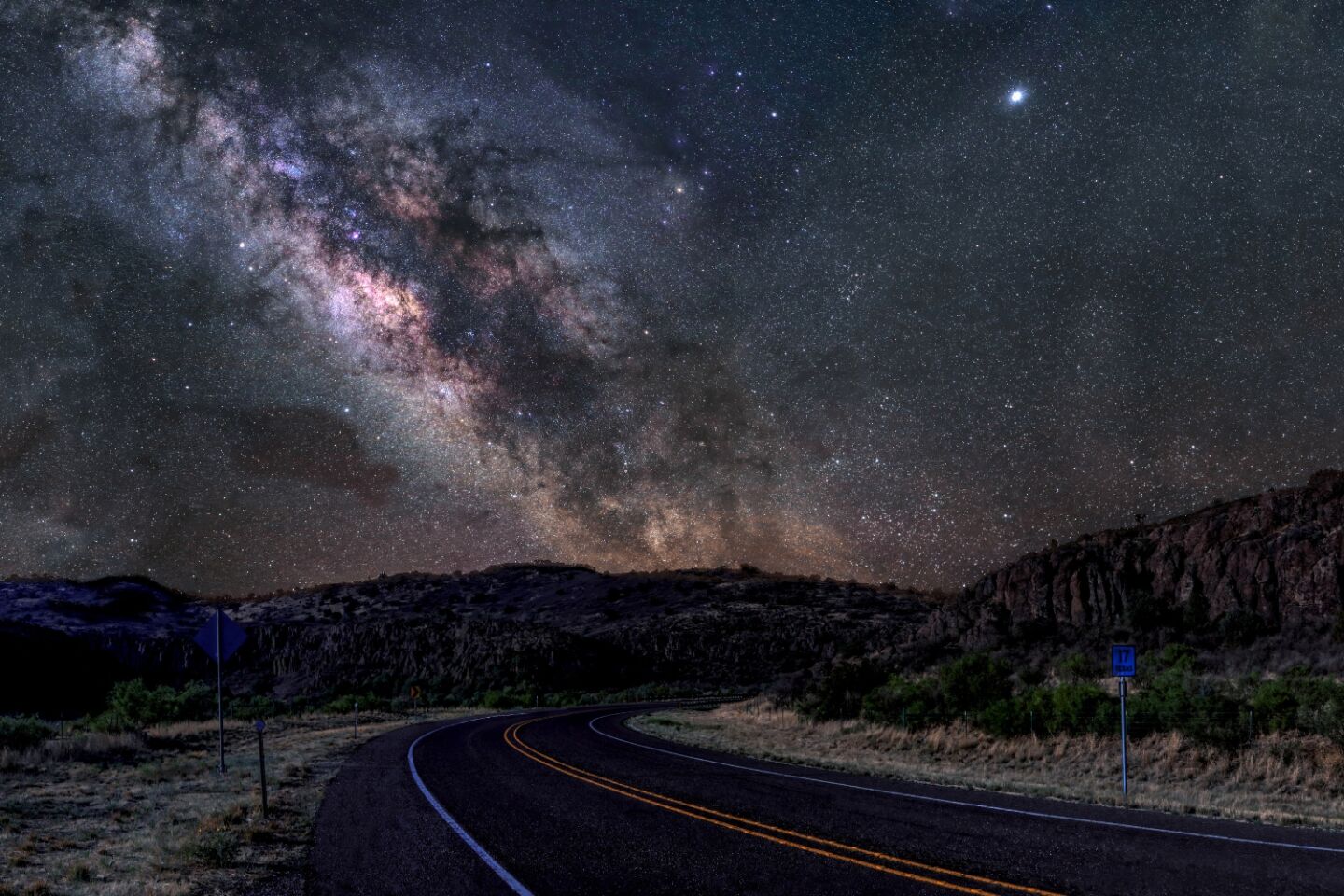
The night sky over Big Bend belongs to everyone who has ever looked up from this ground and found the Milky Way still arching overhead. DarkSky is committed to working with anyone—federal agencies, land managers, and the communities who call this region home—to keep it that way.