







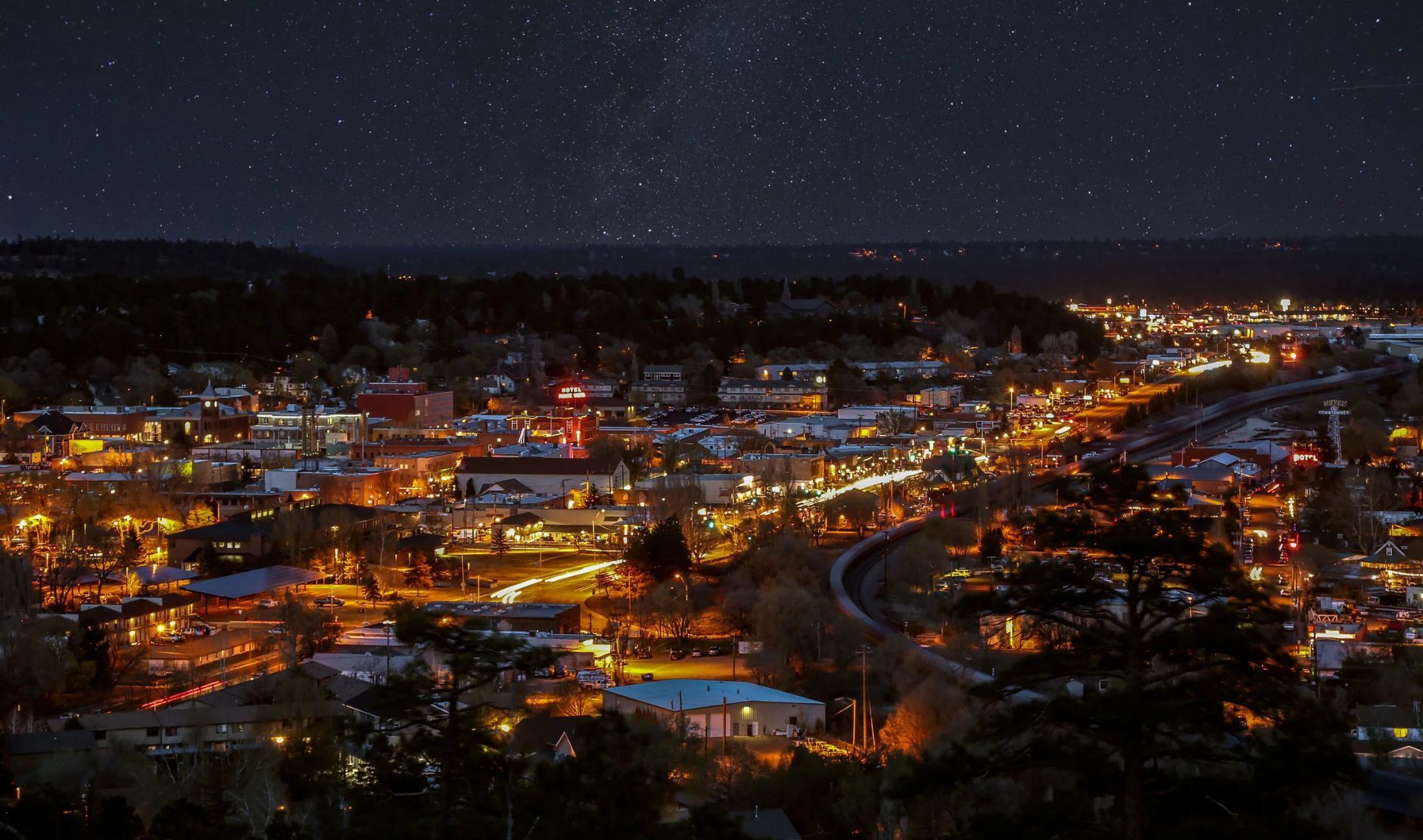
Twenty-five years ago, Flagstaff, Arizona, became the world’s first International Dark Sky City. What began as a local effort to protect its night skies has grown into a global conservation movement to protect the threatened nighttime environment.
On a clear night in downtown Flagstaff, Arizona, you can stand on a street corner, look up and find a sky crowded with stars. For a city of its size (pop. 77,000), that view is rare. It is also no accident.
Twenty-five years ago, on Oct. 24, 2001, DarkSky International, then known as the International Dark-Sky Association, recognized Flagstaff as the world’s first International Dark Sky City. The designation would become the foundation of the International Dark Sky Places program, which today encompasses 277 communities, parks, reserves and protected areas around the world.
But Flagstaff’s story began decades before this historic recognition.
Flagstaff’s appreciation for its skies stretches back more than a century. In 1892, newspaper publisher Clarkson M. Funston dubbed Flagstaff the “Skylight City” in the Coconino Sun, celebrating the town’s clear skies, abundant sunshine, and elevation of more than 7,000 feet. The nickname soon spread, becoming a source of local pride.
The city’s long history as a center for astronomy extended that appreciation for its “skylight” from day into night. At Lowell Observatory, Clyde Tombaugh discovered Pluto in 1930. In 1955, the U.S. Naval Observatory opened its own station in Flagstaff after light pollution made observing in Washington, D.C., too difficult.
By 1958, Lowell was preparing to bring a major research telescope from Ohio to a darker site outside town. Its astronomers worried that bright advertising searchlights would interfere with their work. With encouragement from the Naval Observatory, they took their concerns to city officials. The result was a ban on advertising searchlights and the world’s first outdoor lighting ordinance designed to protect the night sky.
It was an early recognition that the darkness above Flagstaff was something worth preserving.
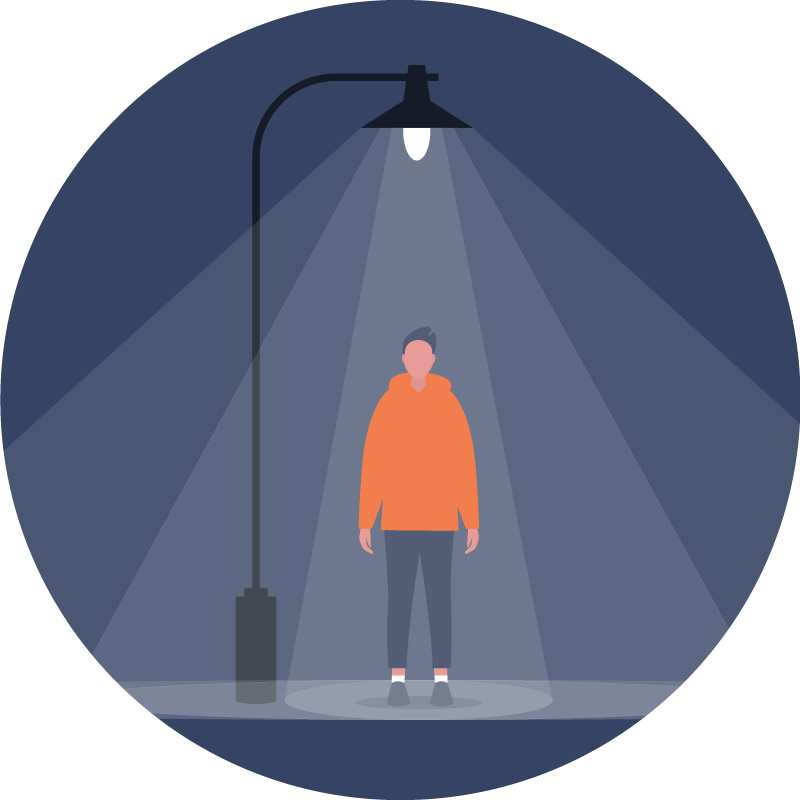
Over the following decades, the city and surrounding Coconino County went further. In 1989, they adopted groundbreaking lighting standards that restricted the amount of outdoor light permitted on a property, required shielding to limit glare and minimize light going up into the sky and required amber-colored lighting that would interfere less with astronomical research.
That same year (1989), roughly 260 miles south in Tucson, astronomer David Crawford and amateur astronomer Tim Hunter founded the International Dark-Sky Association. Alarmed by the growing glow of artificial light around observatories in southern Arizona, they set out to raise awareness of light pollution and demonstrate that communities could illuminate their streets and buildings without sacrificing the night sky above.
Together, these efforts made Arizona the center of an emerging conservation movement, one focused not on a single ecosystem, but on something essential to life across the planet: natural darkness.
At the time, light pollution was still a relatively unfamiliar environmental issue outside astronomical circles, far from the widely recognized term it has become today.
Back in Flagstaff, in 1999, three residents, concerned that light pollution continued to grow despite existing protections, decided their city could do more. Lance Diskan, a health educator at Northern Arizona University; John Grahame, an open-space advocate; and Chris Luginbuhl, an astronomer at the U.S. Naval Observatory, formed what in 2000 would be named the Flagstaff Dark Skies Coalition (FDSC).
Their approach was practical and grounded in the conviction that dark skies were for everyone, not just astronomers. They recognized businesses that used responsible outdoor lighting, worked with the city and Arizona Public Service to replace glaring roadway fixtures with shielded amber low-pressure sodium, and encouraged residents to see their night skies as something worth preserving.
Then in June 2001 they approached the International Dark-Sky Association with an idea that had never been tried: Why not recognize an entire city for its commitment to protecting and restoring the night sky?
FDSC’s proposal outlined three main goals:
The association agreed.
In October 2001, Crawford presented the world’s first International Dark Sky City recognition to Flagstaff Councilwoman Penny Trovillion and City Manager Dave Wilcox.
“This can happen everywhere,” Diskan told High Country News that fall.
He was right.
“In June 2001, the Flagstaff Dark Skies Coalition proposed the creation of an ‘International Dark-Sky City’ program to encourage communities to identify dark skies as a valuable community asset and goal,” said Danielle Adams, executive director of the Flagstaff Dark Skies Coalition. “Since the first designation of Flagstaff on October 24, 2001, DarkSky International has grown that idea into a robust, successful International Dark Sky Places program.”
What began in Flagstaff soon expanded far beyond city limits.
In 2007, Natural Bridges National Monument, in southeastern Utah’s Four Corners region, became the world’s first International Dark Sky Park. The designation extended the idea beyond cities to protected landscapes, where preserving natural darkness could become part of a broader conservation mission.
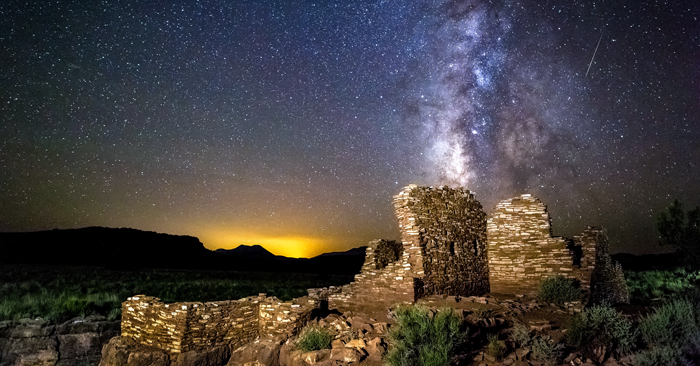
The idea caught on among national park rangers and conservation professionals. By 2016, a dozen National Park Service sites had earned certification, including three national monuments surrounding Flagstaff: Sunset Crater Volcano, Walnut Canyon and Wupatki.
Nearby communities followed Flagstaff’s lead. Sedona became an International Dark Sky Community in 2014, followed by Big Park/Village of Oak Creek in 2016, Camp Verde in 2018, and Cottonwood in 2019. The movement also extended to the region’s national parks. Petrified Forest National Park earned International Dark Sky Park status in 2018, and in 2019, Grand Canyon National Park achieved full certification after inventorying more than 5,000 outdoor light fixtures and retrofitting enough of them to meet dark sky standards.
Northern Arizona now holds one of the world’s densest clusters of certified Dark Sky Places, proof that protecting natural darkness can become a shared priority across an entire region.
But the movement was no longer confined to the American Southwest.
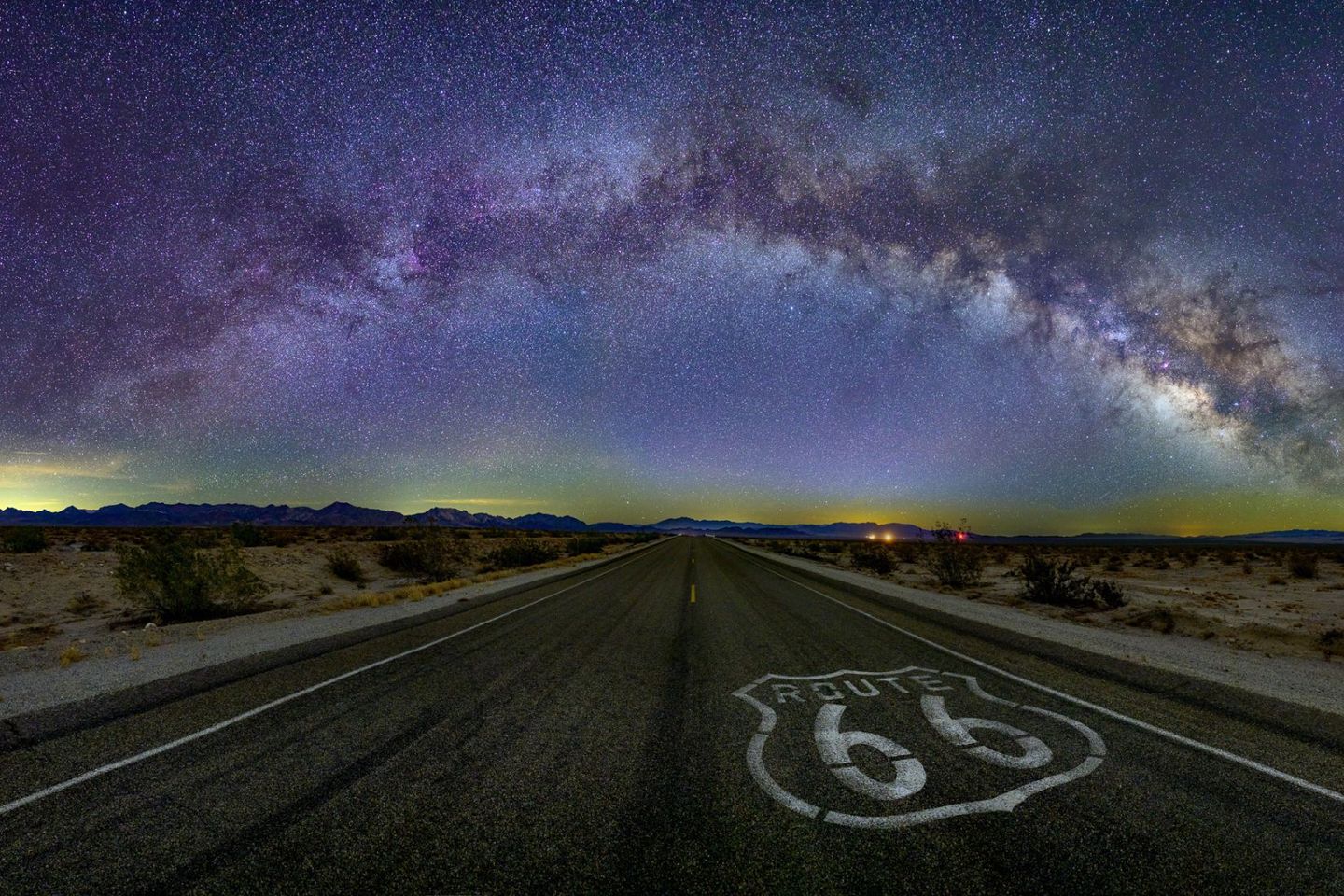
Across Europe, Asia, Africa, Oceania and the Americas, communities and protected areas began pursuing their own designations. What started as an experiment in Flagstaff had become an international conservation powerhouse, with 277 certified places around the world, now preserving the skies above more than 237,167 square kilometers of land. Entire regions and even nations are now looking toward certification, inspired by the early advocates for the night in Flagstaff.
“Twenty-five years ago, Flagstaff helped redefine what conservation could look like,” said Ruskin Hartley, CEO and executive director of DarkSky International. “It showed the world that natural darkness is a resource worth protecting, just like clean air and clean water. What began with one community has grown into a global movement, inspiring people across continents to protect and restore the nighttime environment for generations to come.”
The influence of Flagstaff’s original designation extends well beyond the growing number of certified places.
It helped establish natural darkness as a conservation priority, something that can be protected, managed and even restored. Today, International Dark Sky Places commit not only to maintaining their dark skies, but also to reducing light pollution and educating the public about the importance of the nighttime environment.
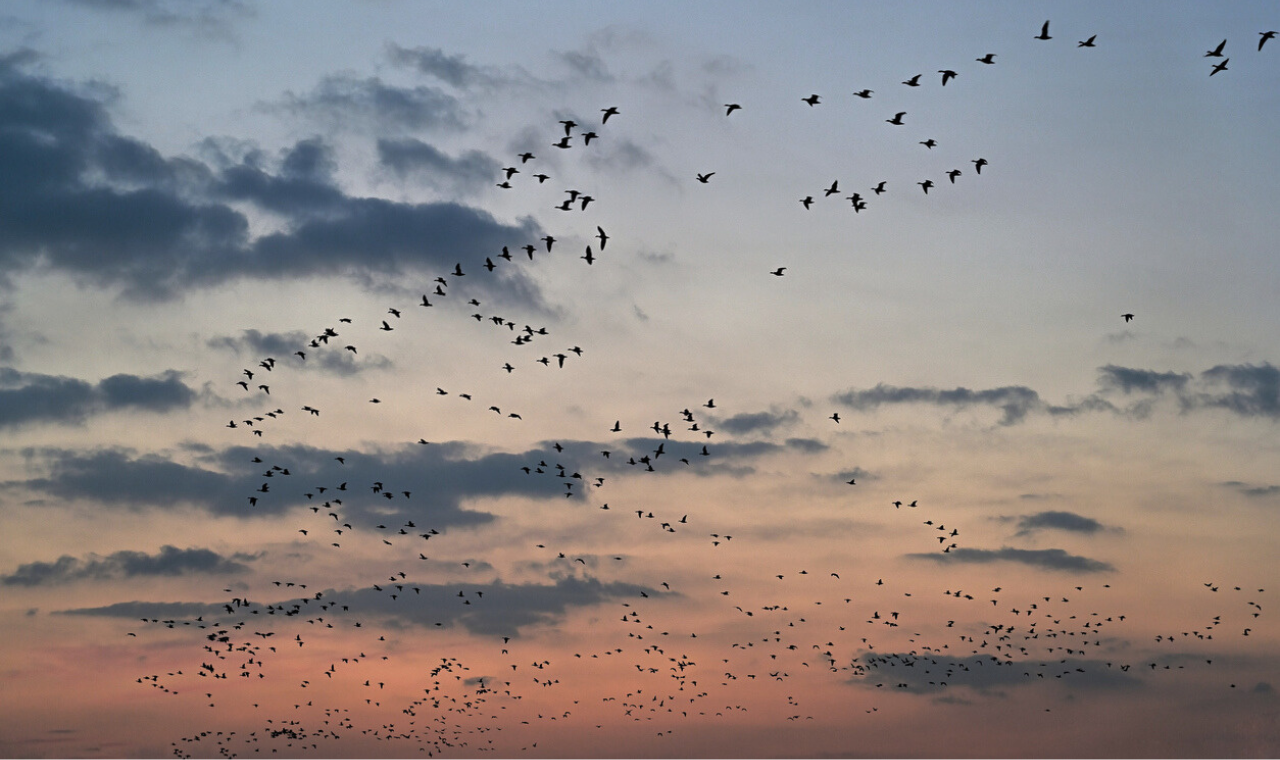
That work has implications far beyond the stars. Natural darkness supports wildlife, from migratory birds navigating the night sky to insects that depend on darkness to feed and pollinate. Protecting it can also reduce energy consumption, preserve cultural connections to the night and improve the quality of life in surrounding communities.
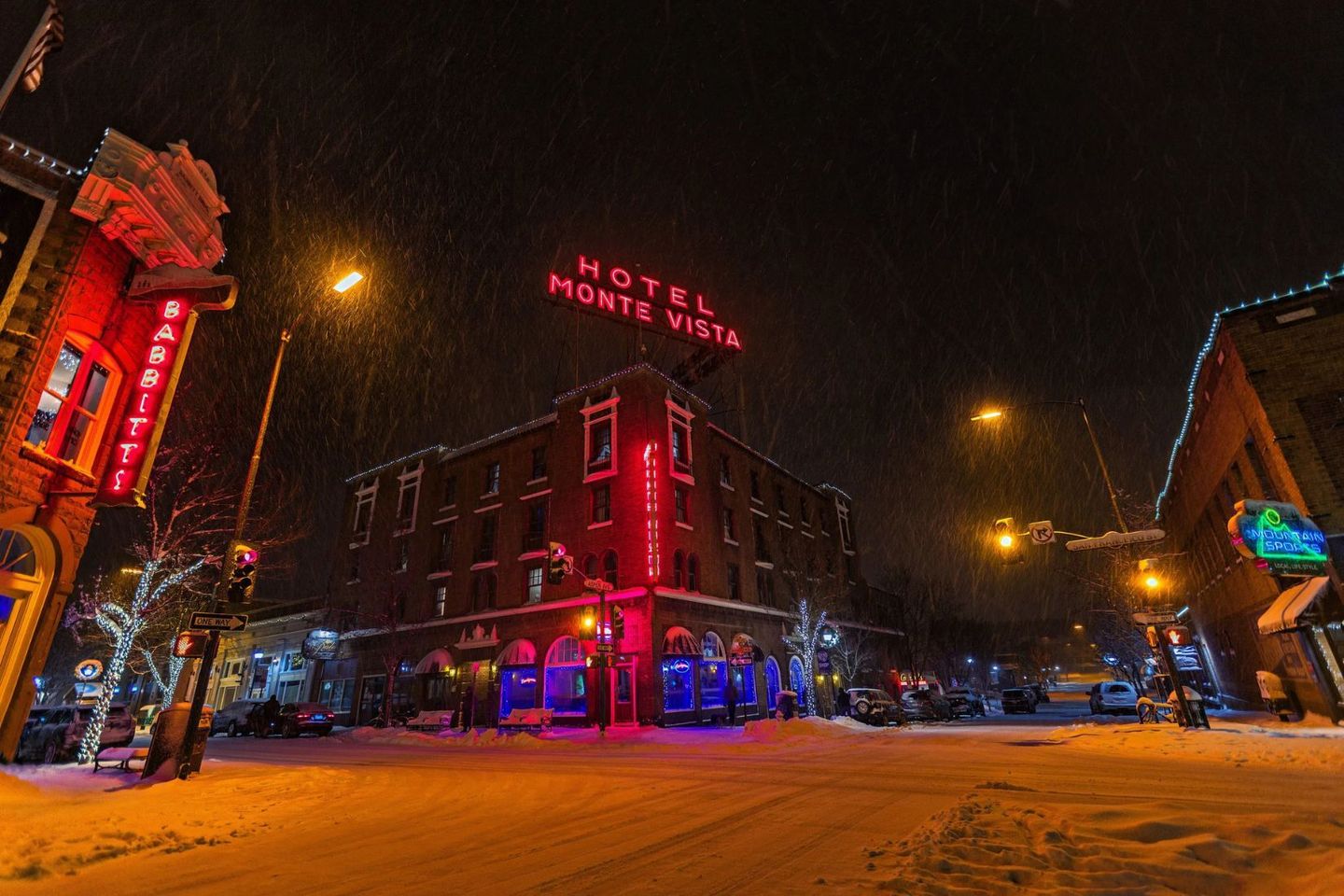
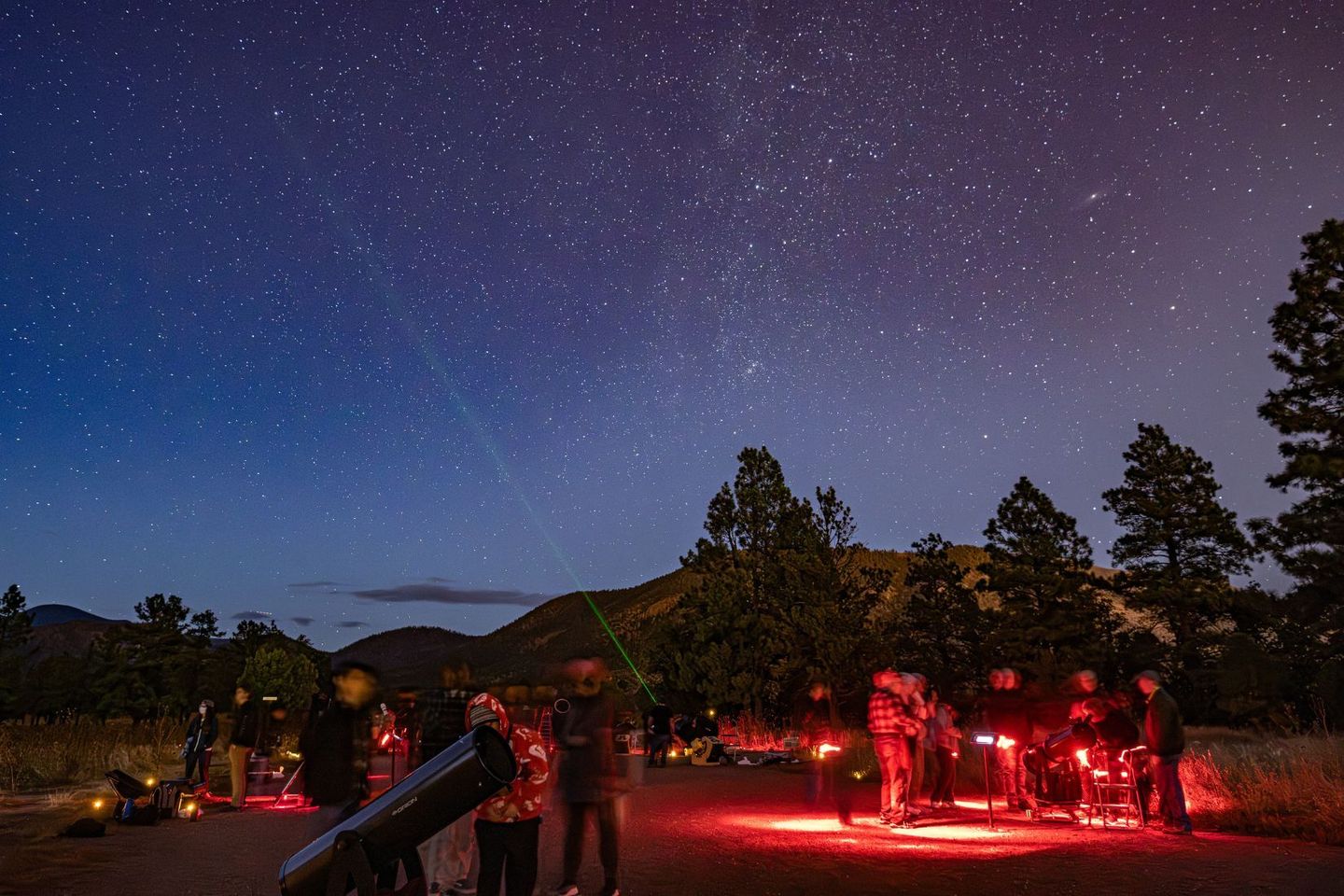
The movement has also helped create new opportunities for communities through astrotourism, as demonstrated in Flagstaff, where businesses promote the city’s certification to visitors, observatories offer tours and programs, and local, state and federal parks host events drawing thousands of people. And in Flagstaff, you’ll even find stargazing events happening right in Heritage Square in the heart of the city’s historic downtown.
Once largely the pursuit of amateur astronomers, traveling to experience exceptional night skies has become a growing global tourism trend. Visitors seek out certified Dark Sky Places to see the Milky Way, experience meteor showers and discover landscapes transformed after sunset.
For rural communities and protected areas, those visitors can support local businesses and provide an economic incentive to conserve the very darkness that draws people there.
Flagstaff remains a compelling example of how these benefits can coexist. Home to world-renowned observatories, a thriving tourism economy and a growing population, the city has maintained remarkably dark skies. Research comparing sky glow observations found Flagstaff’s total sky brightness to be roughly 14 times lower than that of Cheyenne, Wyoming, a city of comparable size.
“As for Flagstaff (population 77,000), we remain on the leading edge of urban dark-sky protection,” Adams said, “with our 2026 retrofit of 4,000 street lights to narrowband amber LEDs, a naked-eye view of the Milky Way from our downtown core, and the conservation of our star-filled urban night skies continuing as a deeply held community value.”
It is a remarkable achievement and a testament to the work that community members have put in over nearly seven decades.
Today, new International Dark Sky Places continue to emerge across the globe, each building on an idea first put forward by the residents of Flagstaff.
Twenty-five years later, the city’s legacy is no longer measured only by the stars visible above its streets, but by the growing number of places around the world working to ensure that future generations can experience the night.