Join our email list to get the latest news from DarkSky International, including our monthly newsletter. Emails go out twice per month and follow a strict privacy policy.
Find news, events, volunteer opportunities, and more.
Full site search
Certified lighting
Find responsible lighting for your outdoor project.
Search certified lighting
Dark Sky Places
Find a stunning night sky experience near you.
Search Dark Sky Places
DarkSky Approved Resort guidelines
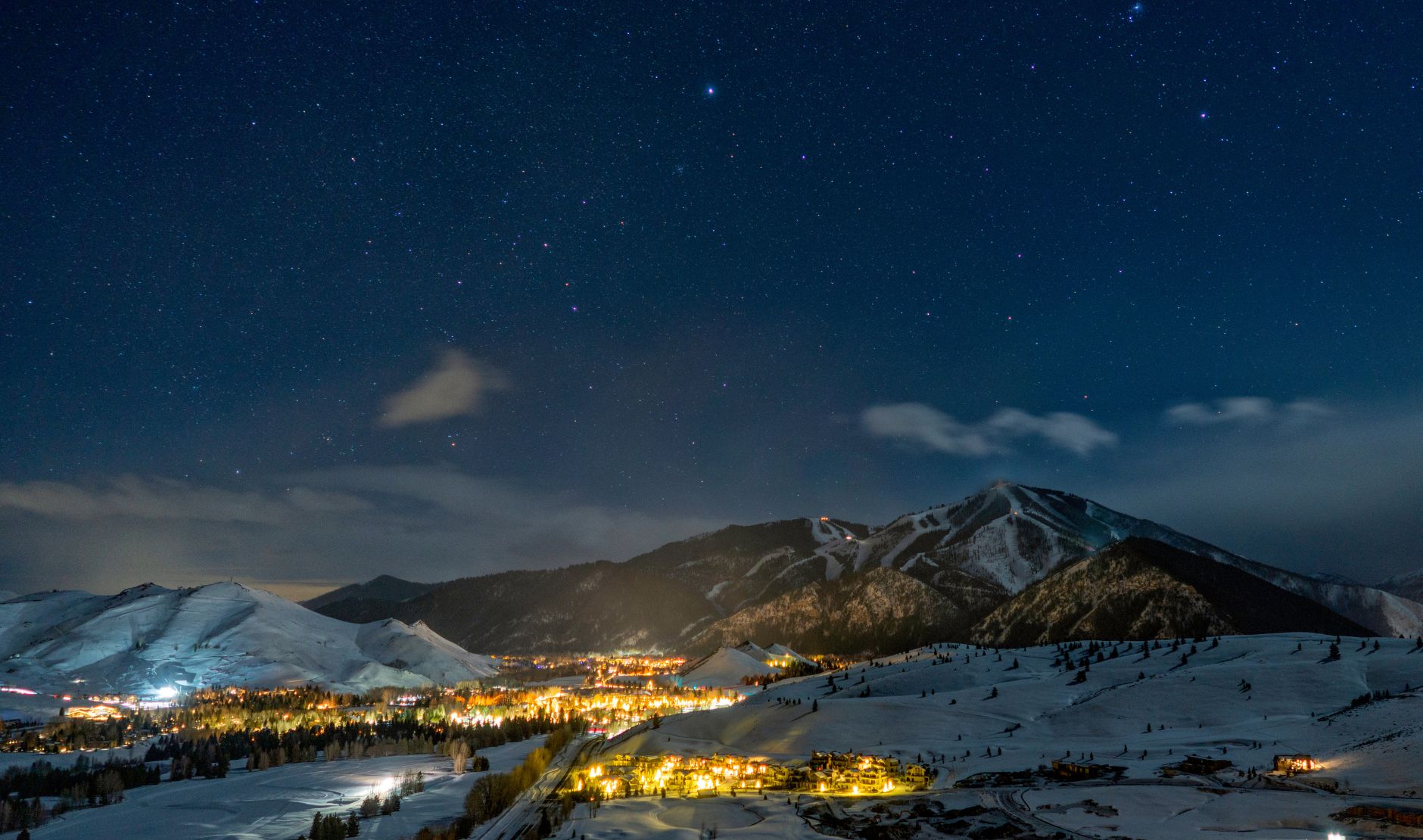
DarkSky Approved Lodging complements the Dark Sky Places program by recognizing overnight accommodations where the Milky Way is visible.
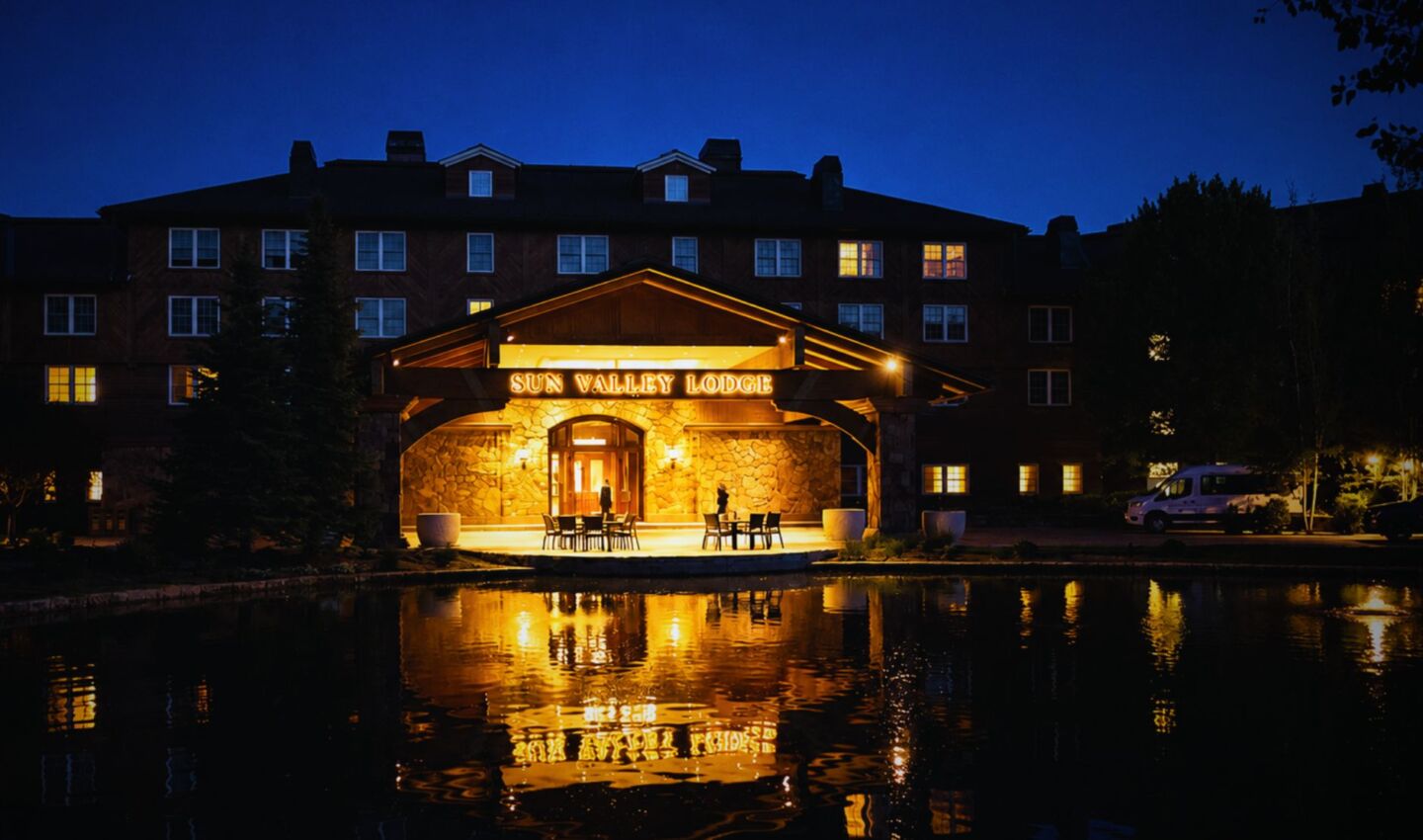
Credit: Sun Valley Resort
Version 1.0, updated December 7, 2023
Introduction
The DarkSky Approved Resort program (hereafter, the “Program”) is established by DarkSky International to promote high-quality lighting for visitor accommodations possessing an exceptional or impressive quality of starry nights and a nighttime environment that is preserved through onsite DarkSky Approved lighting. A DarkSky Approved Resort might include, for example, resorts, high-rise hotels, motels, large retreat centers, and other larger facilities that offer all-inclusive overnight accommodations and promote ecotourism or astrotourism and are situated in dark sky locations.
The Program is intended to complement the award-winning International Dark Sky Places program by providing recognition to owners and/or operators who provide overnight accommodation to the public visiting dark sky locations where the Milky Way is visible. They provide opportunities for visitors to spend the night in a dark sky location — an increasingly rare experience for many of the world’s population.
For a particular facility or accommodation to be DarkSky certified, it must demonstrate that it meets the criteria in this document, which includes both technical performance specifications and administrative requirements. These criteria are based on the objectives of the Five Principles for Responsible Outdoor Lighting. Those Principles are:
All light should have a clear purpose.
Light should be directed only to where it is needed.
Light should be no brighter than necessary.
Light should be used only when it is useful.
Warmer color lights should be used where possible.
This program provides DarkSky Approved Resort certification to individual facilities at specific locations that have met the criteria explained in these guidelines. The types of facilities that are eligible for consideration include resorts, high-rise hotels, motels, large retreat centers, and similar types of facilities whose purpose is to provide overnight accommodations for travelers on a large scale.
1.2 Goals
This program provides certification from DarkSky International for accommodation facilities that meet the following goals:
Exemplify excellent outdoor lighting practices and their commitment to the ideals of dark sky protection and restoration.
Promote ecotourism and astrotourism in a manner that enhances public understanding and enjoyment of the night sky and its heritage.
Promote the conservation and protection of nocturnal habitats and their associated ecological resources.
Foster an understanding by facility visitors that dark skies are a valuable and ever-dwindling global resource needing urgent protection.
Encourage others in the sector to become leaders on dark sky protection by modeling best practices, demonstrating what is attainable, and working peer-to-peer to inspire like-minded property owners to protect dark skies at their facilities.
Promote and execute DarkSky’s mission of educating the global public about the difference between “good lighting” and “bad lighting,” and the associated opportunities for protecting the environment, human health, and dark skies.
1.3 Benefits of certification as a DarkSky Approved Resort
The designation celebrates the efforts made by a private business to protect the night sky. Achieving this distinction will encourage and ensure the sustainability of outdoor lighting that is dark sky friendly and will enhance the awareness of destination guests of the principles of environmental stewardship and responsibilities of night sky protection.
The designation entitles the facility owners to display the DarkSky Approved Resort logo and to promote this distinction in its marketing and outreach collateral. In addition, DarkSky maintains a dedicated web page for the DarkSky Approved Resort program that will serve as a resource and information guide for prospective guests.
A plaque and/or sign design file designating the DarkSky Resort certification will be provided by DarkSky for production and display by the facility.
DarkSky will make educational and outreach material available for use by the facility.
1.4 Definitions
ALAN (artificial light at night): Light that is created from human technology, rather than a naturally occurring process. Also known as anthropogenic lighting.
BUG rating: The BUG rating system assesses the impact of a luminaire’s backlight (B), uplight (U), and glare (G) characteristics.
Candela (cd): The unit of measure for luminous intensity.
CCT (correlated color temperature): The measured color appearance of light emitted by a light source described using a nominal value stated in Kelvins (K). Lower CCTs (1800 K to 2200 K) appear very warm or amber. Medium CCTs (2700 K to 3000 K) appear “warm white,” similar to standard incandescent bulbs. High CCTs (4000 K and higher) appear “cool white” or “blue.”
Facility: The total composite area of the site under application, inclusive of the property, main buildings, guest accommodations, recreational areas, parking areas, facilities maintenance buildings, back of house structures, and other infrastructure that support the operations of the accommodation.
Five Principles for Responsible Outdoor Lighting: Co-authored and published by DarkSky International and the Illuminating Engineering Society: 1) Use light only if it is needed; 2) Direct light so it falls only where it is intended; 3) Light should be no brighter than necessary; 4) Use light only when it is needed; and 5) Use warmer color lights where possible.
Illuminance: Measured in Lux or footcandles, the total luminous flux incident at a point on a surface
Light Level: The maintained Luminance or Illuminance value.
Light Pollution:ALAN traveling into areas where it is not needed or wanted. This can be in the form of Light Trespass, glare, or atmospheric sky glow.
Light Trespass: The vertical illuminance calculated or measured 1.5 m above finish grade along the property line, with the light meter aimed perpendicular to the boundary line and directed into the area with lighting.
Lumen (lm): A unit of measure of the luminous flux of a light source.
Luminaire: A complete lighting unit, including the light source, housing, optics, electronics, and other necessary components for the purpose of providing outdoor illumination.
Luminance: The intensity of light emitted from a surface per unit area in a given direction.
Lux (lx): The SI metric system unit of measure for Illuminance.
Nadir: A downward vertical vector directly beneath a luminaire, opposite to zenith.
Zero Uplight: An installed Luminaire that does not have visible light source emission at or above a horizontal plane passing through the lowest light-emitting part of the Luminaire, also referred to as a U0 BUG rating or a 0% upward light ratio (ULR)
2.0 Program qualifications and criteria
2.1 Qualifications for consideration
To qualify for consideration as a DarkSky Approved Resort, the candidate facility must meet the following outcomes, which will be demonstrated by compliance with the criteria in the sections that follow:
Be located in a region with an exceptional and impressive dark sky resource.
Local endangered species and sensitive habitats are identified.
Light pollution is minimized due to exemplary lighting practices.
Guests have regular nighttime access, and are provided educational, or outreach materials about night sky conservation.
Note:At its sole discretion, DarkSky may choose not to recognize a facility that meets the criteria but is proposed in a particularly sensitive location.
2.2 Program criteria
The goal of the program criteria is to define the requirements for each of the four program areas.
Sky Quality
The candidate accommodation facility (hereafter, “Facility”) must:
The facility must provide evidence of a dark sky reading not lower than 20.5 stellar magnitudes per square arcsecond (mpsas); or
Be located within a currently designated International Dark Sky Park or International Dark Sky Sanctuary, or within the core of an International Dark Sky conservation area.
The Facility must have a written Habitat Identification Report (HIR) or Environmental Impact Study that includes the following:
List of threatened, endangered, or vulnerable species around the Facility that identifies which are nocturnal or sensitive to human-generated light at night.
Steps to be taken to minimize human-generated lighting in areas within the Facility that are visited by endangered, or threatened, nocturnally active wildlife, or species.
The HIR must identify whether there are particular wildlife species, including migratory species, or other flora or fauna with particular sensitivities to light at night. Examples would include a bat colony, riparian species, nighttime pollinators such as moths, a firefly population, or seasonally migrating birds.
Facilities must supply an environmental impact study, or create a report from publicly available databases, such as the IUCN Red List of Threatened Species or other regional or country-specific databases, e.g., the United States Fish & Wildlife Service’s database, or NatureServe Explorer.
Mitigation measures can include removing unnecessary luminaires, ensuring that light is not falling on sensitive locations, and/or installing controls programmed to dim and/or turn off lighting at designated times. Mitigation measures shall be included in the Lighting Management Plan (LMP).
Lighting management plan: The Facility shall adopt and follow a Lighting Management Plan(LMP) proportional to the amount and complexity of the Facility’s lighting systems and which incorporates the Five Principles for Responsible Outdoor Lighting. The points below outline the minimum requirements for the LMP. Appendix A provides further guidance.
At the outset of any process involving additions or other changes to the existing lighting, the purpose of the proposed changes shall be clearly stated and consideration given as to whether they are necessary or will be helpful, including the following:
Lighting objectives should consider the local regulatory requirements, relevant lighting standards, and identified species. In all cases, the Facility should take care to conform to all relevant local codes and ordinances pertaining to the use of light at night which may have more strict light level or control requirements
Consideration should be given to how indoor light affects the outdoor environment, and steps should be taken to minimize its impact, such as window shades and placement of interior luminaires.
Glare from luminaires (a.k.a. light fixtures) should be minimized to maintain dark adaptation as much as possible; shielding the light source from view is optimal to achieve this purpose. This can be achieved by using luminaires that emit less than 5% of their total light emission at or above 80-degrees from nadir. (Refer to Appendix B).
Luminaire dimming may be required to address overlighting, or to reduce light levels after a designated curfew time.
At least 67% of the existing lighting inventory shall conform to the LMP at the time the application is submitted.
The LMP shall describe a schedule wherein 80% of the lighting inventory will conform to the LMP within two years of certification, and 100% within five years.
Education and Outreach: The Facility shall improve the knowledge of its staff and guests regarding the night sky as a resource, the effects of light pollution, the principles of good lighting, and steps that guests can take to minimize light pollution.
The Facility shall ensure that all staff are knowledgeable about the Program and that all facility maintenance staff are trained on the LMP.
The Facility shall provide safe viewing of the night sky or the nighttime environment to all guests.
The Facility shall provide outreach materials describing the importance and value of dark skies and natural darkness, the impacts of light pollution on the environment, and actions individuals can take to address the problem.
DarkSky makes educational and outreach material available at cost or via digital download.
The Facility routinely provides programs for guests to attend, these shall include programs related to the night sky and/or nighttime environment.
Programs may be offered in collaboration with local businesses, interpreters, or volunteer astronomy groups.
Programs may be provided free of charge or on a paid basis.
Once certified, the Facility shall have signage indicating it is a DarkSky Approved Resort.
2.3 Program criteria
The goal of the program outcomes is to identify the resulting site conditions when criteria is followed.
Outcomes:
The Milky Way is readily visible to the unaided eye
No artificial light sources yielding significant glare on property
Any light domes present are dim, restricted in extent, and close to the horizon
Light pollution is minimized through the use of exemplary lighting practices
Dark adaption of the eye is improved through the use of shielding
Endangered species and sensitive habitats will be uninterrupted
Staff and guests will gain an understanding of light pollution causes, and solutions
3.0 Application and review process
3.1 Steps for applicant
Program Qualifications and Criteria Review. This information is provided in Section 2.
Pre-application. The applicant submits a pre-application form and pays the pre-application fee. This will open a case file with DarkSky and secure the Facility’s ability to apply under the current guidelines for 12 months. As part of the pre-application process, Facilities are required to submit their Lighting Inventory and preliminary LMP with the completed Pre-application form (see Appendix A). Applicants are encouraged to submit all pre-application materials prior to beginning work on any retrofits. Sky quality can be determined with SQM measurements or by using light pollution maps and documented using the provided SQM template. DarkSky will review the information and provide feedback as to the potential success of the facility to attain DarkSky Approved status. See the Program Fee schedule here.
Application. After review of the Pre-application materials has been performed and a response provided to the applicant by DarkSky, the applicant may choose to move forward with the DarkSky Approval process. The completed application, supporting documentation, and application fee are to be submitted to DarkSky via an invite only application. The applicant will receive email confirmation that the application materials and fee have been received. Four to six weeks should be allowed for review of the application. DarkSky will contact the applicant if additional information is required. All of the following are required in order for the application to be considered complete and reviewable:
Applicant company or business name and name of primary contact
Mailing address and email address of business location
Phone number
Maps of the area to be designated as a DarkSky Approved Resort, clearly indicating the Resort boundaries and geographic context
Site plan showing the location of facilities and any sensitive resources (e.g., natural areas, bodies of water)
Checklist showing compliance with the criteria (see Section 2)
Documentation of night sky quality
Habitat Identification Report (see Section 2.2.B)
Lighting Management Plan (see Section 2.2.C)
Lighting Inventory, including luminaire locations and photos (see Appendix A)
Description and documentation of interpretive programs or materials related to dark skies and/or natural darkness
Plan for signage identifying the site as a DarkSky Approved Resort (Note: The signage is not permitted to be installed until the property has received official notification of its certification)
Site Visit
An integral element of the approval process is ensuring that an applicant fully complies with and meets all application requirements.
Although DarkSky staff can complete much of the evaluation of a candidate Facility by reviewing the application and supporting documentation and discussing the proposal with the applicant by phone and email, to ensure the integrity of the program, DarkSky or its designated representative will also conduct a site visit as part of the final review process. The purpose of such a visit is to verify that the facility fully complies with the lighting specifications and other requirements and to meet with facility owners, staff, and others involved in managing the program. It is important to note that all costs for the site visit are the full responsibility of the applicant.
Although it is preferred that DarkSky staff or trained volunteers perform the site visit. DarkSky may instead elect a local representative to conduct the inspection when travel is impractical.
3.2 Review process
Application Review. DarkSky staff typically takes four to six weeks to complete an initial review and assessment of the application. DarkSky will contact applicants if questions arise during the review process or if additional information is required.
Review of Site Inspection Report. DarkSky staff will review the site inspection report and, once satisfied with its completeness, provide a copy to the applicant. The final decision of certifying the Facility as consistent with the criteria lies solely with DarkSky.
Certification. Upon completion of the site visit, DarkSky will make a final determination on the application and will notify the facility of its decision. In the event that there are outstanding issues of non-compliance, DarkSky will work with the applicant to address and remedy those deficiencies. Once the Facility has been granted certification as a DarkSky Approved Resort, DarkSky will notify the applicant in writing and will add the facility to its DarkSky Approved Resort webpage.
Confidentiality. DarkSky will maintain the confidentiality of the application and field assessment and will not make these available to other parties without the prior approval of the applicant. On the DarkSky website, only the fact that the Facility meets the program criteria will be disclosed. Should the Facility cease to be certified, DarkSky shall only disclose that the Facility was certified for a specific period of time and shall not disclose the reason(s) for decertification.
4.0 Ongoing commitments
4.1 Maintenance of required conditions
To demonstrate that the conditions and other criteria required for certification have been maintained, the following measures shall be taken and the results reported in the Facility’s Annual Report (see Section 4.2).
Sky Quality: The Facility should demonstrate a commitment to monitoring sky quality over time. This may be done by the Facility or through a partnership with a local group. Updated sky quality measurements must be provided annually.
Luminaire Compliance: The Facility shall review its lighting inventory at least annually for consistency with the LMP and shall update the Inventory documentation as needed.
Outreach: The Facility shall evaluate its outreach program at least annually and make changes as needed.
4.2 Annual report
The Facility is required to submit an Annual Report including sky quality measurements, luminaire compliance, and outreach and educational activities for the year, including any changes to the lighting or sky quality measurements (see Section 4.1). The Annual Report template can be downloaded here, completed, and emailed to the DarkSky Lighting Program Manager by March 1st.
Failure to submit the Annual Report in a timely manner will result in the suspension of the Facility’s DarkSky Approved Resort certification. If the Facility submits the report within 90 days, the certification will be reinstated. After 90 days, it will be assumed that the Facility wishes to withdraw from the Program.
The Facility should maintain a current point of contact and notify DarkSky of any changes within 30 days.
Should the Facility change ownership, the new owner should notify DarkSky within 30 days.
Additional information on the specific requirements for the Annual Report can be found in Appendix C.
4.3 Recertification
To ensure that the Program meets the highest standards of professionalism and integrity and that a DarkSky Approved Lodging remains exemplary in its protection and restoration of nocturnal nightscapes, DarkSky will recertify each Facility every five years.
As part of the recertification process, the DarkSky Approved Resort (hereafter, “Resort”) should update its Habitat Identification Report (HIR) and its Lighting Management Plan (LMP) as necessary to be consistent with the current Program criteria. It is expected that any changes to the outdoor lighting on the Resort property will be consistent with the updated LMP.
Recertification requires the submission of the current Annual Report (refer to Section 4.2 and Appendix C), confirming that the Lodging continues to meet the minimum standards and requirements set out in the Program guidelines.
It is expected that the recommendations for lighting will evolve over time, given new information on the effects of light and as new products become available. As a result, the DarkSky Approved guidelines may also change. As updated guidelines are issued, the Resort will have the option of continuing under the prior guidelines for an additional five years.
DarkSky Approved Resorts are required to indicate how they plan to bring any non-compliant luminaires into compliance with any new program requirements within 10 years. For example, an applicant certified under the 2022 guidelines would be due for recertification in 2027. If new guidelines were released in 2025, the Resort would have the option to continue under the 2022 guidelines for an additional five years. Alternatively, they could start operating under the 2025 guidelines and be certified as such when they meet the new requirements for compliance.
4.4 Decertification
Should a DarkSky Approved Resort fail to comply with the requirements in this document, DarkSky reserves the right to suspend its DarkSky Approved certification until such a time that issues of noncompliance have been resolved to DarkSky’s satisfaction. In the event that these matters cannot be resolved in a timely manner, DarkSky shall terminate the facility’s certification and remove it from the list of certified sites.
4.5 Withdrawing from the program
An approved facility may withdraw from the program at any time for any reason, subject to a 30-day written notice. Any fees paid are nonrefundable.
4.6 Investigation and due process
Any allegation of impropriety concerning any of the elements of participation in the Program outlined in this document will be subject to DarkSky investigation and potential remedial action, including temporary suspension or permanent revocation of the designation. DarkSky International staff shall perform due diligence in gathering facts concerning such allegations they deem credible and will prepare a report of their findings for consideration by the Executive Director. The Executive Director commits to weighing the evidence fairly and impartially, and to seeking to resolve disputes whenever possible through dialogue.
A Resort subject to an investigation shall be notified in a timely manner and solicited for evidence contrary to the specifics of the allegation at hand. Any Resort so investigated has the right to review the allegations against it and all factual information collected by DarkSky pertinent to the claims.
The Resort will be given an opportunity to correct any deficiencies established by the DarkSky investigation within a reasonable period to be prescribed by the Executive Director.
Failure to achieve consensus through these means risks suspension or revocation of the designation. A recommendation of such will be forwarded to the Board of Directors for formal ratification before coming into force. The Board’s decision on any disciplinary matters involving an approved facility shall be considered definitive and binding.
A Resort’s certification may be suspended for up to 12 months, during which time the Resort has a chance to remedy any deficiencies. After 12 months, the suspension becomes a permanent decertification.
APPENDIX A
Lightscape Management Plan and Lighting Inventory
A.1 Lightscape Management Plan (LMP)
DarkSky strongly recommends that a candidate Facility retain the services of a qualified lighting professional with experience in designing for dark sky locations. It is further recommended that the Facility follow the guidance within nationally recognized lighting standards such as ANSI/IES RP-43-25, Recommended Practice: Lighting for Exterior Applications, or similar national standards documents.
The Facility should employ good lighting practices, such as:
Establishing written policies and procedures that meet or exceed local requirements, building code, or policies for outdoor lighting and that conform to all applicable local, regional, and national laws and ordinances
Using light only when it is needed, where it is needed, and in the appropriate amount for the identified task
Using outdoor luminaires that direct their light downward, and make appropriate use of timers and/or occupancy sensors
Consider the impact that indoor lighting has on the outdoor environment and identify steps to minimize it
Exceptionsmay be granted on a case-by-case basis in situations where the safety of Facility staff and visitors requires a specific amount of light and accurate color rendition, where no other suitable luminaires are available, and/or for historic preservation. In these cases, it is important that additional steps be taken to reduce the lighting impact by turning off lights when not needed.
DarkSky may request additional descriptions, photographs, or drawings of such designated special-use luminaires. DarkSky will review these special uses to ensure that the Facility’s lighting acts as a suitable example of good lighting for the public and that it protects the nighttime environment to the maximum extent practicable.
A.2 Lighting Inventory
The Lighting Inventory should specify all of the following for each light fixture (luminaire):
Location
Purpose
Manufacturer
Model number
Light source type (e.g., incandescent, LED)
Correlated color temperature (CCT), in kelvin (K)
Luminaires total lumen output
Operational details, such as use of motion sensors, time switches (a.k.a. timeclocks), or photocells
Shielding and aiming, including IES BUG rating if available
Daytime photographs, or manufacturer diagrams, or cut sheets of each fixture (luminaire) type
Sample nighttime photographs taken from defined locations as indicated on the site plan
Note: When there are numerous outdoor light fixtures, it is acceptable to list them in groups according to purpose or area.
APPENDIX B
Lighting Design
Table B-1 covers typical application types and provides best practice suggestions as well as the minimum requirements that must be met to become certified.
In all cases, the Facility should take care to conform to all relevant local codes and ordinances pertaining to the use of light at night which may have more strict light level or control requirements
New construction projects are encouraged to use DarkSky Approved luminaires or products with zero uplight and no more than 3% of the total luminaire lumen output above 80° from nadir.
All mentions of Correlated Color Temperature (CCT) are nominal values.
Lighting designs that differ from the below recommendations may still be approved if DarkSky International confirms that the alternative method will produce the same outcome.
Maximum luminaire lumens = 600. Use products with zero uplight. Color temperature <=3000K CCT. Dimmable to 10% of the total light output rating. Use of a dimming control.
Products over 600 lumens must have zero uplight and color temperature <=3000K CCT. Manual on/off control.
Covered porch, patio, entrance, balcony(public) common areas
Maximum luminaire lumens = 600. Use products with zero uplight. Color temperature <=3000K CCT. Dimmable to 10% of the total light output rating. Use of a programmable time-clock control.
Products over 600 lumens must have zero uplight and color temperature <=3000K CCT. Manual on/off control.
Pathway
Use products with zero uplight. Color temperature <=3000K CCT. Dimmable to 10% of the total light output rating. Use of a programmable time-clock control. Use products 42 inches (106 cm) or less in height (Bollards/Pathway Lighting).
Products over 600 lumens must have zero uplight and color temperature <=3000K CCT. Manual on/off control.
Car parks (Parking lots)
Use products with zero uplight and color temperature <=3000K CCT. Dimmable to 10% of the total light output rating. Use of a programmable time-clock control.
Products over 600 lumens must have zero uplight and color temperature <=3000K CCT. Manual on/off control.
Approach roads
Use products with zero uplight and color temperature <=3000K CCT. Dimmable to 10% of the total light output rating.
Products over 600 lumens must have zero uplight and color temperature <=3000K CCT. Manual on/off control.
Festoon and/or string lighting; limited to (public) common areas
Limited to 50 lumens maximum per lamp/bulb. Use a product with zero uplight and color temperature <=3000K CCT. Dimmable to 10% of the total light output rating. Use a dimming or time-clock control. Limit the use of festoon lighting and turn off whenever they are not needed.
Limited to 50 lumens maximum per lamp/bulb. Minimum spacing between lamps is 24 inches (60 cm). Color temperature <=3000K CCT. Limit the use of festoon lighting and turn off whenever they are not needed.
Signage
Use zero uplight externally mounted luminaires from above. Color temperature <=3000K CCT. No digital displays or internally illuminated signs.
Use zero uplight externally mounted luminaires from above. Color temperature <=3000K CCT. No digital displays. Internally illuminated sign brightness level to conform with DarkSky Sign Guidance. Sign lighting must have the capability to be dimmed. Signage must be static, no change of copy.
Facade lighting
Use downward-directed facade lighting that does not go beyond the surface intended to be illuminated and avoid overlighting. Refer to ANSI/RP-43-25 for guidance. Color temperature <=3000K CCT. Minimize the use of facade lighting to only primary public areas.
Design lighting to not go beyond the surface intended to be illuminated and avoid overlighting. Refer to ANSI/RP-43-25 for guidance. Color temperature <=3000K CCT.
Ornamental plant or tree up-lighting, and Accent lighting of sculptures, or landscape features
No ornamental plant or tree up-lighting.No accent lighting of sculptures, or landscape features.
Limited to 200 lumens per tree, never exceeding 3,000 lumen per acre (43,560 square feet/4,047 square meters). Use beam angles no greater than 20 degrees. Turn off tree up-lighting after curfew (curfew 11:00 pm – 5:00 am)
Pool (deck lighting)
Follow recognized best practices for swimming pool lighting consistent with ISPSC 2024 or equivalent local or international standards. Color temperature <=3000K CCT. Dimmable to 10% of the total light output rating. Use a programmable time-clock control to dim, or turn off lighting when pool hours end.
Follow recognized best practices for swimming pool lighting consistent with ISPSC 2024 or equivalent local or international standards. Use a manual switch or time-clock control to dim, or turn off lighting when pool hours end. Color temperature <=3000K CCT.
Sports Lighting
Follow DarkSky Approved Outdoor Sports Lighting Program guidelines.
Use products with zero uplight and color temperature <=3000K CCT. Dimmable to 10% of the total light output rating. Use a programmable time-clock control. Lights off no later than 11:00 pm.
Interior Lighting
Light from interior sources shall be controlled with window treatments to keep light from transmitting outdoors. Resorts include a room key power-switch to ensure lights are off when the room is unoccupied. Provide guests with a DarkSky educational card asking to close window treatments at night.
Light from interior sources shall be controlled with window treatments to keep light from transmitting outdoors. Provide guests with a DarkSky educational card asking to close window treatments at night.
Flag Installations
Ground mounted luminaires with spot, or narrow spot distributions shall be used. Lights shall be well targeted and restrict illumination to only the flag itself and avoid spill light onto other surfaces or trees. Flag lighting shall be installed with steep aiming angles to minimize viewing of the light source. Color temperature <=3000K CCT.
Ground mounted luminaires with spot, or narrow spot distributions shall be used. Lights shall be well targeted and restrict illumination to only the flag itself and avoid spill light onto other surfaces or trees. Flag lighting shall be installed in a way that reduces direct viewing of the light source and minimizes high angle light. Color temperature <=3000K CCT.
APPENDIX c
Annual report
A facility approved as a DarkSky Approved Resort (hereafter, “Resort”) is required to provide an Annual Report to DarkSky International. Failure to provide this information in a timely manner may result in temporary suspension or even possible revocation of the facility’s designation.
At a minimum, the Annual Report must provide:
A report on annual sky quality measurements:
The Resort shall re-measure the darkness of its dark sky on an annual basis to confirm that the reading is still 20.5 mpsas or greater.
Should the readings fall below 20.5 for a period of two years, the Resort shall identify the steps it will take to reduce light pollution from its own operation and neighboring sources.
A summary of programs, interpretive events, communications, or other educational outreach activities administered at the Resort.
A summary of changes in the Resort’s outdoor lighting system since the original certification or the last Annual Report, whichever is more recent:
This includes the addition or removal of luminaires, changes in light output, or CCT of the luminaires, and any other modifications to the outdoor lighting on the property.
For all new luminaires installed, a description (manufacturer, model number, lumen output, distribution information, CCT, and accompanying photographs must be provided.
Attestation that the Resort is compliant with the current program guidelines.
Contact
To learn more, contact the DarkSky Lighting Program Manager.