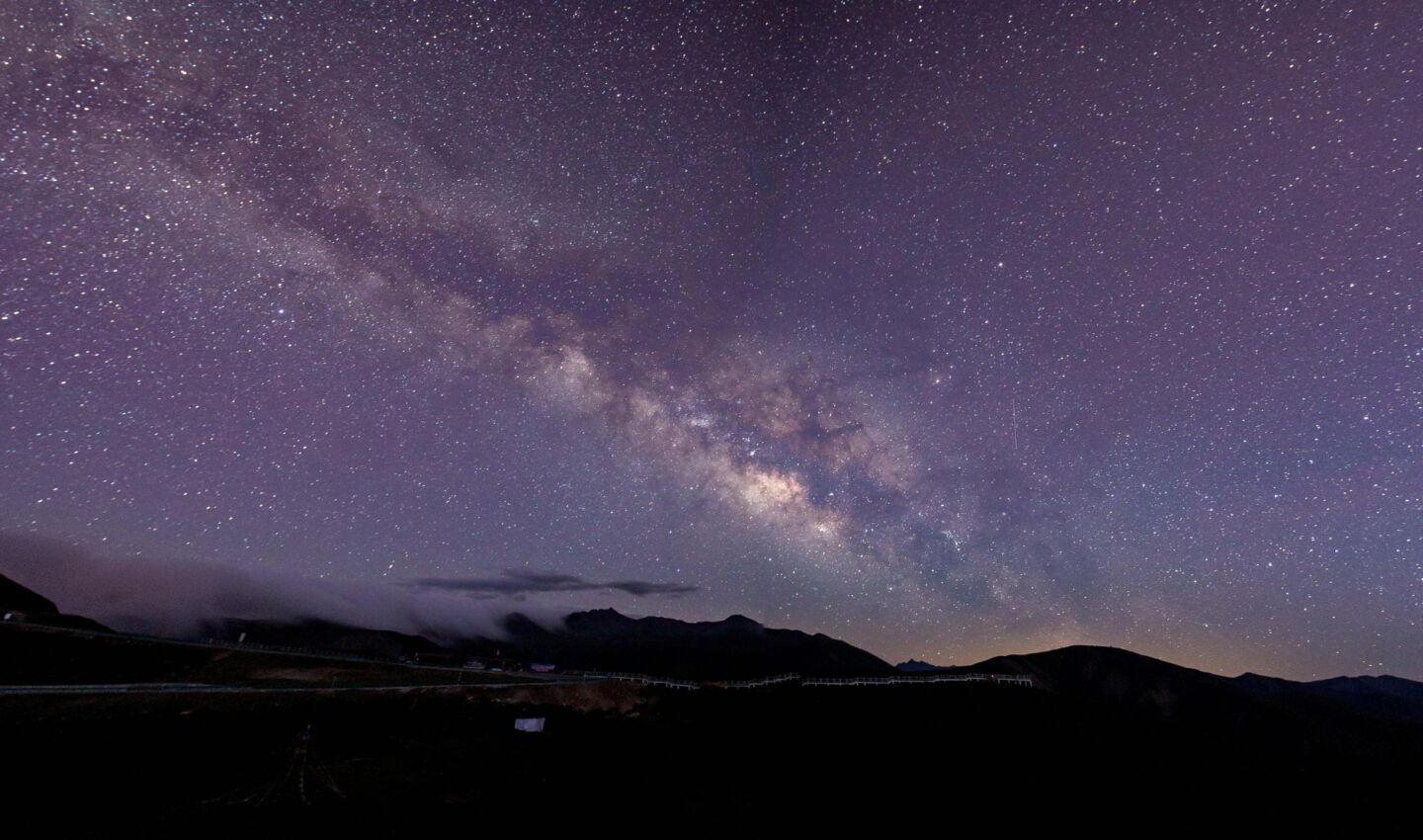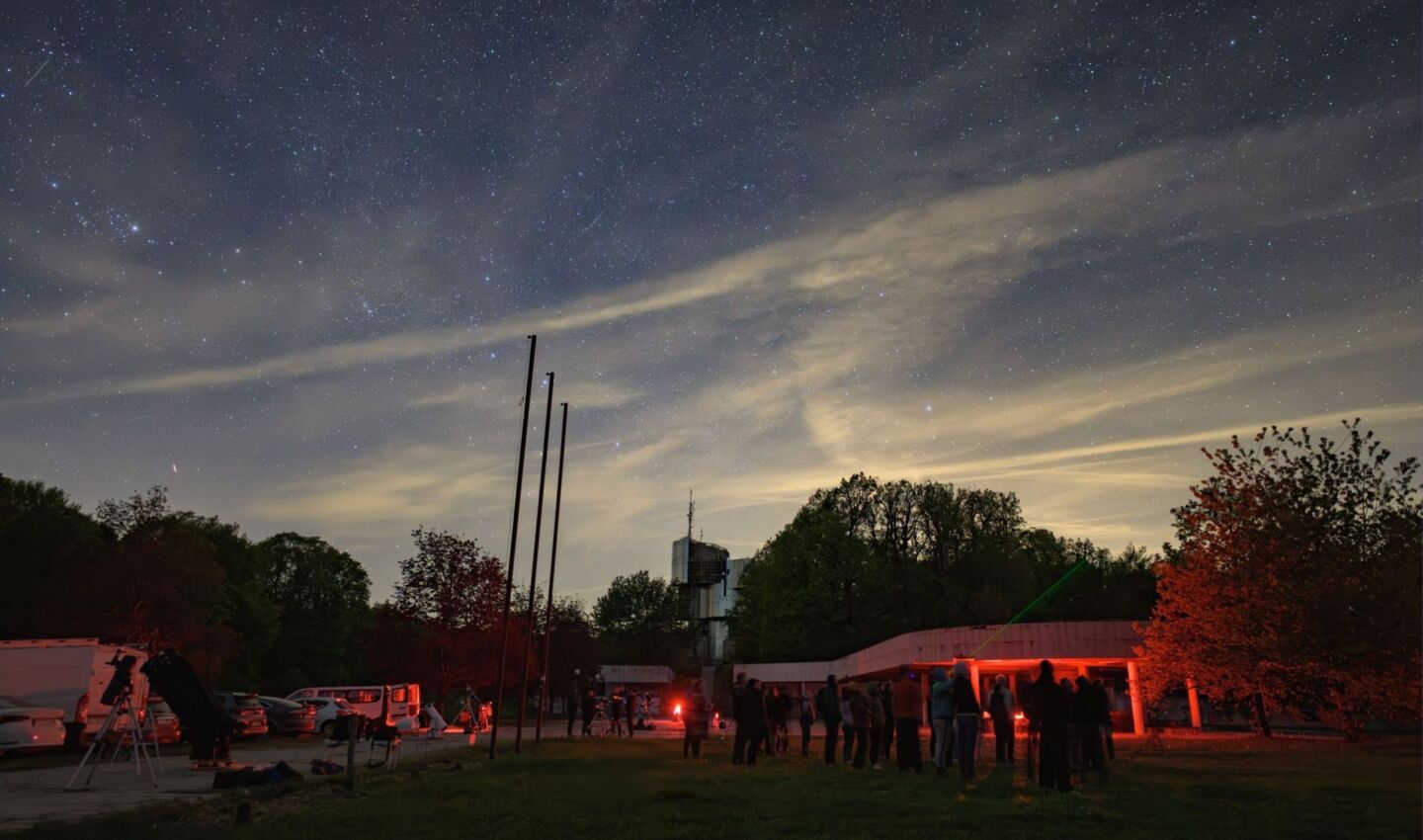











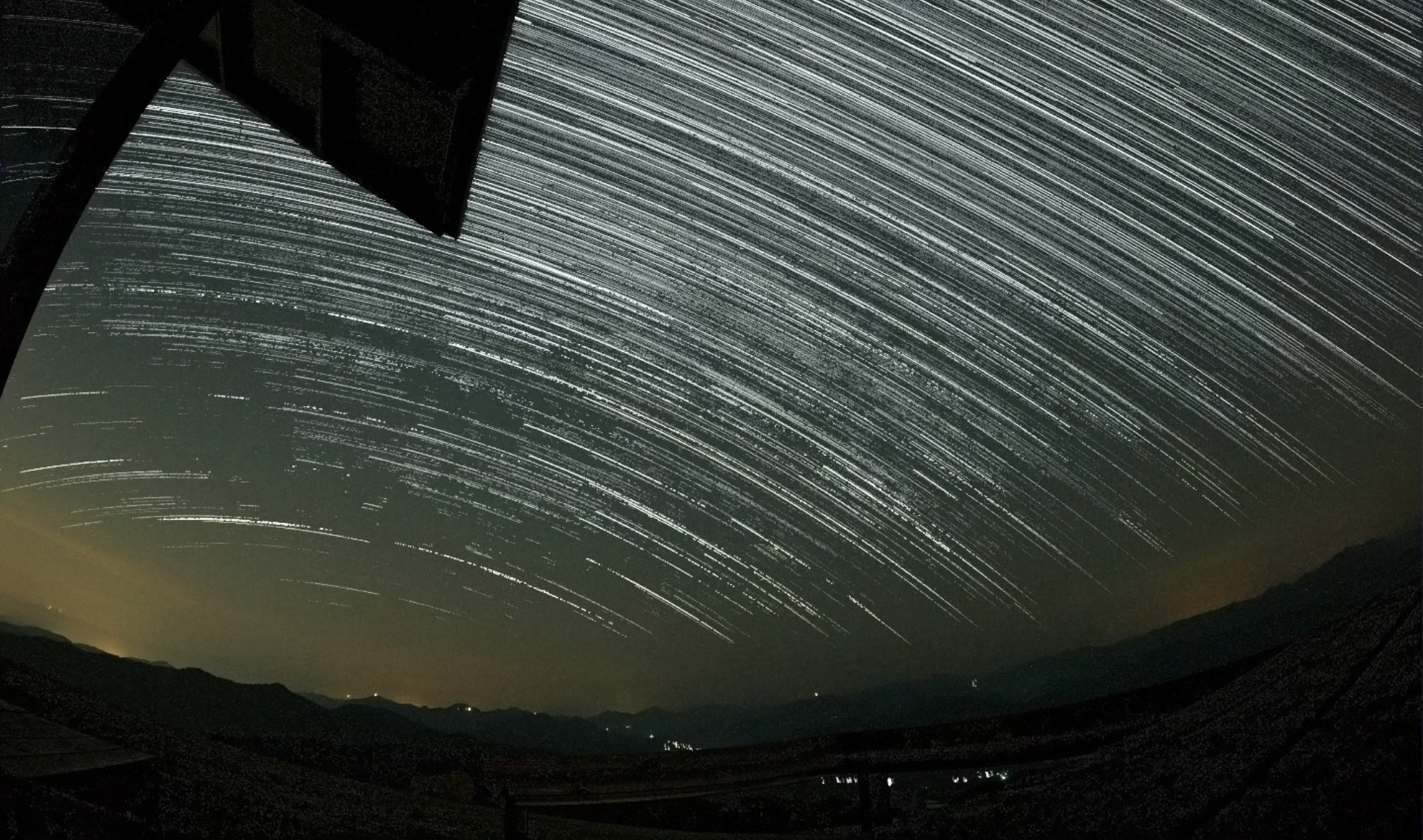
Zhangwu Urban Night Sky Place has been designated by DarkSky International as China’s first Urban Night Sky Place (UNSP). With existing transport access and facilities for camping and astronomical observation, it offers residents of Anji and nearby cities an accessible stargazing destination with essential visitor services.
Zhangwu Urban Night Sky Place is located in the hamlet of Shimen, Jingwu Village, Zhangwu Town, in northwestern Anji County. It borders Anhui Province to the north, with Tianzi Lake and Xianshan Lake in Si’an to the east. To the south, views extend to central Anji, Xiaofeng, and the Changlongshan Reservoir dam; to the west lies Lucun Reservoir in Anhui. The site offers panoramic views across three counties in Zhejiang and Anhui provinces. Its core area covers approximately 0.26 square kilometers, and the summit stands at about 680 meters above sea level. The open terrain is surrounded by mountains, with forests, bamboo groves, and stream valleys. Vegetation covers more than 90 percent of the area, providing a natural setting. Development in the surrounding area is limited, and artificial light sources at night are relatively few. The largely intact mountain ecosystem and expansive views allow visitors to enjoy mountains and seas of clouds by day, and a landscape of stars and mountain wilderness by night.
Alongside its natural environment, Zhangwu has a long and distinguished cultural history. In 2015, it was named one of China’s most beautiful historic and cultural towns. This site boasts a rich cultural heritage, a concentration of talent, and a long lineage of outstanding figures. It is the birthplace of Wu Changshuo, the artist renowned in China and abroad for his mastery of poetry, calligraphy, painting, and seal carving. Other notable figures include a father and his three sons from the Wu family, all of whom attained the Jinshi degree, the highest qualification in the imperial civil service examinations, during the Jiajing reign of the Ming dynasty, as well as Wu Wufeng, a celebrated book collector during the Qianlong reign of the Qing dynasty. More than 30 historic buildings from the Ming and Qing dynasties remain in the town, preserving a cultural legacy that continues today.
Since July 2025, Zhangwu Town has worked toward dark sky certification through sustained efforts to encourage public participation and improve the nighttime environment. It has established a collaborative framework among the town government, the village collective, the campsite, and specialist teams, and has drafted requirements for managing the lighting environment.
A comprehensive survey of lighting in Jingwu Village was followed by improvements tailored to different fixture types. The team replaced 20 road lighting fixtures in Shimen. Two guesthouses were advised to switch off or remove 21 courtyard fixtures whose illuminance or color temperature did not meet the requirements. A further 20 low-color-temperature ground lights were installed with shielding and timer controls. Together, controls on color temperature, light direction, intensity, and operating hours help reduce light spill.
Village representatives, guesthouse operators, and restaurant owners have taken part in dark sky outreach sessions and lighting retrofit demonstrations. Six series of brochures have been produced, covering topics including light pollution prevention, responsible lighting, dark sky tourism, and astronomy education for children. Stargazing festivals, astronomy talks, observing sessions, and educational activities for university students and faculty have encouraged residents, businesses, and visitors to help protect the night sky.
Night sky quality surveys and ongoing monitoring use an SQM-L Sky Quality Meter at eight representative locations in the core and buffer areas. Multiple rounds of monitoring have been completed since August 2025, with five consecutive readings at each location. Weather, cloud cover, and lunar phase were recorded, providing a scientific basis for assessing the effects of the lighting improvements.
These measures reduce unnecessary lighting while maintaining the illumination needed for road access, work, daily life, and public safety. They provide a sustainable management framework for protecting the nighttime environment over the long term.
“Bringing Zhangwu Urban Night Sky Place to life demonstrates that nature and culture can thrive together. We are proud to support a place where communities can reconnect with the stars and their heritage, inspiring future generations to cherish both our skies and our communities. We are excited to welcome China’s first UNSP aboard the growing list of UNSPs globally,” stated Amber Harrison, International Dark Sky Places program manager.
“Anji is the birthplace of the ‘Two Mountains’ concept: lucid waters and lush mountains are invaluable assets. Protecting the environment means safeguarding both the green mountains and clear waters we see by day and the tranquility, natural surroundings, and starry skies we experience at night. Zhangwu’s recognition as China’s first Urban Night Sky Place acknowledges the conservation work already undertaken. It also calls for a continued commitment to responsible lighting and management of the nighttime environment. Our aim here is not to achieve the darkest possible sky. What matters more is making the most of our convenient access and existing facilities to offer residents of Anji and nearby cities an accessible, sustainable place to enjoy stargazing and nature, supported by visitor services. We will strengthen our arrangements for long-term dark sky protection and make it an integral part of our work in ecological conservation, rural governance, and cultural and tourism development,” said Shen Andong, a member of the Zhangwu Town Party Committee and Deputy Town Mayor.
“Dark sky protection is closely connected to everyday village life. Our job is to explain why protecting the stars matters and to manage streetlights and business owners’ courtyard lighting well. We need to keep necessary areas lit and use less lighting when it is not needed, reducing its impact on the night sky. Residents of nearby cities do not have to travel far to stargaze here. The village and campsite already offer basic camping and visitor services, along with stargazing guidance and astronomy education. Stargazing and camping can also support local guesthouses and restaurants, helping to revitalize the village and increase residents’ incomes. Jingwu Village will continue working with the campsite on outreach and routine maintenance, so that residents can feel safe at home and visitors can easily enjoy the stars,” said Xu Jianguo, Secretary of the Jingwu Village Party General Branch and Director of the Village Committee.
“During the day, visitors to Jiangjun Mountain can enjoy mountains, seas of clouds, and bamboo forests. At night, they can stargaze, camp, and experience the tranquility of the mountains. Zhangwu’s appeal lies in both its night sky and its proximity to nearby cities and ease of access. The campsite already has facilities for camping and astronomical observation, and we will continue to offer stargazing guidance, astronomy interpretation, and small-group stargazing experiences. We will also use lighting responsibly in line with dark sky protection requirements and reduce unnecessary light, allowing visitors to experience natural nights safely and comfortably,” said Rao Yanzhong, operator of Jiangjun Mountain Stargazing Campsite.
Building on its recognition as China’s first Urban Night Sky Place, Zhangwu will continue retrofitting and maintaining lighting while strengthening its systems for monitoring night sky quality, staff training, and annual reporting. These efforts will bring responsible lighting, ongoing monitoring, and public participation together in a lasting protection framework. Working with Jiangjun Mountain Stargazing Campsite, the local community will improve directions to the site, visitor booking and reception arrangements, and stargazing services. It will gradually expand astronomy education, nature learning activities, and small-group stargazing experiences, making stargazing guidance and astronomy education more consistently available. The aim is to provide residents of Anji and nearby cities with convenient, accessible, and sustainable stargazing opportunities, while coordinating rural tourism development with the protection of the nighttime environment.
About the International Dark Sky Places Program: Founded in 2001, the International Dark Sky Places Program is a non-regulatory and voluntary program encouraging communities, parks, and protected areas worldwide to preserve and protect dark sites through effective lighting policies, environmentally responsible outdoor lighting, and public education. When used indiscriminately, artificial light can disrupt ecosystems, impact human health, waste money and energy, contribute to climate change, and block our view and connection to the universe. Zhangwu Urban Night Sky Place now joins more than 275 Places that have demonstrated robust community support for dark sky advocacy and strive to protect the night from light pollution. Learn more by visiting https://darksky.org/what-we-do/international-dark-sky-places/.
About DarkSky International: The mission of DarkSky is to preserve and protect the nighttime environment and our heritage of dark skies through environmentally responsible outdoor lighting. Learn more at darksky.org
Media Contacts
Xu Zhidan
Economic Development Office
Zhangwu Town People’s Government
[email protected]